To preserve NAD+ potency, you’ll need to store lyophilized powder at −20°C and keep reconstituted solutions at 2°C, 8°C, since hydrolysis alone can destroy 50% of activity within 24 hours at 25°C. Your buffer choice matters just as much, Tris at pH 8.5 retains ~90% integrity over 43 days, while HEPES and phosphate drive 4- to 6-fold greater losses. Aliquoting, sealing, and logging temperature excursions are equally critical steps you won’t want to skip below. Why are peptide bonds stable in the biomolecular context? Their stability is crucial for maintaining protein structure and function.
Why NAD+ Loses Potency in Storage
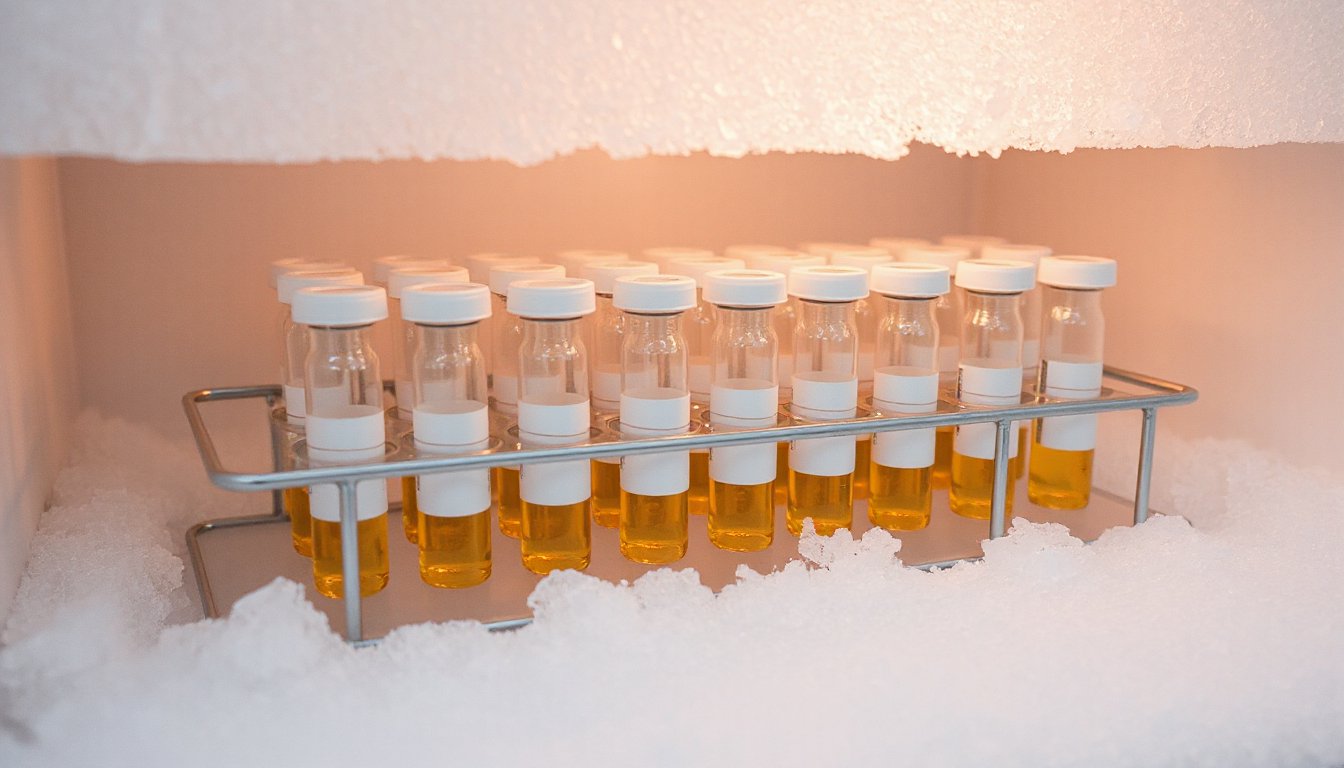
NAD+ degrades through multiple converging pathways, hydrolysis, oxidation, and thermal breakdown, each capable of silently eroding potency well before a researcher opens the vial. In solution, the labile phosphate ester bond hydrolyzes rapidly, one stability analysis reported 50% activity loss within 24 hours at 25°C and near-complete degradation within 72 hours without refrigeration. Oxidative reactions compound this decline, proceeding even in sealed containers when residual moisture is present. Many users unknowingly consume degraded NAD+ supplements because visual clarity does not indicate whether the compound has already broken down beyond useful thresholds.
For effective nad+ degradation prevention, you’ll need to control every variable simultaneously. Light, heat, and pH shifts each accelerate breakdown independently. Understanding nad+ stability laboratory conditions means recognizing that these pathways converge, making proper nad+ handling research protocols essential to preserving compound integrity throughout your experimental timeline.
How Cold Should You Store NAD+?
For nad+ research grade storage, the target depends on physical form. When storing nad+ laboratory powder, maintain −20°C in sealed, moisture-proof packaging. Once reconstituted, shift to 2°C, 8°C refrigeration. A standard home refrigerator is suitable for maintaining reconstituted NAD+ within this temperature range.
Key parameters for nad+ potency preservation:
- Store lyophilized powder at −20°C; store reconstituted solutions at 2°C, 8°C
- Never freeze liquid NAD+ unless the product label explicitly permits it
- Position vials on a middle shelf toward the back to minimize temperature cycling
- Avoid refrigerator door placement where frequent opening introduces thermal fluctuation
- Use reconstituted NAD+ within 7, 14 days, even under continuous refrigeration
Stable cold beats intermittently colder. Consistency drives potency retention.
Tris vs. HEPES vs. Phosphate: Which Buffer Wins?
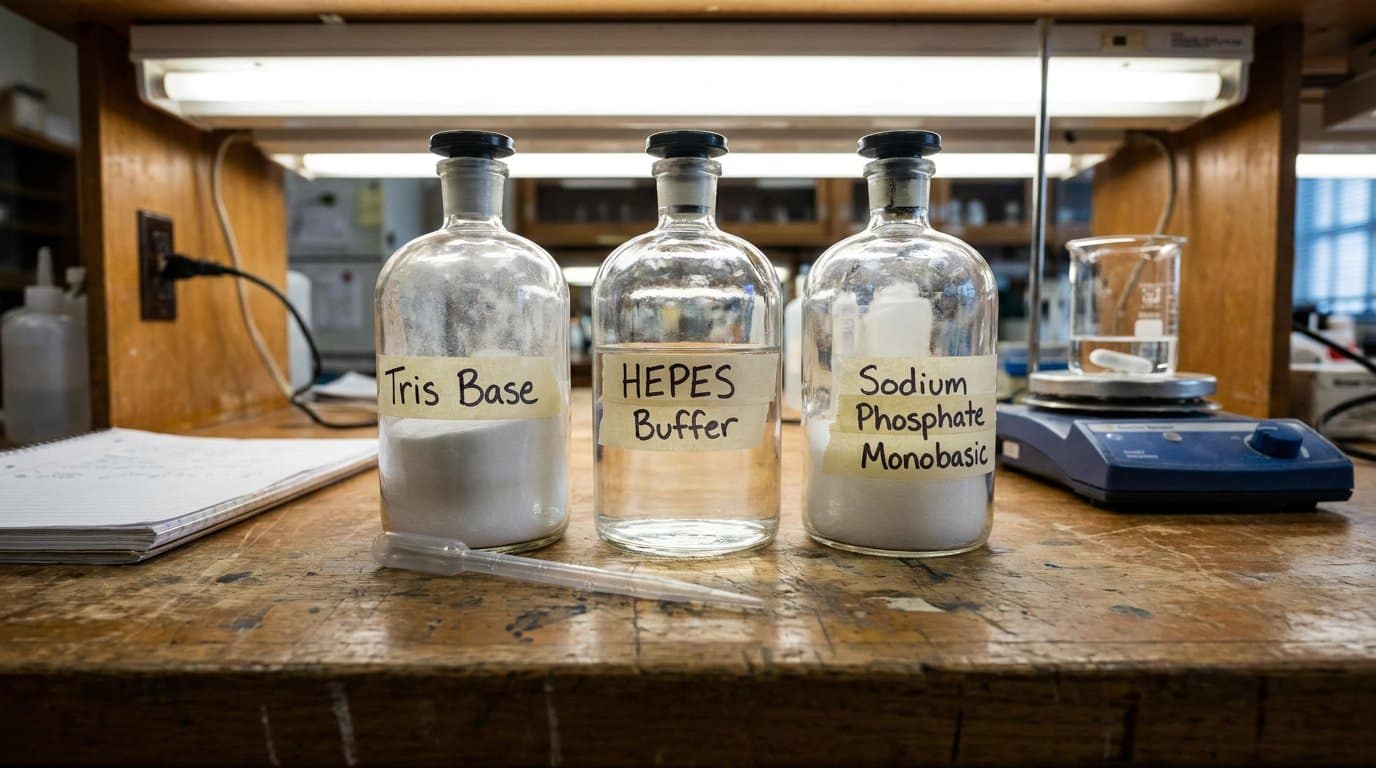
How much does buffer choice actually cost you in usable NAD+? Over 43 days at 19°C, Tris (pH 8.5) preserved NADH at ~4 μM/day degradation, roughly 90% retention. HEPES degraded at ~18 μM/day (~60% remaining), while sodium phosphate hit ~23 μM/day (below 50% remaining). That’s a 4, 6× degradation differential driven entirely by buffer environment.
For NAD+ storage research, Tris consistently outperformed both alternatives. HEPES ranked worst for NAD+ specifically, despite intermediate NADH performance. Phosphate accelerated degradation through alkaline-labile pathways. Your NAD+ reconstitution guide should specify Tris for working solutions requiring multi-day stability. Pair this with a proper NAD+ freeze storage protocol for stock aliquots, and you’ll minimize potency loss across your entire experimental timeline.
Raising the temperature by just 6°C to 25°C increased Tris degradation to 11 μM/day, meaning only ~75% of NADH remained after 43 days, confirming that even the best buffer cannot fully compensate for inadequate temperature control.
NAD+ Degradation Rates Across Three Common Buffers
When you’re selecting a buffer for NAD+ storage, the degradation rate differences are stark, Tris at 50 mM and pH 8.5 maintains >90% NADH integrity over 43 days at 19 °C, with a degradation rate of just 4 μM/day, while HEPES and sodium phosphate drive losses 4- to 6-fold higher at 18 and 23 μM/day, respectively. HEPES is particularly problematic for NAD+ specifically, with complete degradation observed by the end of the 43-day observation period. Even the modest temperature shift from 19 °C to 25 °C nearly triples NADH degradation in Tris to 11 μM/day, underscoring how buffer choice and thermal control jointly determine whether your NAD+ stock retains research-grade potency.
Tris Buffer Outperforms Others
Although buffer selection may seem like a routine decision, it materially impacts how long NAD+ retains its potency in aqueous solution. When determining how to store NAD+ research grade stocks, buffer identity should be a primary variable you control.
In a 43-day aqueous stability comparison, Tris consistently outperformed alternatives:
- Tris (50 mM, pH 8.5, 19°C) produced the lowest NAD+ degradation across the full study period
- Sodium phosphate showed markedly higher degradation rates than Tris under identical conditions
- HEPES performed worst among all three buffers tested
- NAD+ and NADH remained highly stable in Tris for 40+ days
- Buffer ranking held consistently across qualitative and quantitative assessments
Tris-based storage directly reduces cofactor loss during extended holding periods, preserving functional NAD+ availability for downstream enzymatic and cell-based assays. Metabolic peptide research has uncovered novel pathways that enhance cellular energy efficiency. These discoveries could lead to significant breakthroughs in treating metabolic disorders.
HEPES Accelerates NAD+ Loss
Despite its widespread use in cell culture and bioprocessing, HEPES consistently underperforms as a storage buffer for aqueous NAD+. Degradation rates in HEPES reached up to 34 μM/day, comparable to sodium phosphate and substantially worse than Tris. The 19°C-to-25°C temperature shift meaningfully accelerated this loss over observation periods extending to 43 days.
| Buffer | Relative NAD+ Stability | Suitability for Long-Term Storage |
|---|---|---|
| Tris | Highest | Favorable |
| HEPES | Lower | Unfavorable |
| Sodium Phosphate | Lower | Unfavorable |
You shouldn’t conflate HEPES’s excellent pH buffering capacity with chemical inertness toward NAD+. If your protocol requires HEPES-based media, you’ll want to minimize NAD+ residence time by preparing solutions fresh and using them promptly. Extended incubations in HEPES will erode recoverable NAD+ substantially.
Phosphate Buffer Degradation Rates
Sodium phosphate ranks among the weaker performers for long-term NAD+ retention, even though it’s one of the most commonly used buffers in biochemical research.
In a comparative stability study tracking NAD+ and NADH across three aqueous buffers over 43 days, sodium phosphate consistently underperformed Tris at both 19 °C and 25 °C. Key findings include:
- Degradation rates in sodium phosphate reached up to 34 μM/day under tested conditions
- Tris outperformed sodium phosphate at both temperature points
- Mild temperature increases amplified degradation significance in phosphate systems
- UV-Vis spectroscopy confirmed measurable long-term cofactor loss
- Phosphate ranked below Tris in the overall buffer stability hierarchy
If you’re running extended cofactor-dependent assays, you should treat phosphate-buffered NAD+ solutions as inherently less stable than Tris-based formulations.
Aliquot, Seal, and Shield: A Step-by-Step Storage Guide
Once you’ve reconstituted NAD+, its stability clock starts running, aliquoting promptly into single-use volumes is the most effective step you can take to preserve potency. Each time you open a container, you introduce moisture, oxygen, and contaminants, smaller aliquots minimize this cumulative exposure. Store aliquots at -20°C for long-term retention or at 4°C if you’ll use them within one month. It is essential to understand how to make peptide nasal spray correctly to ensure efficacy and safety. Proper handling and storage techniques will help maintain the integrity of the peptides, preventing degradation over time.
Seal all containers tightly between uses. Rubber stoppers should remain intact, and vials should stay capped whenever they’re not actively accessed. Shield stored aliquots from light using amber vials or opaque containers, original cardboard packaging adds a secondary barrier. Before use, visually inspect each aliquot for cloudiness, particulates, or color changes. Discard any compromised material rather than risk introducing degraded NAD+ into sensitive assays. Before preparing the material for experimentation, it is essential to understand how to reconstitute tb 500 effectively. Proper reconstitution will ensure optimal efficacy and stability of the solution.
What Blood Sample Data Reveals About NAD+ Shelf Life
How well does NAD+ actually hold up in a biological matrix over time? Whole blood stored at 4°C provides a useful stability profile: Mitochondrial peptide comparison insights reveal significant variations in stability and efficacy among different sources of NAD+. Understanding these differences can help in optimizing supplementation strategies for various health benefits.
- 2 days: 123.7% ± 23.8% of baseline (likely reflects pre-analytical release effects)
- 1 week: 134.9% ± 19.8%, still above starting levels
- 2 weeks: 101.5% ± 17.8%, functionally stable
- 1 month: 64.4% ± 5.9%, roughly one-third loss
NMN degrades far faster in the same matrix, dropping to 52.1% ± 20.4% by day two and falling below quantification limits in most samples within two weeks.
You’ll get more reliable preservation using chemically treated dried blood spot cards or storing aliquots at −20°C (approximately one month) or −80°C (approximately one year). Rapid processing and validated stabilization methods remain essential.
Why Logging Storage Conditions Protects Your Results
When you track storage temperature over time, you create a quantitative record that flags excursions capable of cutting NAD+ potency by half in as little as 24 hours at 25°C. Recording the buffer system and pH at reconstitution is equally critical, since NAD+ degrades faster outside physiological pH ranges, a variable that directly affects how much active compound remains during extended assays. Together, these logged parameters let you isolate handling-related potency loss from true experimental effects, ensuring your results are reproducible across batches, technicians, and study runs.
Track Temperature Over Time
Temperature drift, even brief, unrecorded excursions above the recommended storage range, can silently degrade NAD+ and compromise downstream data without leaving any visible trace. Time-stamped temperature logs convert assumption into evidence, letting you distinguish a single isolated spike from repeated thermal cycling that accelerates hydrolytic breakdown.
To maintain traceable storage history, you should:
- Place a data-logging thermometer inside the storage unit rather than relying on external room readings
- Record minimum, maximum, and duration outside the setpoint for every logging interval
- Log at least twice daily, noting date, time, and storage location
- Flag any sustained excursion above 8°C as a potential degradation event
- Cross-reference temperature records with potency checks when assay variability appears unexplained
This documentation protects both your inventory and your results.
Record Buffer and pH
Even with a flawless temperature record, the solvent system surrounding your NAD+ can drive degradation at rates that dwarf thermal effects alone. In one aqueous stability study, NADH loss in HEPES and sodium phosphate ran 4, 6× higher than in Tris at 19°C. Phosphate is particularly problematic under alkaline conditions.
| Parameter | What to Log | Why It Matters |
|---|---|---|
| Buffer identity | Tris, HEPES, phosphate, etc. | Degradation rates differ 4, 6× between buffers |
| Exact pH | Measured value at preparation | NAD+ stability drops sharply outside pH 2, 6 |
| pH drift | Value at each use point | Reveals contamination or buffer exhaustion |
Log these variables alongside every aliquot to isolate buffer-driven potency loss from thermal or photodegradation causes.
Ensure Reproducible Experimental Results
Because NAD+ degrades through multiple independent pathways, thermal, hydrolytic, photolytic, a single uncontrolled variable can silently shift your effective concentration between experiments, producing variance you’d otherwise attribute to biological signal. Recent studies have shown that insulin sensitivity peptide research is crucial for understanding metabolic disorders. Optimizing insulin sensitivity could lead to better therapeutic strategies for conditions like diabetes.
To protect reproducibility, maintain structured storage logs that capture:
- Temperature history at every stage, from receipt through reconstitution
- Freeze-thaw counts per aliquot, flagging samples exceeding your threshold
- Light exposure events, including unplanned bench-work intervals
- Storage duration and first-use dates for each vial or aliquot
- Container status, confirming samples remained in light-proof, sealed vessels
These metadata let you distinguish storage-driven potency loss from genuine assay variability. When results drift, you’ll trace root causes to specific handling deviations rather than questioning your biology. Consistent documentation turns sample history into a reproducibility safeguard.
Shop Research Peptides at Holas Today
If you are looking for laboratory-grade peptides that are properly handled, securely packaged, and shipped with care, Holas has you covered. We provide research-grade peptides with third-party tested purity, reliable packaging standards, and fast shipping to support your research needs. Browse our full catalog or contact us to find the right materials for your research today.
Frequently Asked Questions
Can Nad+ Potency Be Verified Using UV Absorbance Before Starting Experiments?
You can use UV absorbance at 260, 261 nm as a quick screening tool to confirm NAD+ concentration before experiments. However, UV alone doesn’t distinguish NAD+ from structurally related degradation products or contaminants with overlapping spectra. For stronger verification, you’ll want to pair absorbance readings with a calibration curve from a reference standard or use HPLC-UV, which separates NAD+ as a distinct peak and improves both identity confirmation and quantitation accuracy.
How Should Lyophilized Nad+ Be Handled When Transitioning From Freezer to Bench?
You should keep the sealed vial at -20°C until you’re ready to reconstitute, then allow it to equilibrate to room temperature while still sealed to prevent condensation from contacting the lyophilized powder. Minimize bench exposure time, prepare your aseptic workflow in advance so the vial spends the shortest duration possible outside cold storage. Avoid repeated freeze-thaw cycles, as each change accelerates hydrolytic degradation and introduces measurable potency variability across experimental replicates.
What Reconstitution Solvents Are Recommended for Research-Grade Nad+ Preparation?
You should reconstitute research-grade NAD+ in sterile water, which supports solubility up to 200 mg/mL. Phosphate-buffered saline at physiological pH is also suitable when your assay requires isotonic conditions. For LC-MS workflows, you’ll want to use 100 mM ammonium acetate instead. Keep the pH near neutral, alkaline and strongly acidic conditions accelerate degradation. After dissolving, vortex vigorously, aliquot immediately, and store unused portions at −80°C to preserve potency.
Does Reconstituted Nad+ Degrade Faster Than Its Lyophilized Form Under Identical Conditions?
Yes, reconstituted NAD+ degrades considerably faster than its lyophilized form. In solution at 25°C, you’ll see roughly 50% potency loss within 24 hours and near-complete degradation by 96 hours. By contrast, lyophilized NAD+ stored at −20°C maintains potency for 12, 24 months. Water drives this gap, it enables hydrolytic and oxidative pathways that remain suppressed in dry powder. You should reconstitute only what you’ll use promptly.
How Does pH Sensitivity During Reconstitution Affect Nad+ Stability in Downstream Assays?
Reconstituting NAD+ outside neutral-to-slightly-alkaline pH accelerates hydrolysis, directly reducing the intact cofactor available for your downstream enzymatic or cell-based assays. Buffer identity compounds this effect, NREL data show degradation rates reaching 34 µM/day in sodium phosphate or HEPES versus roughly 4 µM/day in Tris at 19 °C. You’ll improve reproducibility by matching your reconstitution buffer to assay conditions, verifying concentration via UV absorbance at 260 nm, and minimizing hold times.