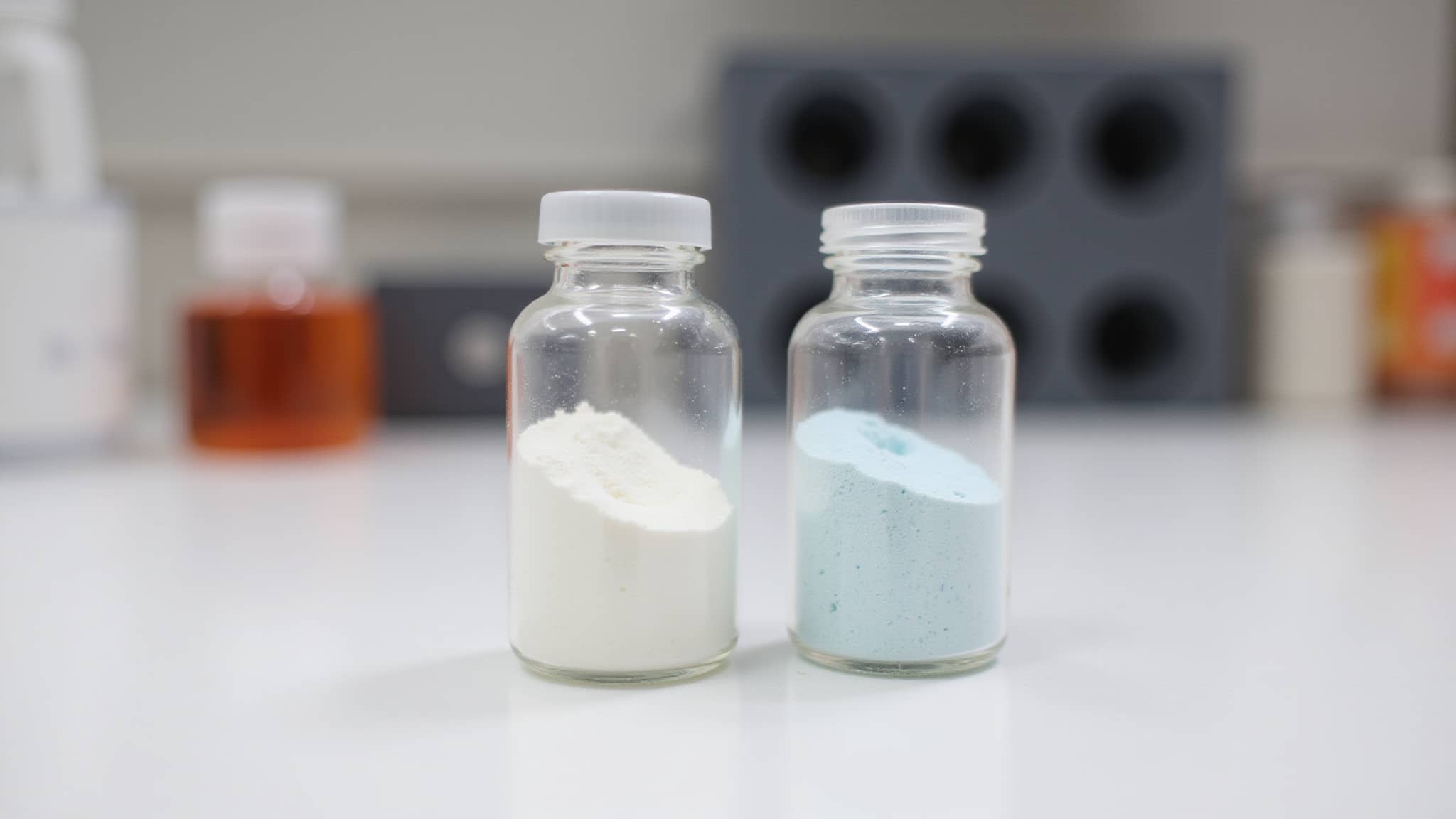
You combine peptides into blends to study how multiple compounds interact within a single experimental system. A blend co-formulates two or more distinct peptides in a fixed ratio, so one reconstitution yields all components together. This lets you assess synergistic or complementary mechanisms, probe interacting signaling pathways, and test
Key Takeaways
- Peptides are blended to examine how multiple compounds interact within the same experimental system rather than in isolation.
- Blends reveal synergistic or additive effects that may exceed the combined response of individual peptides alone.
- Combining peptides allows researchers to investigate interacting signaling pathways rather than one isolated molecular target.
- Complementary-mechanism blends let each peptide target a different node, enabling study of pathway coordination.
- A single co-formulated preparation models broader biological responses while reducing pipetting variability and handling errors.
Why are peptides combined into blends for research

Peptides are combined into blends for research to examine how multiple compounds interact in the same experimental system. You combine peptides to examine synergistic or complementary mechanisms of action that a single compound can’t reveal. If researchers are investigating interacting signaling pathways instead of one isolated target, a co-formulated system lets you model broader biological responses in a single preparation.
Blends are also used to study additive effects that may exceed the response of individual peptides alone. Here, the interaction itself is the variable being measured, so a fixed-ratio combination directly serves the experimental objective.
Keep in mind that blends aren’t automatically superior. You choose them when the combination is logical, disclosed, and documented, and when combined effects, not single-target attribution, define your study. GLOW and KLOW Research Blends can enhance your understanding of complex interactions. These blends are particularly useful in studies where multi-faceted outcomes are expected.
What is a peptide blend
A peptide blend is a co-formulated preparation that combines two or more distinct peptides in a fixed ratio within a single vial or lyophilized preparation. The components are combined before reconstitution, so one solution yields all peptides together at the intended relative concentrations. These ratios are typically defined by either mass or molar terms, depending on how the supplier specifies the formulation. Klow four-compound blend has emerged as a popular choice among researchers for its balanced composition. This unique formulation allows for enhanced efficacy in various applications, particularly in the fields of skincare and regenerative medicine.
Reconstituting the vial produces a standardized preparation that delivers each peptide simultaneously rather than separate compounds. This structure lets you study combined peptide behavior in one consistent format. The defining feature isn’t just the presence of multiple sequences, it is the fixed, pre-set relationship between them that characterizes the blend.
What research questions do peptide blends address

Peptide blends address research questions about how peptides interact in combination rather than how one peptide behaves in isolation. You can investigate synergistic or complementary mechanisms of action, examining whether combined peptides produce responses that exceed the sum of their individual effects. When your focus shifts to interacting signaling pathways instead of a single isolated target, a co-formulated system models the broader biological response being characterized. You can probe additive effects, test whether one peptide modulates another, and study the interaction itself as the primary variable. Blends suit questions where combined behavior, not individual attribution, is what matters. If you need to isolate a single peptide’s contribution, though, a defined single-sequence product remains the more interpretable choice.
What are complementary-mechanism blends
Complementary-mechanism blends are peptide combinations designed to act through distinct but related pathways, so their individual contributions converge on a broader biological response than any single component targets alone. These blends apply when the research question centerss on how interacting signaling pathways behave in tandem rather than on one isolated target. The combination is purposeful: each peptide addresses a different mechanistic node, and you study how those nodes coordinate. One such blend involves melanotan ii melanocortin receptor, which interacts with the body’s natural hormonal pathways. Understanding its mechanisms can reveal insights into pigmentation and appetite regulation.
When you design or evaluate a complementary-mechanism blend, focus on:
- Pathway relationships, confirm the peptides engage distinct but connected mechanisms.
- Ratio rationale, verify the mass or molar ratio reflects the intended interaction.
- Component documentation, ensure each peptide’s identity and purity are individually verified.
This approach keeps your interpretation grounded in mechanism.
How do single compounds and blends compare in research

Single compounds provide precise attribution, while blends capture combined, multi-pathway behavior. When you need to link a specific response to one sequence, single peptides give you the interpretability that isolated targets require. When your research question centers on interacting pathways, a blend models combined behavior that single compounds can’t replicate.
| Single Compound | Blend |
|---|---|
| Precise attribution and interpretability | Combined, multi-pathway responses |
| One sequence, one target | Fixed-ratio co-formulation |
| Cleaner mechanistic isolation | Synergistic or additive effects |
Neither format’s automatically superior. A blend’s value depends on whether the combination is logical, disclosed, and documented at the component level. You shouldn’t rely on a single overall purity figure; each peptide should be individually identified and verified for defensible conclusions.
What handling considerations apply to peptide blends
Peptide blends require careful handling because all components are reconstituted together in a single step, which concentrates handling risk. One reconstitution reduces pipetting variability and handling errors, but a single misstep affects every component simultaneously, since one peptide cannot be corrected independently.
With blends, one reconstitution means one shared fate, every component rises or falls on a single handling step.
- Verify component-level documentation. Confirm each peptide is individually identified and characterized, not just reported as one aggregate purity value.
- Maintain stoichiometric consistency. Follow the disclosed mass or molar ratio precisely, so replicates preserve the intended relative concentrations.
- Standardize storage and aliquoting. Use one documented workflow across replicates to protect batch-level consistency and minimize material loss.
These steps keep your blend interpretable, reproducible, and suitable for multi-pathway investigation.
Explore Research Peptide Blends at Holas
Combining peptides into research blends offers unique advantages that single peptides cannot deliver alone. Holas supplies laboratory-grade peptide bundles and blends, third-party tested and prepared for research applications. Browse our shop or contact us to explore your options.
Frequently Asked Questions
How Should Peptide Blend Purity Be Verified at the Component Level?
Each peptide should be verified individually rather than relying on a single blend-wide purity value. Confirming every component’s identity and purity separately keeps each sequence individually identifiable and documented. A single overall number is less informative when it masks per-component quality. Component-level verification, along with confirmation that the combination is logical, disclosed, and well documented, is what preserves attribution and interpretability.
What Documentation Should a Peptide Blend Include?
Documentation should identify each peptide’s sequence and the blend’s defined mass or molar ratio, with component-level quality data, meaning individual purity values rather than a single overall figure. Each component’s identity should be individually confirmed and documented, along with batch-level consistency records. Clear disclosure of every peptide included matters, since undocumented or unidentifiable components undermine attribution, interpretability, and reproducibility across teams.
How Is a Blend’s Ratio Expressed, by Mass or Molar?
A blend’s ratio is expressed either by mass ratio or molar ratio, since research suppliers commonly use both conventions. The two are not interchangeable, so the documentation should be checked rather than assumed. A mass ratio reflects relative weights, while a molar ratio reflects relative molecule counts. For accurate stoichiometric interpretation across replicates, the basis the supplier used should be confirmed and each component’s concentration verified accordingly.
Are Peptide Blends More Economical Than Sourcing Individual Peptides?
They often can be. A pre-combined blend typically costs less than sourcing and preparing each peptide separately, and it saves on preparation, since one reconstitution replaces multiple vial workflows and reduces material loss during handling. Even so, economy alone does not justify the format; it is worthwhile only when the combination is logical for the research and each component’s quality is individually documented.
Which Research Fields Most Commonly Use Peptide Blends?
Peptide blends appear most commonly in preclinical research involving tissue repair and wound healing, where combined effects matter, and in metabolic research and other multi-pathway studies. They are also used in regenerative biology, which often examines interacting signaling pathways, and suppliers frequently position blends for recovery-related peptide groupings. The format is most relevant when a study objective involves interacting rather than isolated targets.