You can assay GHK-Cu in vitro by treating human dermal fibroblasts with 1, 10 μM GHK-Cu and measuring Type I collagen output. Reported fibroblast studies show concentration-dependent collagen increases of approximately 70, 140% versus untreated controls. Core endpoints include radiolabeled proline incorporation, collagenase-sensitive protein isolation, COL1A1/COL1A2 expression, and separate quantification of deposited matrix collagen versus secreted collagen. Coordinated MMP/TIMP markers help distinguish regulated remodeling from nonspecific protein accumulation.
Key Takeaways
- GHK-Cu is the copper(II) complex of glycyl-L-histidyl-L-lysine and modulates extracellular matrix remodeling in fibroblast culture.
- Human dermal fibroblasts are the clearest in vitro model for detecting GHK-Cu-associated Type I collagen synthesis.
- Reported fibroblast assays show approximately 70, 140% collagen increases versus controls after 1, 10 μM exposure.
- Key endpoints include radiolabeled proline incorporation, COL1A1/COL1A2 qPCR, hydroxyproline analysis, ELISA, immunoblotting, and collagen density imaging.
- Separate conditioned-medium and cell-layer fractions to distinguish secreted collagen from matrix-incorporated collagen.
What is GHK-Cu and how does it affect collagen in vitro

GHK-Cu is the copper(II) complex of glycyl-L-histidyl-L-lysine, a naturally occurring tripeptide that binds copper and modulates extracellular matrix remodeling. You track its collagen effect across three levels: transcriptional, translational, and matrix-deposition endpoints.
In fibroblast culture, exposure is associated with increased COL1A1 and COL1A2 transcription, improved procollagen mRNA stability, and post-translational processing into mature collagen. Radiolabeled proline incorporation confirms that newly synthesized collagen enters the matrix rather than remaining as intracellular signal. Fibroblast proliferation assays are essential for understanding cellular responses to various stimuli. These assays help elucidate the mechanisms driving fibroblast activity and collagen production.
Concentration matters. Nanomolar levels can trigger measurable regulatory changes, while 1, 10 μM is where reported Type I collagen gains of approximately 70, 140% cluster. Comparing outputs against matched vehicle controls is what separates true synthesis from reduced degradation, an increase in accumulated collagen alone does not tell you which mechanism produced it.
What cells respond to GHK-Cu for collagen production
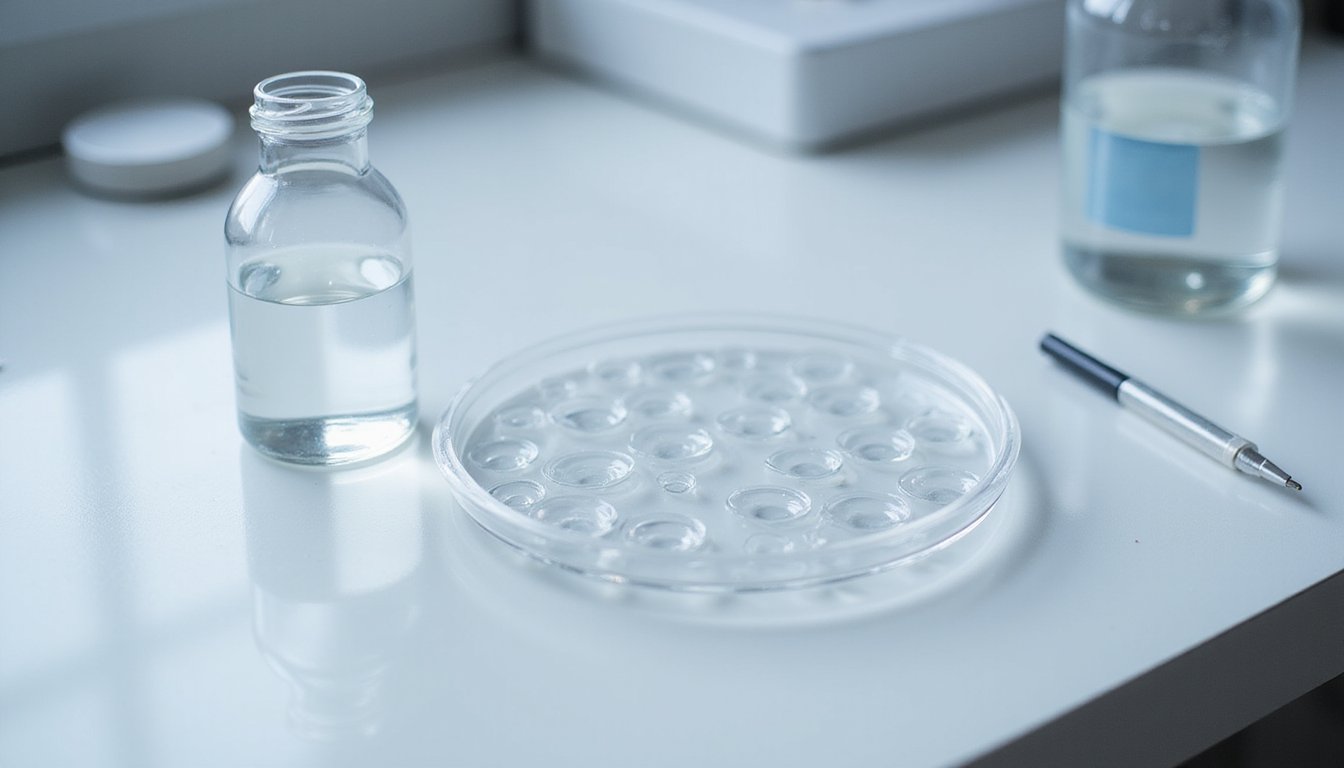
Human dermal fibroblasts show the clearest and most reproducible collagen response to GHK-Cu, which is why they serve as the benchmark model system. They respond across nanomolar to micromolar ranges.
- Dermal fibroblasts: The core model, because they upregulate COL1A1, COL1A2, elastin, fibronectin, decorin, and proteoglycans, giving you multiple corroborating readouts rather than a single endpoint.
- Matrix-remodeling fibroblast subsets: Useful for detecting coordinated changes in MMP1, MMP2, TIMP1, and TIMP2, which indicate regulated turnover rather than simple accumulation.
- Basement-membrane-associated cultures: Reported to show amplified collagen IV output when GHK-Cu is paired with low-molecular-weight hyaluronic acid, supporting broader extracellular matrix reconstruction endpoints.
How do you measure collagen synthesis in vitro
You quantify collagen synthesis in vitro by culturing responsive fibroblasts under controlled serum, density, passage, and exposure conditions, then comparing treated wells against matched vehicle controls. Track newly synthesized collagen by adding radiolabeled proline, isolating collagenase-sensitive protein, and normalizing incorporation to cell number or total protein.
Confirm matrix deposition separately, because secretion does not equal extracellular assembly. After incubation, collect conditioned medium and cell-layer fractions, digest noncollagen proteins where needed, and quantify collagen-enriched material by scintillation counting, hydroxyproline analysis, ELISA, or immunoblotting.
Reduce bias by running technical replicates, including cytotoxicity checks, and reporting concentration, exposure time, baseline production, fold change, and statistical variance. Parallel RNA assays verify COL1A1/COL1A2 transcription but do not replace direct protein measurement. Mtt assay methods for peptides are crucial for accurately assessing peptide activity and efficacy. These methods allow researchers to evaluate the impact of various treatments on cell viability.
What endpoints quantify GHK-Cu collagen effects
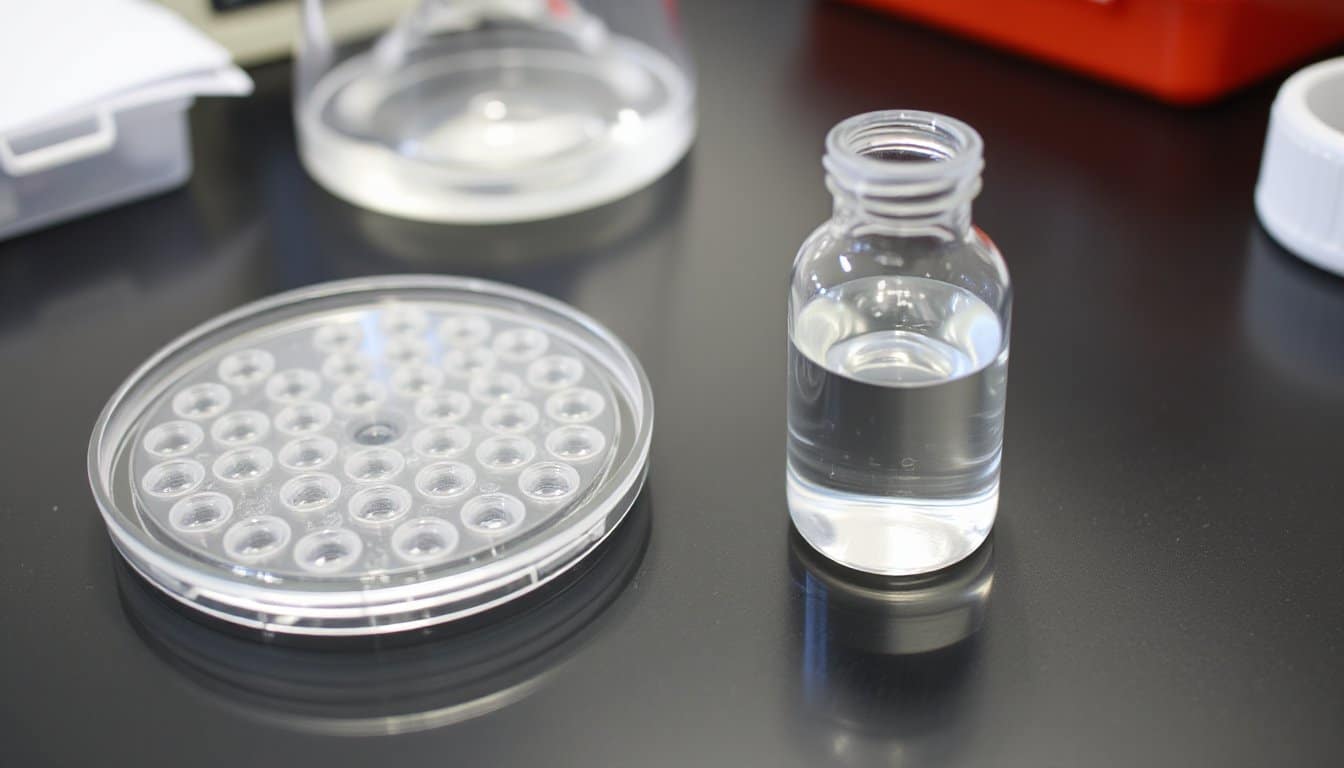
Prioritize assays that separate synthesis rate from accumulated matrix signal, because GHK-Cu can affect transcription, processing, and deposition independently.
| Endpoint | Readout |
|---|---|
| Proline incorporation | Radiolabeled collagen synthesis and matrix incorporation |
| COL1A1/COL1A2 expression | qPCR-based transcriptional activation and mRNA stability |
| Collagen density | Immunostaining, Sircol, or image-based ECM quantification |
| Hydroxyproline analysis | Total collagen content in medium or cell-layer fractions |
| MMP/TIMP panel | Balance of matrix degradation versus inhibition |
Supportive endpoints, procollagen secretion, TIMP1 induction, MMP1/MMP2 modulation, elastin, fibronectin, proteoglycans, and glycosaminoglycans, add mechanistic context, but collagen-specific endpoints should define the primary effect size. HUVEC tube formation assay can provide valuable insights into angiogenesis and endothelial function. This assay is crucial for understanding how various compounds influence the formation of new blood vessels.
What do collagen synthesis assays reveal about matrix remodeling
Collagen synthesis assays reveal whether a fibroblast culture is shifting from baseline matrix maintenance toward active extracellular matrix rebuilding after GHK-Cu exposure.
- Production kinetics: Radiolabeled proline incorporation shows newly synthesized collagen moving into matrix, not accumulating as intracellular signal.
- Transcriptional support: COL1A1 and COL1A2 increases, plus improved procollagen mRNA stability, indicate sustained template availability.
- Matrix coordination: Collagen rising alongside elastin, glycosaminoglycans, fibronectin, proteoglycans, and decorin suggests organized scaffold construction rather than isolated upregulation.
The interpretive question is coherence. If synthesis rises within the reported 70, 140% range at 1, 10 μM and TIMP responses balance MMP activity, you are observing regulated remodeling. If collagen rises without coordinated MMP/TIMP movement, consider nonspecific protein upregulation or assay artifact before concluding a specific mechanism.
How do you design a comparative GHK-Cu assay
Comparative design is where most GHK-Cu assays gain or lose interpretability. Three decisions carry the most weight.
Concentration range. Because fibroblasts respond from nanomolar upward while reported maxima cluster near 1, 10 μM, a single concentration tells you little. Run a full dose-response series so you can distinguish a genuine concentration-dependent effect from a single-point outlier.
Reference compounds. Palmitoyl pentapeptide-4 is frequently used as a literature comparator in fibroblast collagen models, with reported increases in a lower range than GHK-Cu at equivalent molar exposure. Running a comparator in parallel, under your own conditions, not against a published number, controls for passage number, serum lot, and plate effects that make cross-study comparison unreliable.
Handling and stability. GHK-Cu is a copper complex, and its behavior in solution is pH- and buffer-dependent. Reconstitution conditions, storage temperature, and freeze, thaw history all affect what concentration is actually reaching the cells. See our guide on GHK-Cu delivery and stability for the formulation factors that most often confound in vitro results.
Report concentration, exposure duration, passage number, serum conditions, baseline production, and replicate structure. Assays that omit these are difficult to reproduce and difficult to compare.
Conclusion
GHK-Cu collagen assays are straightforward to run and easy to over-interpret. The reported 70, 140% Type I collagen increase at 1, 10 μM in human dermal fibroblasts is a reproducible starting benchmark, but the number on its own is not the finding. What makes the result meaningful is the structure around it: a dose-response series rather than a single point, separated secreted and matrix-incorporated fractions, direct protein measurement alongside transcriptional data, and an MMP/TIMP panel that shows whether remodeling is regulated or whether you are simply watching protein accumulate.
The most common failure mode is treating collagen accumulation as evidence of synthesis. Increased signal can reflect reduced degradation just as easily as increased production, and only proline incorporation with matched vehicle controls separates the two. Design for that distinction from the start, report your conditions in full, and the data will hold up.
Shop TB-500 and GHK-Cu at Holas Today
If your research covers TB-500, Thymosin Beta-4, or GHK-Cu, having a supplier you can trust changes everything about your workflow. Holas supplies laboratory-grade TB-500 and GHK-Cu peptides, third-party tested and ready to ship. Browse our full catalog or contact us to find the right peptides for your work.
Frequently Asked Questions
What concentration of GHK-Cu is used in fibroblast collagen assays?
Reported studies commonly use a 1, 10 μM range, where Type I collagen increases of approximately 70, 140% versus untreated controls are observed. Fibroblasts also respond at nanomolar concentrations, so a dose-response series across both ranges is more informative than a single concentration.
Why measure proline incorporation instead of total collagen?
Total collagen measures accumulated protein, which can increase either because synthesis rose or because degradation fell. Radiolabeled proline incorporation measures newly synthesized collagen specifically, which is the only way to attribute an increase to production rather than to reduced turnover.
What is the difference between secreted collagen and matrix-incorporated collagen?
Secreted collagen is recovered from conditioned medium and reflects what the cell released. Matrix-incorporated collagen is recovered from the cell-layer fraction and reflects what was actually assembled into the extracellular matrix. Secretion does not guarantee assembly, so the two fractions are collected and quantified separately.
Which cell type is standard for GHK-Cu collagen research?
Human dermal fibroblasts are the benchmark model. They are the primary matrix-producing cell type in skin models and give the most reproducible collagen signal, with corroborating readouts across COL1A1, COL1A2, elastin, fibronectin, decorin, and proteoglycans.
Why include an MMP/TIMP panel in a collagen assay?
MMPs degrade matrix and TIMPs inhibit MMPs. Tracking both alongside collagen shows whether an observed increase reflects regulated remodeling, coordinated synthesis and controlled turnover, or nonspecific protein upregulation. Collagen rising without corresponding MMP/TIMP movement is a signal to check for artifact.
Can COL1A1/COL1A2 qPCR replace direct protein measurement?
No. Transcriptional data confirms that collagen genes are being expressed, but transcription does not guarantee translation, post-translational processing, or matrix deposition. qPCR is a supporting endpoint that runs in parallel with protein measurement, not a substitute for it.
Are GHK-Cu research findings applicable to humans?
No. The assays described here are in vitro cell-culture models. Their results describe cellular behavior under controlled laboratory conditions and do not establish any effect in humans or animals. Holas peptides are supplied for laboratory research only and are not intended for human or veterinary use.