You’re overlooking critical supplier vetting, skipping GMP compliance and ISO certification checks, then failing to request batch-specific Certificates of Analysis with complete HPLC and MS data. You’re accepting peptides below 95% purity without verifying identity, sequence accuracy, and undocumented impurities that compromise your experiments. You’re also neglecting proper labeling, storage protocols, and reconstitution procedures that introduce quantitation errors. These common errors labs make when ordering custom peptides cascade through your workflow, invalidating downstream results before you even begin analysis. You’re overlooking critical supplier vetting, skipping GMP compliance and ISO certification checks, then failing to request batch-specific Certificates of Analysis with complete HPLC and MS data. Understanding how to synthesize peptides also helps researchers evaluate whether suppliers follow proper synthesis and purification standards. You’re accepting peptides below 95% purity without verifying identity, sequence accuracy, and undocumented impurities that compromise your experiments.You’re also neglecting proper labeling, storage protocols, and reconstitution procedures that introduce quantitation errors. These common errors labs make when ordering custom peptides cascade through your workflow, invalidating downstream results before you even begin analysis. You’re overlooking critical supplier vetting, skipping GMP compliance and ISO certification checks, then failing to request batch-specific Certificates of Analysis with complete HPLC and MS data. You’re accepting peptides below 95% purity without verifying identity, sequence accuracy, and undocumented impurities that compromise your experiments. You’re also neglecting proper labeling, storage protocols, and reconstitution procedures that introduce quantitation errors. These common errors labs make when ordering custom peptides cascade through your workflow, invalidating downstream results before you even begin analysis.You’re overlooking critical supplier vetting again, skipping GMP compliance and ISO certification checks, then failing to request batch-specific Certificates of Analysis with complete HPLC and MS data. Following custom peptide production standards helps ensure suppliers maintain strict synthesis, purification, and quality verification practices. You’re accepting peptides below 95% purity without verifying identity, sequence accuracy, and undocumented impurities that compromise your experiments. You’re also neglecting proper labeling, storage protocols, and reconstitution procedures that introduce quantitation errors, allowing these mistakes to cascade through your workflow and invalidate downstream results before analysis even begins.
Skipping Supplier Vetting Before Ordering Custom Peptides
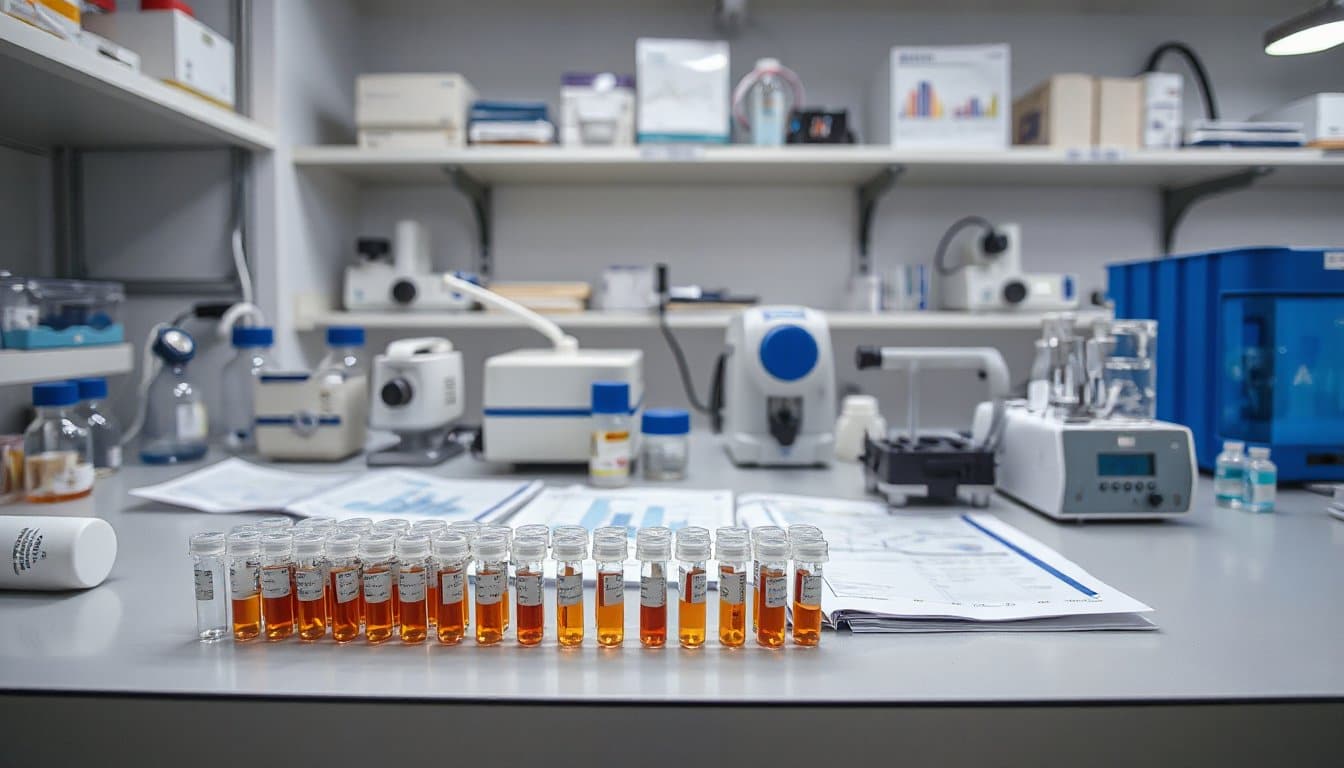
Skipping supplier vetting before ordering custom peptides exposes you to unreliable sources that compromise peptide quality, compliance, and experimental reproducibility. Verify that suppliers maintain GMP compliance, ISO certification, and state-of-the-art facilities equipped for solid-phase peptide synthesis. Request batch-specific Certificates of Analysis (CoA) with HPLC and mass spectrometry data to confirm purity above 99% and prevent mistakes ordering custom peptides. Confirm suppliers aren’t resellers by checking business registration, pharmacy licensing, and verifiable contact information. Clarify critical specifications upfront: wrong peptide sequence submission, n-terminal acetylation omitted, c-terminal amidation omitted, wrong salt form peptides, and TFA vs. acetate mismatch all derail experiments. Establish documented quality agreements defining purity requirement mismatch thresholds, analytical deliverables, missing chromatograms, and missing mass spec reports. Partner with manufacturers demonstrating years of peptide synthesis expertise and transparent production methods to guarantee reliable, reproducible materials for your research. Look for suppliers offering knowledgeable customer support that can promptly address technical inquiries about batch verification and CoA access. Ensure your selected partner has facilities designed to support high-quality peptide production and is equipped with advanced peptide synthesis and purification systems that meet GMP regulations.
Ignoring Purity Specs and CoA Verification
| Risk Factor | Consequence | Verification Step |
|---|---|---|
| coa incomplete | Reproducibility loss | Demand batch-specific HPLC/MS data |
| Low purity (<95%) | Quantitation errors | Check main peak dominance |
| Unspecified impurities | False discoveries | Review chromatograms |
| Labeling mismatch | Detection failure | Confirm identity via LC-MS |
| No lab details | Fraud risk | Reject generic formats |
Demand CoAs with ≥95% RP-HPLC purity, MS confirmation, and orthogonal tests to avoid peptide specification errors.
Botching Peptide Labeling and Documentation
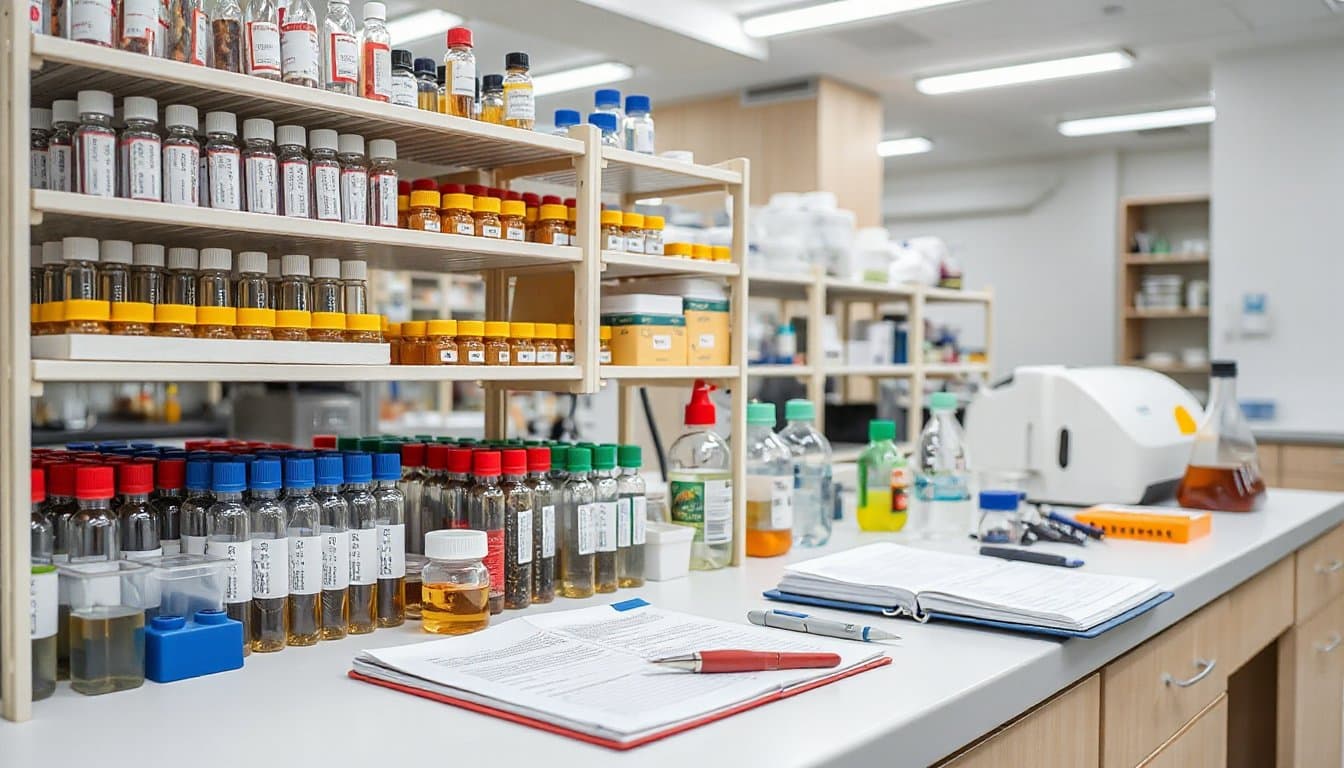
Incomplete or poorly organized labeling on peptide vials and missing documentation details create systematic vulnerabilities in your workflow, particularly when multiple researchers handle reconstituted solutions or when batches sit in storage for extended periods. Your Certificate of Analysis must include lot numbers, purity percentages, and batch consistency oversight to enable traceability. Document reconstitution dates, solvent types, final concentrations, and storage requirements ignored, omissions that cascade into dosing errors. Specify missing termini requirements and label placement errors on vials to prevent cross-contamination risks. Request lot traceability explicitly; insufficient quantity planning compounds when aliquoting needs missed go unaddressed. Establish inconsistent naming conventions protocols before ordering to clarify packaging requirements unclear and guarantee every vial carries calculated concentrations and preparer identities for reproducibility and troubleshooting downstream. Implementing custom peptide applications in research requires meticulous documentation practices to ensure reliability and reproducibility in your experiments. Every step, from synthesis to application, should be thoroughly recorded to minimize variability and enhance collaborative efforts among research teams. By adopting standardized procedures and clear labeling, researchers can mitigate the risk of misinterpretation and streamline their workflow effectively.
Mishandling Peptide Storage and Freeze-Thaw Cycles
Mishandling peptide storage and freeze-thaw cycles accelerates degradation, compromising your custom peptides’ integrity and experimental reliability. You make improper temperature selection by using frost-free freezers that introduce temperature swings, or assuming room temperature suits lyophilized peptides beyond days; store them at -20°C to -80°C, with short-term storage at 4°C limits duration to days for solutions. Avoid exposure to moisture and air, use desiccated, nitrogen-flushed containers and equilibrate cold vials to room temperature before opening. Combat light and humidity neglect with dark, airtight storage shielded from photodegradation. Limit repeated freeze-thaw cycles by aliquoting into single-use vials. Fix inadequate aliquoting practices and incorrect stability assumptions; specify temperature handling precisely when ordering to prevent deliquescence and oxidation.
Fumbling Reconstitution, Quantification, and HPLC Calibration

Fumbling reconstitution, quantification, and HPLC calibration undermines your custom peptides’ reliability, yielding inaccurate concentrations and flawed analyses. Volume miscalculations, adding 0.5 mL instead of 5 mL to lyophilized peptide, produce tenfold concentration errors propagating through downstream experiments. Unit conversion mistakes between milligrams and milliliters, compounded by overlooking peptide purity percentages, generate systematically incorrect dosing. Incompatible solvent selection compromises peptide solubility oversight; hydrophobic sequences require tailored buffers addressing pH-dependent solubility and charged residues. Inaccurate quantification occurs in 9, 33% of laboratory preparations when purity corrections are omitted. Poor HPLC calibration, inadequately cleaned equipment, missing concentration documentation, skipped verification, introduces measurement errors masking true peptide concentration. Double-checking calculations, consulting datasheet specifications, and verifying dissolution visually before analysis prevents costly experimental failures.
Shop Research Peptides at Holas Today
If you are looking for research peptides that are properly handled, securely packaged, and shipped with care, Holas has you covered. We provide laboratory-grade peptides with third-party tested purity, reliable packaging standards, and fast shipping to support your research needs. Browse our full catalog or contact us to find the right peptides for you today.
Frequently Asked Questions
What Specific Purity Level Does My Research Application Actually Require?
Match your research application to these purity levels: ≥85% for preliminary studies; >85-95% for biochemical/quantitative assays; ≥98% for NMR/crystallography; >98% for clinical trials. You assess it by classifying your workflow, screening needs lower purity, while binding kinetics or in vivo tests demand high purity to minimize interference and guarantee reproducibility.
How Should I Interpret Different Analytical Methods Listed on Certificates of Analysis?
You interpret analytical methods on COAs by matching them to test purposes: HPLC measures purity via peak integration; mass spectrometry (ESI-MS, MALDI-TOF) confirms identity by molecular weight; amino acid analysis verifies content. Compare results against your specs’ acceptance criteria, note pass/fail, method details (instrument, standards), and uncertainties for reproducibility. Verify lab accreditation and batch specifics.
Which Solvent Should I Use for Reconstituting My Custom Peptide Safely?
Choose your solvent based on the peptide’s sequence and properties: use PBS for sensitive or copper peptides like GHK-Cu; BAC water for BPC-157 or multi-dose vials; saline for TB-500 or GHRPs. For hydrophobic ones, start with 0.1-1% acetic acid. Gently swirl, don’t shake, to avoid damage, match to hydrophobicity, and refrigerate immediately.
How Often Must I Recalibrate My HPLC System Before Analyzing Peptide Batches?
Recalibrate your HPLC system every 6 months in GMP environments to guarantee accuracy for peptide batch analysis. Perform system suitability tests before each run, injecting reference standards to check retention time, peak area, and resolution. You’re risking undetected drift, compromised purity measurements, and regulatory noncompliance if you extend to 12 months without control charting justification. Maintain with fresh solvents and inspections.
What Environmental Conditions Preserve Peptide Stability During Long-Term Storage?
You’ll preserve peptide stability long-term by maintaining temperatures between -20°C and -80°C, with -80°C ideal for storage exceeding six months. Keep relative humidity below 50% using desiccant packets in tightly sealed, chemically inert containers, preferably glass or medical-grade plastics. Store peptides in darkness or amber containers to prevent photooxidative damage, especially those containing aromatic amino acids. Avoid freeze-thaw cycles by aliquoting into single-use vials. For peptides with cysteine, methionine, or tryptophan residues, use nitrogen-flushed or vacuum-sealed containers to prevent oxidation.