TB-500 is encapsulated by loading the 43-amino acid N-acetylated peptide into nanoparticles, hydrogels, or capsule-based carriers. These systems protect it from proteolysis, oxidation, adsorption, and rapid clearance while tuning exposure kinetics. Loading and release are controlled through carrier chemistry, pH, ionic strength, solvent choice, mixing rate, particle size, and hydrogel crosslink density. Typical profiles show a burst phase, then diffusion-controlled, then erosion-driven release, with kinetic models guiding comparison across formats. Tb-500 aqueous solubility testing is crucial in determining the effectiveness of various delivery systems. Understanding its solubility helps researchers design more efficient carriers.
Key Takeaways
- Encapsulated TB-500 formulations use nanoparticles, hydrogels, or capsule systems to improve peptide stability and delivery control.
- Encapsulation protects the 43-amino acid peptide from proteolysis, oxidation, hydrolysis, adsorption, and rapid biological clearance.
- Carrier selection depends on peptide charge, hydrophilicity, molecular size, target release profile, and intended delivery route.
- Formulation variables include solvent choice, pH, ionic strength, mixing rate, crosslink density, and peptide loading conditions.
- Release testing measures burst release, sustained diffusion, matrix erosion, and kinetic model fit using controlled research methods.
Encapsulated TB-500 Formulation Methods
Encapsulated TB-500 formulation methods place the 43-amino acid, N-terminally acetylated peptide into nanoparticle or hydrogel delivery systems to improve stability, reduce proteolytic degradation, and support sustained or tissue-targeted release. TB-500 encapsulation is designed by matching peptide charge, hydrophilicity, and molecular size to a carrier matrix. Polymeric nanoparticles, lipid-based particles, or crosslinked hydrogels can be assessed, with loading controlled through solvent selection, mixing rate, pH, and ionic strength. Formulation work quantifies encapsulation efficiency, particle size, polydispersity, zeta potential, and residual solvent. Peptide identity and integrity are verified after processing with LC-MS or RP-HPLC. These delivery systems provide defined experimental platforms for comparing release kinetics, matrix compatibility, and storage stability under controlled research conditions.
Why the peptide is encapsulated in a formulation
Encapsulating TB-500 protects the peptide from degradation, extends exposure time, and directs release toward the intended experimental site. Encapsulated peptides are used when free TB-500 would face proteolysis, dilution, rapid clearance, or poor residence at the target tissue. Encapsulation isolates the 43-amino acid molecule from reactive biological media while preserving measurable recovery for stability studies. The effectiveness of the TB-500 reconstitution protocol relies heavily on precise handling and optimal storage conditions. Following the established processes ensures maximum bioactivity and minimizes potential degradation.
It also provides control over exposure kinetics. Instead of a short systemic half-life driving repeated administration in preclinical models, encapsulation allows evaluation of prolonged release, reduced peak-trough variation, and localized concentration maintenance. These formulation methods support degradation-kinetic testing, tissue-specific delivery experiments, and oral-bioavailability screening with TB-500 analogs. Encapsulation is not approval-enabling; it is a tool for answering controlled research questions.
Encapsulation technologies used for peptides
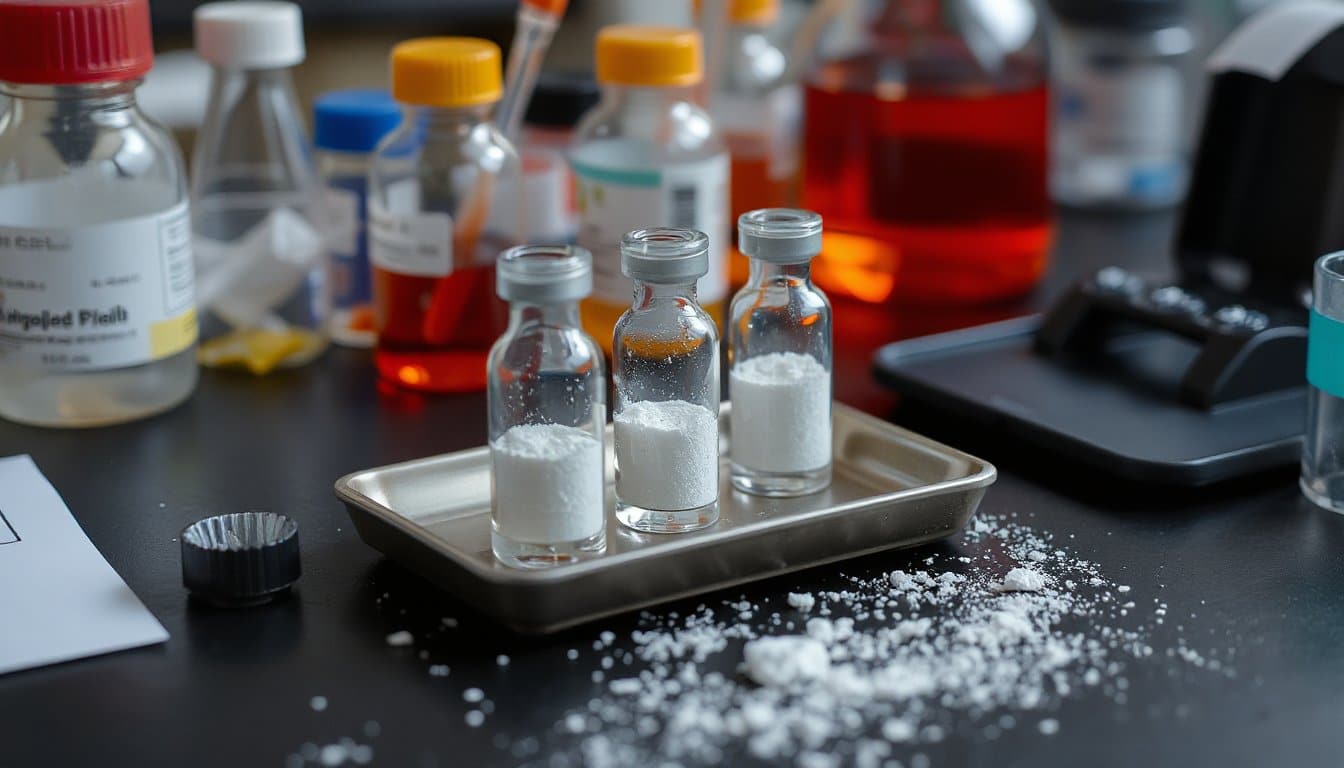
Peptide encapsulation technologies include nanoparticles, hydrogels, and capsule-based systems. Nanoparticles suit dispersed, injectable carriers. Hydrogels suit localized depot release. Capsule-based systems suit testing of stability, degradation kinetics, or oral-delivery behavior.
Nanoparticles suit injectable dispersion, hydrogels suit localized depot release, and capsule systems suit stability or oral-delivery testing.
Nanoparticle matrices are selected when defined particle size, surface charge, loading efficiency, and release curves are the priority. Hydrogel networks suit hydrated, tissue-contacting matrices with tunable crosslink density and diffusion pathways. Capsule formats apply when modeling gastrointestinal exposure, shell dissolution, or analog screening.
- Nanoscale spheres carry peptide through a buffered suspension.
- A soft hydrogel depot seats against target tissue.
- Coated capsules move through staged dissolution media.
Each system is then characterized by encapsulation efficiency, peptide recovery, sterility constraints, residual solvent, and reproducible batch morphology under validated analytical methods.
How encapsulation protects TB-500
Encapsulation protects TB-500 by physically separating the peptide from enzymes, reactive interfaces, and rapid clearance pathways. Placing TB-500 inside polymer matrices, lipid phases, or hydrated hydrogel networks reduces direct exposure to proteases. It also limits adsorption to container surfaces, extracellular proteins, and cell membranes that can unfold or sequester peptides. Encapsulation can shield labile residues from oxidation, hydrolysis, and pH microenvironments that accelerate structural damage. Controlling local water activity, ionic strength, and peptide mobility lowers aggregation and deamidation risks during storage or handling. For a 4,963 Da peptide, this barrier function matters because small peptides diffuse quickly and clear rapidly. Encapsulation does not eliminate degradation; it shifts exposure conditions and slows destabilizing interactions.
Release profiles for the encapsulated peptide
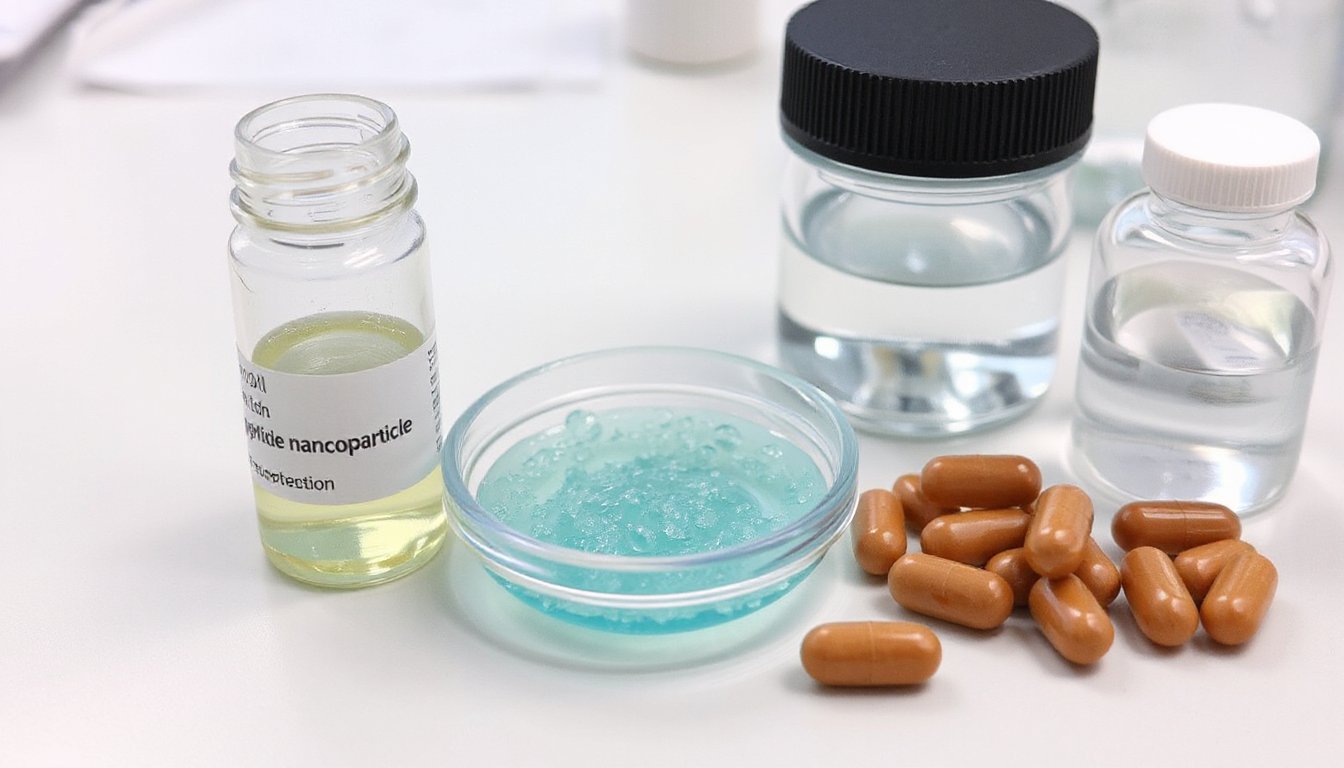
Release profiles for an encapsulated peptide such as TB-500 typically include an initial burst phase followed by diffusion- or degradation-controlled release. Burst release is quantified from surface-associated peptide, then sustained liberation is tracked as water penetrates nanoparticles or hydrogels. Release should not be treated as a single value. The phases are modeled separately using cumulative percent release, sampling intervals, and peptide integrity assays.
| Phase | Driver | Readout |
|---|---|---|
| Burst | Surface desorption | 0 to 24 h release |
| Sustained | Matrix diffusion | Slope stability |
| Terminal | Carrier erosion | Residual peptide |
Formulations are compared by fitting zero-order, Higuchi, or Korsmeyer-Peppas models. Because TB-500 has a short systemic half-life, profiles that reduce burst loss while maintaining measurable, nondegraded peptide release over days are generally prioritized. Thymosin beta-4 lyophilization stability is crucial for ensuring the peptide retains its functionality over extended periods. Using advanced formulation techniques can enhance the stability and solubility of TB-500 in different conditions.
How encapsulation improves ocular delivery in studies
In ocular delivery models, encapsulation increases residence time on the eye surface, shields TB-500 analogs from tear enzymes, and controls release across the corneal or conjunctival interface. Rapid lacrimal washout is reduced when the carrier adheres to mucin and hydrates into a thin depot. Proteolytic exposure is also limited, so more intact peptide remains near epithelial targets.
- A clear microfilm holds droplets against the blinking cornea.
- A hydrated matrix meters peptide like a calibrated valve.
- A protective shell buffers dilution within the tear layer.
Particle size, surface charge, and swelling behavior can be tuned to balance comfort with retention. Rather than repeated bolus exposure, the aim is localized, sustained contact for ocular tissue-targeting studies.
Formulations under investigation
TB-500 and thymosin beta-4 analogs are being tested in nanoparticles, hydrogels, mucoadhesive matrices, and other controlled-release systems designed to slow degradation and localize exposure. Each platform is evaluated by payload protection, release kinetics, tissue residence, and compatibility with a 4,963 Da acetylated peptide. Nanoparticles may shield the sequence from proteases and tune diffusion through polymer composition, surface charge, and particle size. Hydrogels add depot behavior, allowing control of hydration, mesh density, and erosion rate. Mucoadhesive matrices target epithelial surfaces, where contact time limits absorption. Oral capsule concepts focus on analog stability and bioavailability rather than proven systemic delivery for standard TB-500. These formats remain investigational, with evidence still mainly preclinical.
Conclusion
Encapsulating TB-500 in nanoparticles, hydrogels, or capsule systems turns a fast-clearing peptide into a defined experimental platform, protecting it from proteolysis and adsorption while shaping burst, diffusion, and erosion-driven release. The value lies in control: carrier chemistry, loading conditions, and crosslink density can be tuned and then compared through encapsulation efficiency, integrity assays, and kinetic modeling. These formats remain investigational and mainly preclinical, so their role is to answer controlled research questions rather than to serve as finished delivery products.
Every one of these measurements begins with the peptide that goes into the carrier. Variable purity, inconsistent salt form, or degraded starting material distorts encapsulation efficiency, release curves, and integrity checks in ways no formulation refinement can fully correct. Sourcing research-grade TB-500 with verified purity and third-party-confirmed batch quality gives formulation work a stable foundation and keeps release and stability results comparable across experiments.
Shop Lab-Verified TB-500 at Holas Today
When your research calls for TB-500 with verified quality, secure lyophilized packaging, and reliable stability, Holas delivers exactly what your lab requires. Each batch of our TB-500 peptide is third-party tested for purity and consistency, prepared under laboratory-grade standards, and shipped with care. Browse our shop or contact us to source the right peptides for your work.
Frequently Asked Questions
What does encapsulation efficiency measure, and why does it matter for TB-500?
Encapsulation efficiency is the fraction of the added peptide that ends up inside the carrier rather than lost during processing, so it directly sets how much TB-500 a formulation actually delivers. Low efficiency wastes material and can skew release measurements, since surface-bound peptide behaves differently from truly encapsulated peptide. It is measured by separating free from carrier-bound peptide and quantifying each by RP-HPLC or LC-MS.
Why is the initial burst phase treated separately from sustained release?
The burst comes largely from peptide adsorbed on or near the carrier surface, which releases quickly and by a different mechanism than the peptide held within the matrix. Lumping it into an overall rate would obscure both the surface loss and the true sustained-release behavior. Modeling the phases separately, and choosing formulations that limit burst, gives a clearer picture of how much intact peptide is delivered over time.
How is peptide integrity confirmed after the encapsulation process?
Processing steps such as solvent exposure, sonication, and mixing can degrade or modify a peptide, so recovery of intact TB-500 is verified rather than assumed. RP-HPLC and LC-MS confirm that the released material matches the original sequence and mass without new degradation peaks. This check separates a genuine release profile from an artifact of processing damage.
Which release-kinetic model is appropriate for an encapsulated peptide?
The choice depends on the release mechanism: zero-order fits a constant-rate depot, the Higuchi model fits diffusion from a matrix, and Korsmeyer-Peppas helps distinguish diffusion from erosion-driven release. Rather than assuming one model, formulations are fitted against several and compared by goodness of fit. The best-fitting model then indicates whether diffusion, erosion, or a combination governs release.
Why does the short half-life of TB-500 make encapsulation useful in research?
A small peptide that clears quickly offers only a brief exposure window, which complicates studies that need sustained or localized presence. Encapsulation extends and shapes that window, reducing peak-trough swings and maintaining measurable concentration at a target site. This lets researchers study prolonged-exposure conditions that free peptide in solution cannot easily reproduce.