TB-500 research in the cardiac space centers on rodent and large-animal models, where its parent molecule thymosin beta-4 has been studied for effects on infarct size, cardiomyocyte survival, and angiogenesis after experimentally induced ischemic injury. The reported mechanisms run from actin regulation through ILK/Akt survival signaling and VEGF-associated vascular growth, though the functional results across studies are more mixed than headline summaries suggest, and large human trials remain early-stage. The sections below summarize what the preclinical literature has found, where the evidence is strong, and where it is still open. TB-500 is sold for laboratory research use only and is not for human or veterinary use. Peptide recovery research overview indicates a growing interest in the therapeutic potential of peptides like TB-500. Studies are increasingly focused on their mechanisms of action and efficacy in promoting recovery in various injury models.
What Is TB-500 and How Does It Regulate Actin?
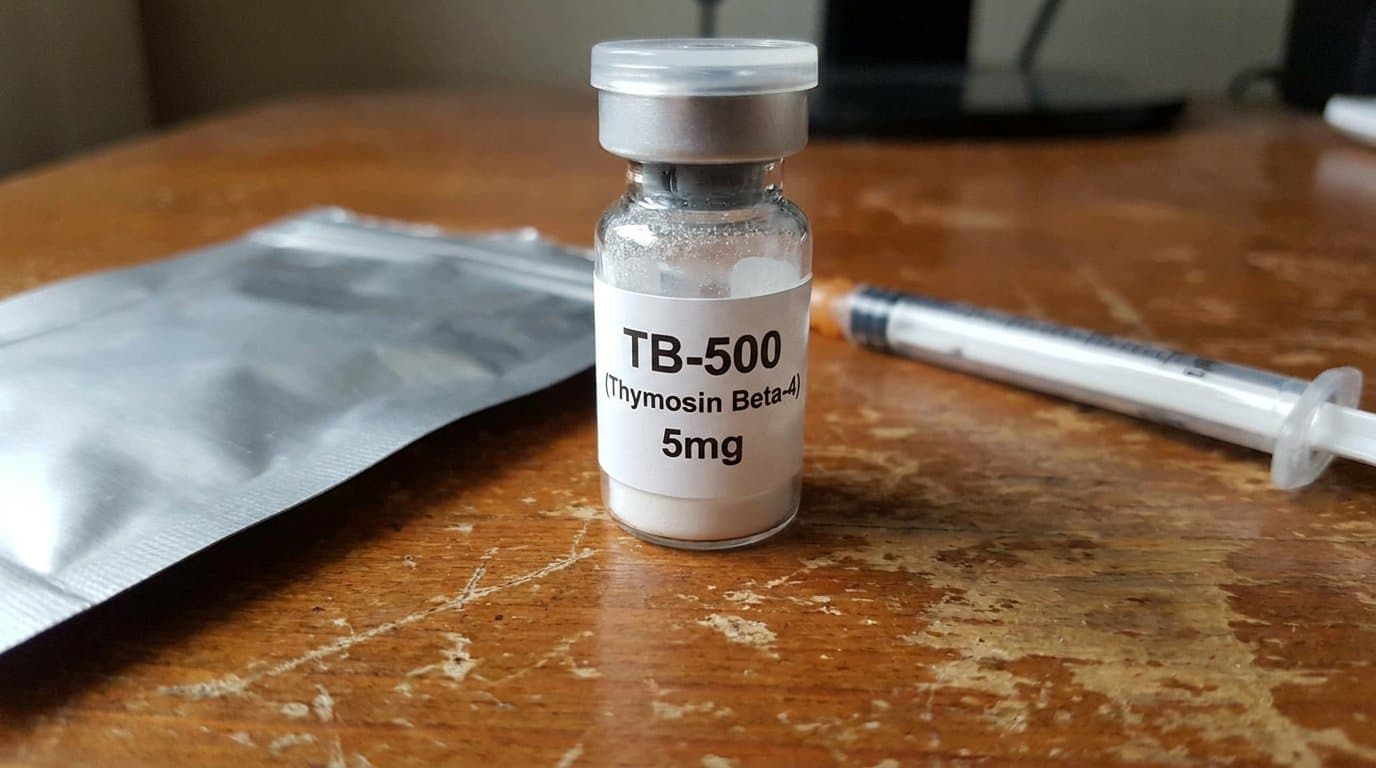
TB-500 is a synthetic peptide derived from thymosin beta-4, a 43-amino-acid protein found naturally in human and animal cells. It is primarily characterized by its actin-sequestering function, binding G-actin monomers to regulate filament assembly and cytoskeletal dynamics. Tb-500 and bpc-157 in research have gained attention for their potential therapeutic applications. Recent studies suggest that bpc-157 may enhance healing and recovery processes, particularly in soft tissue injuries. Thymosin beta 4 fragment has also been studied for its role in promoting cell migration and tissue repair. Researchers are exploring its potential in treating chronic wounds and enhancing recovery from injuries.
TB-500 actin regulation operates by modulating the G-actin/F-actin balance, increasing cellular motility during repair. This mechanism drives endothelial cell migration, fibroblast trafficking, and progenitor cell activation, processes central to angiogenesis and vascular remodeling studies. The peptide also shows resistance to proteolytic degradation and retains biological activity across a range of pH conditions, which contributes to its handling consistency in experimental settings. In the published cardiac models, actin-mediated cytoskeletal reorganization underpins the observed downstream effects, including Akt-associated survival signaling and focal-adhesion pathway activation. Most mechanistic evidence originates from thymosin beta-4 studies rather than from direct TB-500 clinical trials, a distinction that runs through this entire research area.
How TB-500’s Actin Regulation Relates to Cardiac Tissue Repair
Actin sequestration not only reorganizes the cytoskeleton in isolation. In cardiac tissue models, it is linked to cell migration, survival signaling, and structural remodeling studied in post-injury repair. In TB-500 cardiac research, G-actin binding shifts cytoskeletal dynamics in ways associated with the movement of cells into damaged border zones after coronary ligation.
This mechanism is reported to activate integrin-linked kinase, driving Akt-mediated survival signaling that reduces cell death under ischemic stress. This ILK/Akt pathway is central to TB-500 ischemia research, where it connects actin regulation to cardiomyocyte survival. Studies also document reactivation of embryonic-like repair programs in adult myocardium, a notable finding given the adult heart’s limited regenerative capacity. Animal studies have reported improvements in left ventricular function alongside reduced fibrosis in some models, though, as noted below, these functional results are not uniform across studies.
How TB-500 Relates to Angiogenesis Through VEGF Pathways

In TB-500’s role in angiogenesis, VEGF pathway activity is among the mechanisms most often described in preclinical models. The peptide is associated with endothelial cell sprouting through PI3K/Akt and ERK signaling, the same cascades VEGF engages to initiate capillary formation and vessel remodeling in ischemic tissue. These signals are linked to endothelial proliferation and directional migration, the two cellular processes required to establish new vasculature. TB-500 is also reported to upregulate matrix metalloproteinases, which degrade extracellular-matrix barriers so endothelial cells can extend into surrounding tissue.
VEGF Pathway Activity
Among the signaling mechanisms linked to TB-500‘s pro-angiogenic effects, VEGF upregulation is the most consistently reported in the preclinical literature. Across thymosin beta-4 angiogenesis studies, increased VEGF expression has been observed in both cell and animal models, associated with endothelial cell migration, proliferation, and microvascular network formation.
It is worth noting that this pattern is not universal in cardiac models specifically. Some systemic-dosing studies in rats reduced infarct size and improved hemodynamics while not showing a significant increase in peri-infarct blood-vessel density, which suggests that observed functional effects in those models were not solely perfusion-driven. TB-500’s reported interaction with HIF-1 alpha can amplify VEGF expression under hypoxic conditions, while concurrent MMP upregulation supports the matrix remodeling that new vessel penetration requires.
Endothelial Cell Sprouting
Where VEGF signaling provides the foundation for new vessel growth, endothelial cell sprouting is the step that translates that signal into capillary structures. In thymosin beta-4 cardiac research, TB-500 is linked to the cellular behaviors driving this process, tip-cell migration, filopodia extension, and stalk-cell proliferation, through its core actin-remodeling mechanism.
| Sprouting Mechanism | Reported TB-500-Linked Effect |
|---|---|
| Tip-cell migration | Enhanced endothelial motility via cytoskeletal remodeling |
| Matrix attachment | Increased integrin expression supporting sprout extension |
| Progenitor recruitment | Endothelial progenitor cell mobilization in injury models |
| VEGF association | Upregulated expression across multiple cell types |
In TB-500 cardiomyocyte research, these sprouting effects are studied in relation to post-infarction capillary density, with some models linking increased sprouting to improved perfusion and preservation of viable myocardium.
TB-500 and Cardiac Ischemia: Infarct and Survival Data
Moving from mechanism to direct cardiac-ischemia models, the preclinical data cluster around three measured outcomes: infarct size, cardiomyocyte survival in peri-infarct tissue, and contractile performance. Rodent MI studies have repeatedly reported that early thymosin beta-4 dosing reduces infarct size and preserves border-zone myocytes, which is one of the more reproducible findings across designs. The translation into functional gains is less consistent: some studies report improved hemodynamic parameters while chamber volumes and ejection fraction are not significantly changed, and the magnitude of each outcome depends heavily on dosing timing and duration in the model.
Infarct Size
Because TB-500‘s parent molecule thymosin beta-4 modulates actin dynamics and integrin-linked kinase signaling in cardiac tissue, it has drawn attention in preclinical myocardial infarction research for its reported capacity to reduce infarct size after experimentally induced ischemic injury. Review-level summaries describe Tβ4 as reducing infarct volume and preserving cardiac function in preclinical models, attributing this in part to decreased infarct size alongside antifibrotic and proangiogenic activity.
The mechanisms associated with this reduction include three processes:
- Activation of integrin-linked kinase signaling, which promotes cardiomyocyte survival during ischemic remodeling
- Neovascularization in peri-infarct zones in some models, though not all studies shows increased vessel density
- Enhanced cardiomyocyte migration supported by cytoskeletal regulation through actin binding
The strongest infarct-size data derive from full-length thymosin beta-4 studies in rodent and large-animal models, not from direct human TB-500 efficacy trials.
Myocyte Survival
Beyond infarct size, thymosin beta-4 has been linked to improved cardiomyocyte survival after experimentally induced ischemia, a finding spanning in vitro hypoxia assays and in vivo coronary ligation models. The primary mechanism described is activation of integrin-linked kinase (ILK), which drives Akt survival signaling in stressed cardiac cells, repeatedly cited as the key anti-apoptotic route by which Tβ4 preserves viable myocardium during acute injury. Mouse coronary-ligation studies have reported enhanced myocyte survival alongside functional recovery, while embryonic myocardial-tissue experiments documented increased cell migration and survival after Tβ4 exposure. These survival effects are described as part of a broader regenerative program including angiogenesis, progenitor-cell activation, and anti-inflammatory modulation.
Contractile Performance
Myocyte survival after ischemic injury matters functionally only if it preserves contractile performance, which is where the preclinical picture becomes more variable. In one rat permanent-MI model, systemic thymosin beta-4 dosing improved measurable hemodynamic parameters, with long-term administration producing clearer functional preservation than short-term exposure, while ejection fraction and chamber volumes in that same study were not significantly improved. Reported findings from this line of work include:
- Improved hemodynamic indices such as LVEDP and dP/dtmax in treated animals in some designs
- Reduced infarct size associated with long-term dosing
- Reduced plasma ANP, reflecting decreased cardiac wall stress
Notably, functional benefit in these models sometimes occurred without large angiogenesis changes, suggesting contractile effects were not solely perfusion-dependent. Other mouse studies found no significant ejection-fraction or infarct-size difference, underscoring that results vary by model and design.
Can TB-500 Activate Cardiac Progenitor Cells?
How does a peptide originally characterized for its actin-sequestering function reach the center of cardiac regeneration research? Tβ4 has been reported to activate endogenous cardiac progenitor cells through ILK-dependent signaling that intersects with Wnt pathways, reactivating embryonic-like developmental programs in adult heart tissue. In some mouse models, Tβ4 increased epicardial progenitor populations across the epicardium and coronary structures, in certain cases even without hypoxic injury.
| Finding | Detail |
|---|---|
| Progenitor type activated | Epicardial and resident cardiac progenitors |
| Key signaling mechanism | ILK-dependent, Wnt pathway intersection |
| Survival pathways upregulated | Akt and ERK1/2 |
| Activation without injury | Observed in some models |
Human evidence remains limited, with reported clinical work focused on safety and biomarkers rather than definitive regeneration outcomes. Some progenitor findings are also model-dependent, and not every study attributes functional improvement to stem-cell recruitment.
How TB-500 Wound-Healing Data Informs Cardiac Repair Research

Although TB-500 research is often categorized by tissue type, skin wounds, corneal injuries, cardiac ischemia, the underlying repair biology shares mechanistic overlap. In animal wound models, topical Tβ4 has been reported to increase re-epithelialization versus saline controls, with concurrent increases in collagen deposition and vascular ingrowth. These findings inform cardiac-repair hypotheses because post-infarction recovery depends on the same core processes:
- Angiogenesis, restoring perfusion to ischemic tissue through new vessel formation
- Cell migration, recruiting reparative cells to the injury site via actin-dependent motility
- Extracellular-matrix remodeling, rebuilding structural integrity in damaged tissue zones
Dermal trials reporting faster healing in human pressure and stasis ulcers provide a proof-of-concept that Tβ4’s repair signaling extends beyond a single tissue context, which is part of why the wound-healing literature is treated as relevant background for cardiac models.
TB-500 Human Trials: What Exists and What’s Missing
Despite the preclinical data in animal ischemia models, human clinical evidence for thymosin beta-4 in cardiac applications remains thin and early-stage. Early cardiology work studying thymosin beta-4 in acute myocardial infarction has examined safety and functional measures, but no large randomized controlled trials have established efficacy for cardiac repair, and robust human data showing reductions in infarct size, heart-failure hospitalization, or mortality are not yet available.
Registered human cardiac studies of thymosin beta-4 include NCT05984134, a multicenter randomized, double-blind, placebo-controlled Phase IIb study of recombinant human Tβ4 in 90 acute-MI patients using 0.5 and 1.0 μg/kg intravenous dosing with cardiac-MRI endpoints, and the earlier RGN-352 STEMI trial (NCT01311518). These studies emphasize safety, tolerability, and exploratory cardiovascular endpoints rather than definitive proof of clinical benefit, which keeps TB-500 firmly in the investigational category. Research into TB500 benefits for tissue repair highlights its potential in accelerating healing processes. Additionally, preclinical studies suggest that thymosin beta-4 may play a role in reducing scar formation after injury
Why TB-500 Dosing and Long-Term Safety Remain Unclear in the Research
The limited human-trial environment leaves fundamental questions about dosing and safety without clear answers. There are no established dosing standards, no consensus route of administration, and no standardized study duration for TB-500 across the research. Three unresolved areas define this uncertainty: CJC-1295 research applications have gained attention due to their potential in enhancing growth hormone release. Researchers are exploring how CJC-1295 can improve muscle growth and recovery in various populations.
- Dose-response characterization, where reported animal regimens vary widely and no controlled data establish a definitive exposure level
- Chronic-exposure profiling, where available data reflect short-term exposure and longer-term effects are uncharacterized
- Angiogenic-risk questions, where TB-500’s pro-vascular mechanism raises theoretical concerns in models with occult malignancy, which no study has yet quantified
Until larger studies report longer follow-up, the research cannot reliably separate therapeutic potential from unquantified risk, which is one reason TB-500 is handled strictly as a research compound. Combining BPC-157 and TB-500 may lead to enhanced healing effects, but comprehensive understanding requires more extensive clinical evaluations. Potential users should approach these compounds with caution until further evidence is available.
Shop Research Peptides at Holas Today
If you are looking for laboratory-grade peptides that are properly handled, securely packaged, and shipped with care, Holas has you covered. We provide research-grade peptides with third-party tested purity, reliable packaging standards, and fast shipping to support your research needs. Browse our full catalog or contact us to find the right materials for your research today. All products are for laboratory research use only and are not for human or veterinary use.
Frequently Asked Questions
How Does TB-500 Compare to Other Peptides in Cardiac Research Models?
In the preclinical cardiac literature, TB-500 and its parent thymosin beta-4 are studied mainly for actin-mediated cell migration, angiogenesis, and cardiomyocyte survival via Akt and ERK1/2 signaling. This is mechanistically distinct from BPC-157, which is studied more for cytoprotection and vascular stabilization, and from thymosin alpha-1, which centers on immune modulation rather than myocardial repair. Direct head-to-head cardiac comparisons between these peptides are limited, so they are generally evaluated as separate mechanistic tools rather than ranked against one another.
What Research Models Are Used to Study TB-500 in Cardiac Contexts?
The cardiac literature relies heavily on rodent myocardial-infarction models, typically coronary ligation in rats and mice, alongside in vitro hypoxia and endothelial-progenitor-cell assays, with some large-animal work for translational context. Endpoints commonly include infarct size by histology or imaging, ejection fraction and hemodynamic indices by echocardiography or cardiac MRI, and tissue-level markers of fibrosis and vessel density. The variation in model and endpoint is part of why reported functional results differ between studies.
Does TB-500 Affect Cardiac Fibrosis in Preclinical Models?
In preclinical models, thymosin beta-4 and its degradation products have been reported to have antifibrotic effects, including reduced fibroblast activation and decreased collagen deposition after experimentally induced injury, with some studies also noting reduced TGF-β-associated signaling. Review-level summaries note antifibrotic activity in both cardiac and non-cardiac fibrosis models. As with the functional cardiac endpoints, these effects are documented preclinically and are not yet confirmed by high-quality human trials.
Why Does Compound Purity Matter in TB-500 Cardiac Research?
Because TB-500 studies measure sensitive endpoints such as infarct size, vessel density, and survival signaling, the identity and purity of the test material directly affect whether results are interpretable and reproducible. Impurities or inconsistent batch composition can confound delicate angiogenesis and survival readouts, which is why lyophilized material with verified purity, confirmed identity, and batch-level consistency is important for this kind of work. A certificate of analysis confirming purity by HPLC and correct peptide identity supports reproducibility across experiments.
What Handling and Storage Conditions Suit TB-500 in the Lab?
TB-500 is supplied lyophilized, which is its most stable form, and is generally kept cold, sealed, and protected from light, with frozen storage for long-term retention. Once reconstituted, solution is refrigerated and aliquoted into single-use volumes to avoid repeated freeze-thaw cycling, a common cause of peptide degradation. Thymosin beta-4-derived peptides are noted for reasonable stability and proteolytic resistance, but consistent cold-chain handling still matters for preserving activity across a study.