Choose SPPS for efficient, automated synthesis of complex custom peptides in your academic research, as it simplifies purification, boosts yields, and incorporates modified amino acids with scalability under GMP conditions. Opt for LPPS when you need high-purity short sequences or hybrids for peptides over 40 amino acids, leveraging solution-phase versatility. Refine purity beyond 99% via optimized HPLC, and add cyclization, fluorescent labels, or PEGylation for tailored applications. This approach to custom peptide synthesis for academic and laboratory research lets you match methods precisely to your project. Choose SPPS for efficient, automated synthesis of complex custom peptides in your academic research, as it simplifies purification, boosts yields, and incorporates modified amino acids with scalability under GMP conditions. Understanding what is custom peptide synthesis helps clarify why SPPS is widely used for building precise amino-acid sequences for research applications. Opt for LPPS when you need high-purity short sequences or hybrids for peptides over 40 amino acids, leveraging solution-phase versatility. Refine purity beyond 99% via optimized HPLC, and add cyclization, fluorescent labels, or PEGylation for tailored applications. This approach to custom peptide synthesis for academic and laboratory research lets you match methods precisely to your project.
Which Peptide Synthesis Method Fits Your Project?
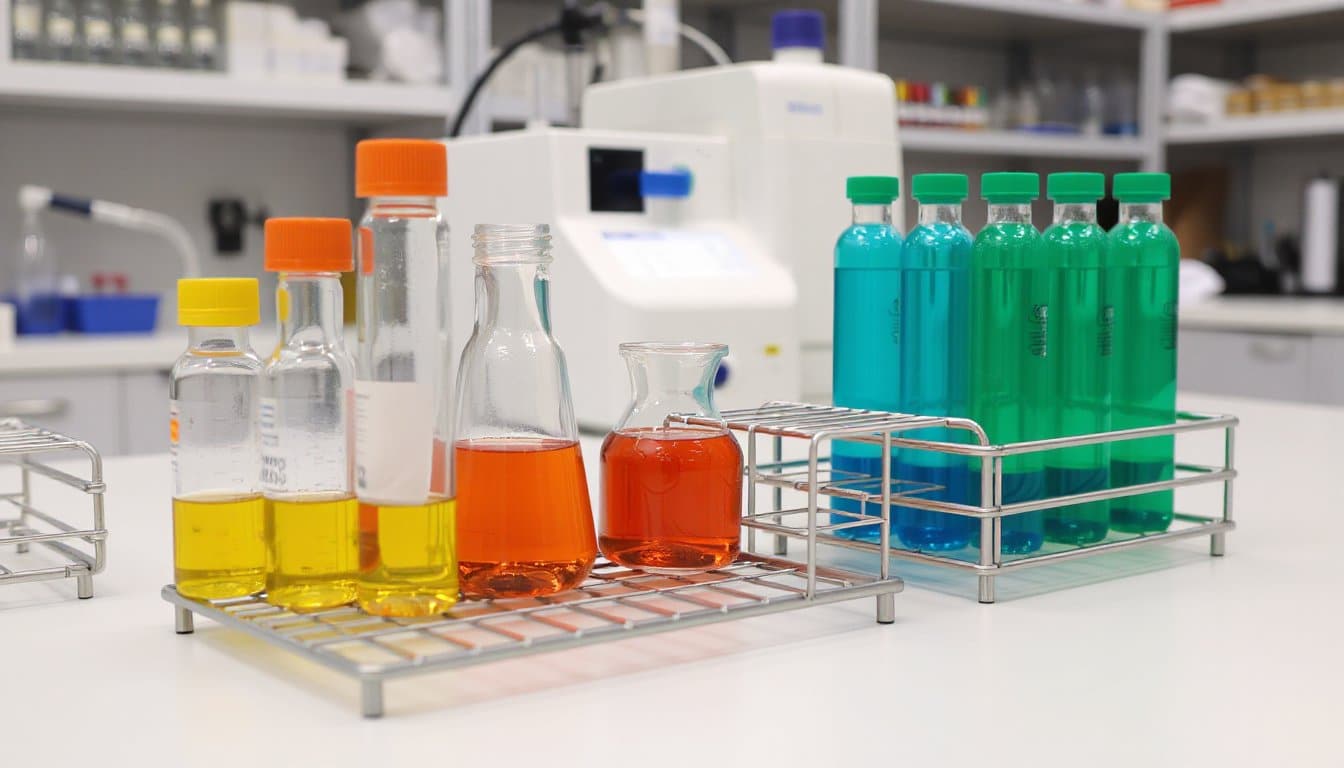
Selecting the ideal peptide synthesis method for your project hinges on factors like peptide length, complexity, required peptide modifications, yield, cost, and scale. For custom peptide synthesis, evaluate Liquid-Phase Peptide Synthesis (LPPS) if you need versatility for any length, though it demands intensive peptide purification. Choose Fragment-Based Peptide Synthesis for long or difficult sequences, assembling SPPS or LPPS fragments via ligation despite higher costs. Opt for Enzymatic Peptide Synthesis when you require high specificity under mild conditions for peptides over 150 aa, balancing enzyme expenses with peptide quality documentation. Solid-Phase Peptide Synthesis (SPPS), developed by Merrifield in 1963, stands as the most widely used method due to its efficiency and automation. For short peptides, Solution-Phase Synthesis offers high purity and low cost, while Fermentation and Biosynthesis Methods suit low-cost microbial products like ε-polylysine, limited by purification challenges. SPPS builds peptides from the C-terminal amino acid attached to an insoluble resin support. SPPS commonly employs the Fmoc method or Boc method, distinguished by their protecting groups. Match methods to your peptide purification and documentation needs for reproducible results.
SPPS Advantages for Complex Custom Peptides
Solid-Phase Peptide Synthesis (SPPS) excels for complex custom peptides, as you easily wash away excess reagents to simplify purification and drive reactions to completion for higher yields. You skip intermediate isolation, shortening timelines versus solution-phase methods while achieving high purity through simple washes. SPPS’s automation compatibility gives you precise reagent control, minimizing errors for consistent custom peptide manufacturing and enabling high-throughput contract peptide synthesis. You incorporate modified, non-natural amino acids into peptide sequence design for linear peptides up to ~50 residues, with tethered chains inhibiting side reactions. Scalability supports seamless gram-scale peptide production from milligrams to kilograms under GMP conditions, maintaining purity for reproducible complex custom peptides.
LPPS and Hybrids for Short or Long Sequences
You select LPPS for short sequences because it delivers high coupling efficiency, intermediate purification, and lower costs through solution-based reactions without solid supports. For long peptides, you choose hybrids that combine LPPS with SPPS via fragment condensation, enabling scalable assembly of sequences over 40 amino acids while minimizing side reactions. Evaluate method selection criteria such as sequence length, yield requirements, and scalability to ascertain alignment with your custom synthesis needs.
LPPS Short Sequences
Liquid-phase peptide synthesis (LPPS) excels at producing short peptide sequences through solution-based reactions that prioritize purity and yield over automation. When you use peptide synthesis services for custom peptides for research, LPPS offers distinct advantages for dipeptides and tripeptides. Intermediate purification after each coupling step guarantees higher crude purity than solid-phase alternatives, making LPPS ideal for made-to-order peptides requiring stringent quality standards. You’ll benefit from flexible reaction conditions that accommodate hydrophobic peptides prone to aggregation, eliminating resin-related solvation issues. The method supports incorporation of unusual amino acids and modifications through solution-phase chemistry, enabling RP-HPLC purification between steps. For short sequences in regulated environments demanding GMP-grade material, LPPS delivers superior sequence fidelity and analytical verification essential for reproducible research applications.
Hybrids Long Peptides
| Technique | Key Advantage | Limitation |
|---|---|---|
| CEPS | >150 aa, no cysteine | Ligation sites needed |
| NCL | 30-150 aa joins | Desulfurization required |
| TAPS | Soluble assembly | Solubility >10-15 aa |
| LPPS Hybrids | Scalable, flexible | Lower yields, purification |
Method Selection Criteria
Selecting the ideal synthesis method for your custom peptide hinges on length, sequence complexity, production scale, purification needs, and timeline. When you order custom peptides from peptide manufacturing usa providers, evaluate SPPS for short sequences (<50 AA) in academic lab peptide synthesis, it’s automatable, rapid, and cost-effective for lab-scale research institution peptides. Choose LPPS for long sequences via fragment condensation, enabling intermediate purification, non-standard amino acids, and large-scale QA/QC peptide manufacturing. Factor hydrophobic challenges or modifications favoring LPPS, while SPPS suits high-throughput. Hybrids optimize tough cases. This guarantees reproducibility in your receptor studies and enzymatic assays. Selecting the ideal synthesis method for your custom peptide hinges on length, sequence complexity, production scale, purification needs, and timeline. When you order custom peptides from peptide manufacturing USA providers, evaluate SPPS for short sequences (<50 AA) in academic lab peptide synthesis, it’s automatable, rapid, and cost-effective for lab-scale research institution peptides. Being aware of common mistakes in peptide ordering also helps researchers verify specifications, purity requirements, and supplier documentation before production begins.Choose LPPS for long sequences via fragment condensation, enabling intermediate purification, non-standard amino acids, and large-scale QA/QC peptide manufacturing. Factor hydrophobic challenges or modifications favoring LPPS, while SPPS suits high-throughput workflows. Hybrid approaches can optimize difficult sequences, guaranteeing reproducibility in receptor studies and enzymatic assays.
Purification Essentials: HPLC for High Purity
Key aspects include:
- Method optimization parameters: You adjust temperature to 25°C, gradient steepness (0.25, 2.0% acetonitrile/min), and flow rates for resolution.
- Scale-up techniques: You increase particle size to 10 µm, inject 2000 µl crude samples, yielding 1.4 mg pure peptide per run.
- Alternative HPLC modes: You employ size-exclusion, ion-exchange, or HILIC/CEX for hydrophilic peptides.
- Practical outcomes and purity: You achieve >99% from 68% crude via pooled fractions, handling 200 mg loads.
Custom Modifications: Cycles, Labels, and More
Custom modifications elevate peptide functionality for advanced research applications. You can enhance structural stability through cyclization techniques, including disulfide bridge peptides that employ mono, double, or triple configurations to constrain conformation and improve biological activity. Stapled peptides utilize covalent cross-linking between non-adjacent amino acids, enhancing cell penetration and conformational stability for specialized assays.
Fluorescently labeled peptides enable real-time detection and tracking. You’ll find FITC and TAMRA conjugations suitable for multiplex detection, while FRET dye pairs allow monitoring of peptide interactions. Biotinylated peptides facilitate streptavidin-based detection systems and affinity purification workflows commonly employed in laboratory research.
Peptide conjugation strategies extend functionality further. Phosphorylation at serine and tyrosine residues mimics natural post-translational modifications for cell signaling studies. PEGylation enhances solubility and reduces immunogenicity, while lipid modifications like myristoylation support membrane association and cellular localization. These modifications align peptide composition with your experimental parameters and instrumentation requirements.
Peptide Applications in Lab Research
You produce biotechnology sequence production through custom peptide synthesis to enable precise control over amino acid compositions for your experimental designs. In drug discovery, you generate peptide inhibitors that target enzymes and receptors, supporting binding assays and kinetics studies as confirmed by analytical methods like HPLC and MS. For high-throughput library screening, you create peptide libraries to accelerate identification of functional sequences in receptor interactions and cell-based viability assays.
Biotechnology Sequence Production
- N-terminal acetylation and C-terminal amidation modify peptide termini for enhanced stability and biological activity in assays
- Peptide labeling with fluorescent dyes, biotin, or isotopes enables detection and tracking in binding experiments
- Research-use-only peptides undergo rigorous analytical verification including HPLC purity analysis and mass spectrometry confirmation
- Peptide production scale ranges from 0.1 mg to kilogram quantities, accommodating discovery through clinical manufacturing
Your institution gains access to hybrid fragment condensation and chemo-enzymatic synthesis for sequences exceeding 50 amino acids, ensuring high-purity complex peptides. These approaches minimize impurities while supporting non-natural amino acids, cyclic structures, and post-translational modifications aligned with your experimental parameters and analytical instrumentation requirements.
Drug Discovery Inhibitors
Peptides serve as potent drug discovery inhibitors in lab research, targeting undruggable proteins via PROTACs that recruit ubiquitin ligases for precise degradation. You design milligram peptide synthesis for PROTACs, PPI inhibitors, and cyclic peptides, ordering tailored sequences that outperform small molecules in specificity and versatility. Employ phage display and AI tools like AlphaFold to identify high-affinity ligands, then validate with mass spectrometry confirmation and peptide purity specifications exceeding 95%. Address peptide solubility considerations and peptide stability profile through N-alkylation, cyclization, or D-amino acids, ensuring cell permeability and reproducibility. You advance inhibitors for cancer, HIV, and RAS via custom synthesis aligned to your assays.
High-Throughput Library Screening
- Screen 92,918 peptides fused to transmembrane domains via FACS for GLP-1R activators, ensuring LC-MS peptide ID verification.
- Rank affinities in phagemid libraries using normalized selection, backed by peptide analytical report.
- Identify CRP binders from D-amino acid OBOC libraries with arginine-aided MALDI-TOF, validated by SPR.
- Deploy HTS microplates or PHERAstar for ultralarge libraries, with certificate of analysis (COA) and contamination controls guaranteeing reproducibility.
Order Custom Peptides With Full Validation
You receive lyophilized peptides with peptide portioning options, batch logs, and a certificate of analysis including MS spectra, HPLC chromatograms, and molecular weight confirmation. Turnaround scheduling aligns with complexity: 10-12 days for >80% purity at $6.50/amino acid, up to 18 days for >95% at $11.50/amino acid. No-risk policies guarantee re-synthesis if unmet.
Shop Research Peptides at Holas Today
If you are looking for research peptides that are properly handled, securely packaged, and shipped with care, Holas has you covered. We provide laboratory-grade peptides with third-party tested purity, reliable packaging standards, and fast shipping to support your research needs. Browse our full catalog or contact us to find the right peptides for you today.
Frequently Asked Questions
What Is the Typical Turnaround Time for Custom Peptide Synthesis Orders?
Typical turnaround times for custom peptide synthesis vary based on peptide specifications. Standard turnaround ranges from 3-7 days for regular, unmodified peptides, while purified peptides under 30 amino acids typically require 2-3 weeks. You can estimate timelines using the formula: peptide length/10 + 1 week. Expedited options include overnight service for crude peptides of 10 amino acids or less. Longer sequences, higher purity requirements, complex modifications, and quality control testing extend timelines substantially.
How Do I Choose Between SPPS and LPPS for My Specific Research Needs?
Choose SPPS for peptides up to 50 amino acids, mg-to-gram scales, automation, and rapid high-throughput needs; you’ll get ≥95% purity and speed for receptor studies or SAR workflows. Opt for LPPS if you need short (2-6) or complex sequences with non-standard amino acids, kilogram scales, or fragment assembly to minimize side reactions and costs. Match your peptide length, complexity, and production scale to these strengths for best results.
What Purity Levels Are Standard for Custom Peptides, and Can I Request Higher Purity?
Standard purity levels range from >70% for high-throughput screening to >95% for quantitative studies like NMR and receptor-ligand binding. You can request higher purity up to >98% or greater for specialized applications including in vivo studies, clinical trials, and structure-activity relationship research. Purity determination uses RP-HPLC at 210-220nm UV absorbance, with longer peptides requiring more optimization to achieve desired specifications.
Are There Additional Costs for Incorporating Non-Standard Amino Acids or Modifications?
Yes, you incur additional costs for non-standard amino acids and modifications. All D-amino acids cost you $65 each; N-Methyl amino acids (Ala, Phe, Leu, Ile, Val, Gly, Met) cost $495. Common modifications include acetylation at $18, phosphorylation (Tyr, Ser, Thr) at $150, biotin-(Ahx) at $63, and palmitoyl at $65. Cyclic bridges add $250 for the first; complex cases require quotes.
How Is the Quality and Identity of My Synthesized Peptide Verified Before Delivery?
We verify your synthesized peptide’s identity via mass spectrometry (comparing theoretical to observed molecular weight with high-resolution ESI-QTof or MALDI) and MS/MS sequencing. Purity is assessed by HPLC or LC-MS (>97% typically). We quantify content through amino acid analysis, check counterions, water (Karl Fischer), and perform visual, enantiomeric, and endotoxin tests before delivery.