Lyophilize your peptides for shipping to boost stability, enable ambient transit for days or weeks, and skip cold chains while tolerating temp fluctuations. Protect them with light-shielding amber vials, desiccants, airtight seals, and oxygen barriers like vacuum-sealing. Refrigerate short-term at 2-8°C to curb hydrolysis; freeze long-term at -20°C or -80°C for years of integrity. Aliquot to dodge freeze-thaw damage, letting vials warm before opening. Understanding shipping and storage considerations for peptide shipments reveals sequence-specific tips and pro protocols ahead. Lyophilize your peptides for shipping to boost stability, enable ambient transit for days or weeks, and skip cold chains while tolerating temperature fluctuations. Protect them with light-shielding amber vials, desiccants, airtight seals, and oxygen barriers like vacuum-sealing, practices that support the impact of peptides in scientific studies by preserving sample quality. Refrigerate short-term at 2, 8 °C to curb hydrolysis; freeze long-term at −20 °C or −80 °C for years of integrity. Aliquot to avoid freeze-thaw damage, letting vials warm before opening. Understanding shipping and storage considerations for peptide shipments reveals sequence-specific tips and professional protocols ahead.
Why Lyophilize Peptides for Shipping
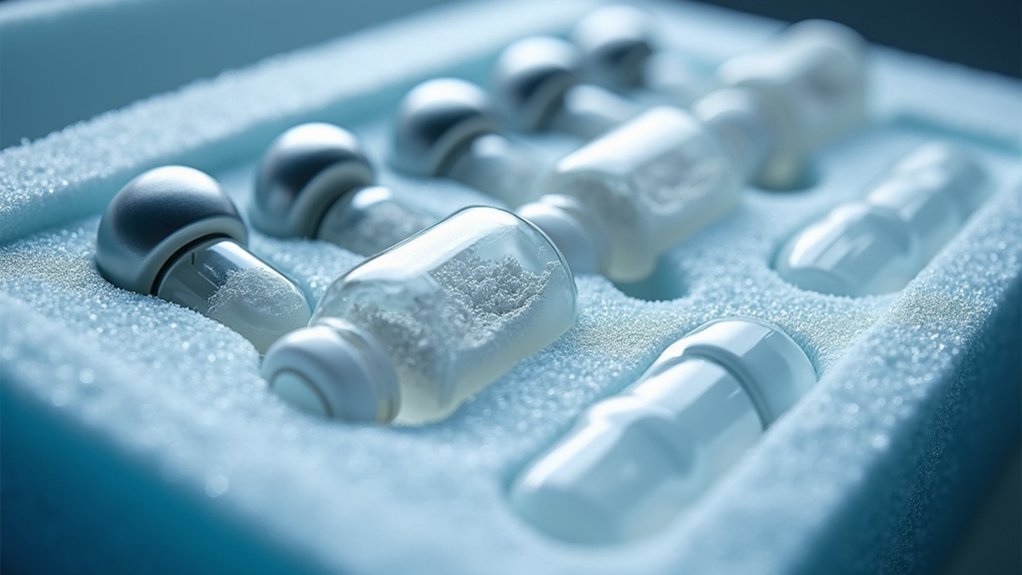
Lyophilization enhances peptide stability for shipping by removing water, which slows degradation reactions and prevents chemical breakdown pathways that plague liquid forms. You’ll benefit from lyophilized peptide shipping because properly freeze-dried peptides remain stable at ambient temperature for days to weeks during transit, eliminating cold-chain logistics. This format tolerates short-term temperature fluctuations without losing potency, simplifying handling compared to temperature-sensitive liquid solutions. Primary drying removes 95% of the water under vacuum, ensuring the resulting powder’s exceptional stability. As a key advantage, lyophilization provides longer shelf life for peptides. For peptide storage considerations, lyophilized formats enable room-temperature stability initially, though long-term freezer storage planning at, 20°C extends shelf life considerably. Lyophilized peptides can remain stable for several months to years when stored with proper protection from moisture and light. You can incorporate desiccant packaging and appropriate sealing to prevent moisture reabsorption. The dry powder format also supports oxidation prevention through reduced water exposure and enables precise weighing for reproducible dosing across your research protocols.
Shield Peptides From Light, Moisture, Oxygen
While lyophilized peptides withstand ambient temperatures during shipment, they’re far from invulnerable once they arrive at your lab. Shield them from light sensitivity protection using amber vials, opaque containers, or aluminum foil wraps, especially if they contain tryptophan or methionine. Implement moisture control storage with desiccants, airtight seals, and humidity below 50% to prevent hydrolysis. Apply oxygen exclusion techniques via vacuum-sealing, inert-gas flushing, or borosilicate glass to block oxidation. Choose container material selection like PTFE-lined glass for superior barriers over plastic. Use cold-pack materials and insulation packaging for transit, then store at -20°C or -80°C in dark, dry conditions to maintain stability.
Refrigerate Short-Term at 2-8°C
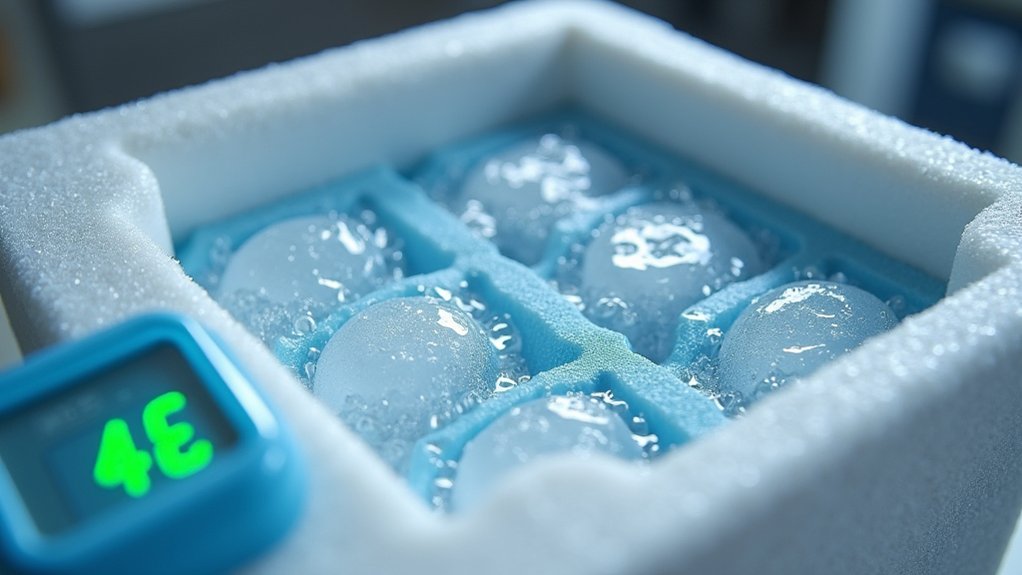
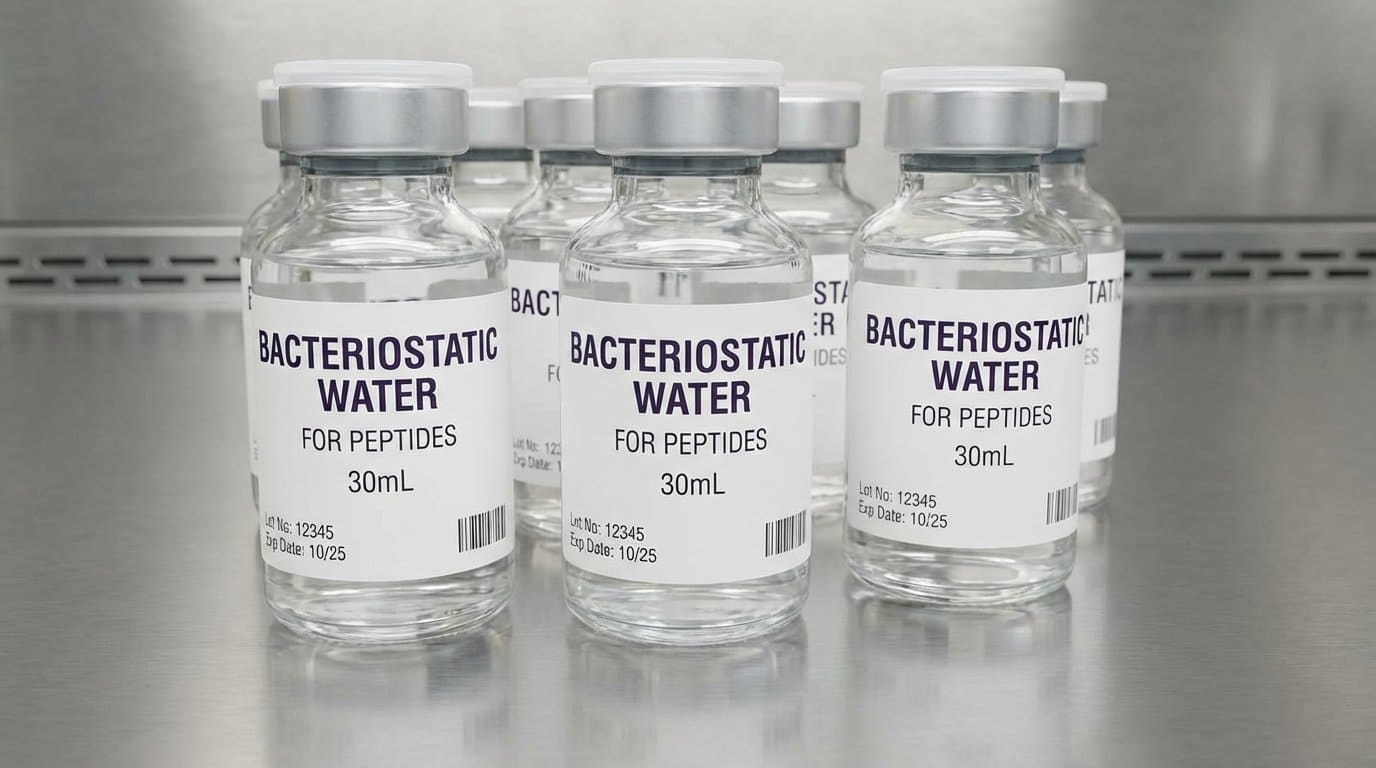
For lyophilized peptides, this range cuts hydrolysis risk in desiccated form and supports refrigerated storage limits of several weeks at room temperature if needed, though you’ll prefer refrigeration. Reconstituted peptides in storage compatibility buffers stay viable up to 4 weeks with bacteriostatic water, but avoid freezing cycles that degrade them. Tightly cap vials, aliquot to limit exposure, and dodge fluctuations for lot integrity. For lyophilized peptides, this range cuts hydrolysis risk in desiccated form and supports refrigerated storage limits of several weeks at room temperature if needed, though refrigeration is preferred. Reconstituted peptides in storage-compatible buffers stay viable up to 4 weeks with bacteriostatic water, but avoid freezing cycles that degrade them. Tightly cap vials, aliquot to limit exposure, and maintain stable temperatures for lot integrity, key considerations in a Research peptides vs clinical peptides comparison when evaluating handling and stability practices.
Freeze Long-Term at -20°C or -80°C
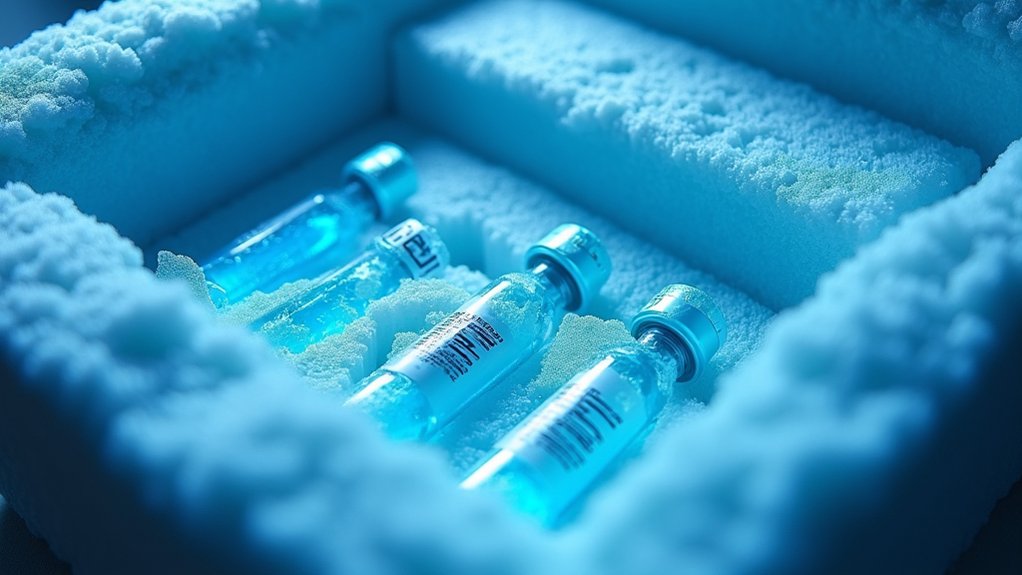
Laboratories store lyophilized peptide vials at, 20°C or, 80°C for long-term preservation, as this removes water to slow hydrolysis and microbial growth. You’ll achieve >95% integrity retention for 1, 2 years at, 20°C, with stability extending several years when you protect them from moisture and light. Use airtight amber glass or opaque vials with desiccants, low-adsorption plastics, and frost-resistant labeling for peptide shipping and chain-of-custody receiving. Opt for , 80°C storage in stainless steel cryo-cases for ultra-long-term needs, minimizing freeze-thaw cycles via aliquoting. Sequence-dependent vulnerabilities, like oxidation in methionine or cysteine, demand documentation and vigilant planning to maintain lot integrity across studies.
Aliquot to Avoid Freeze-Thaw Damage
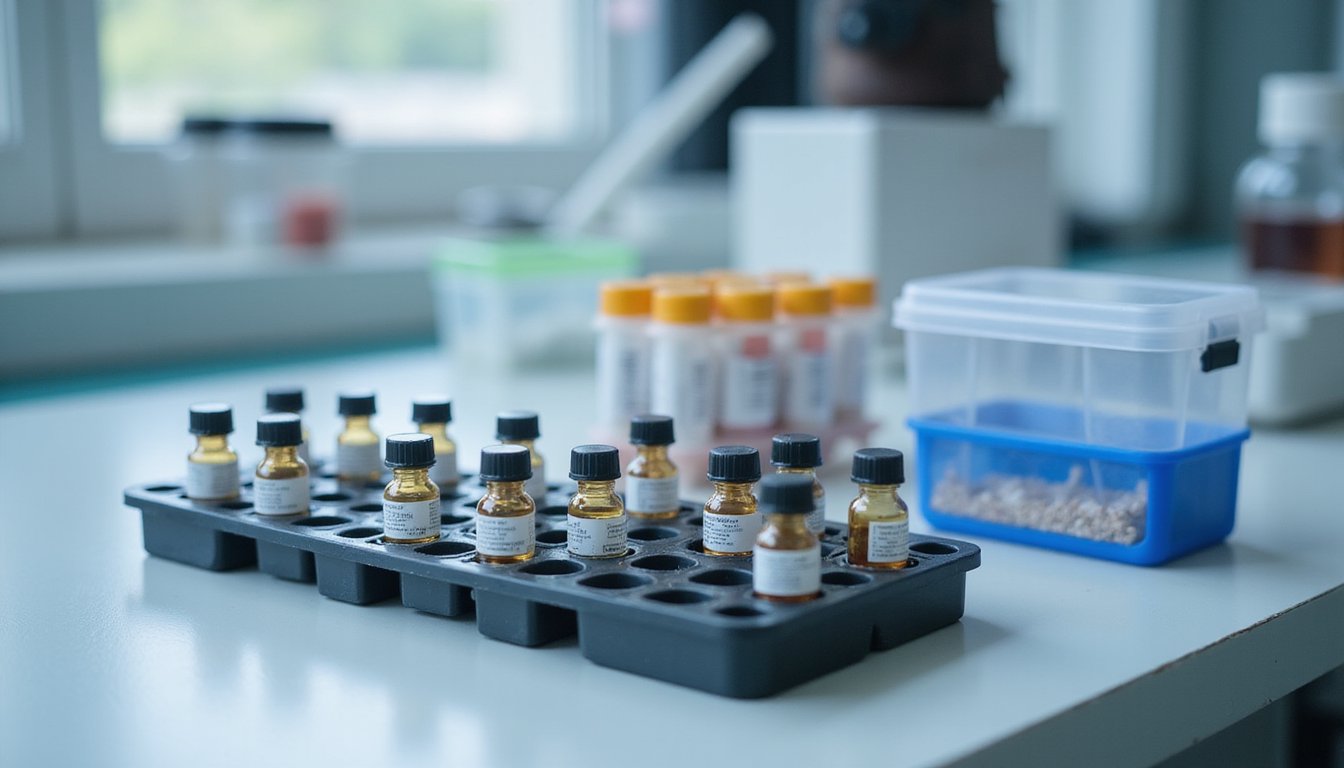
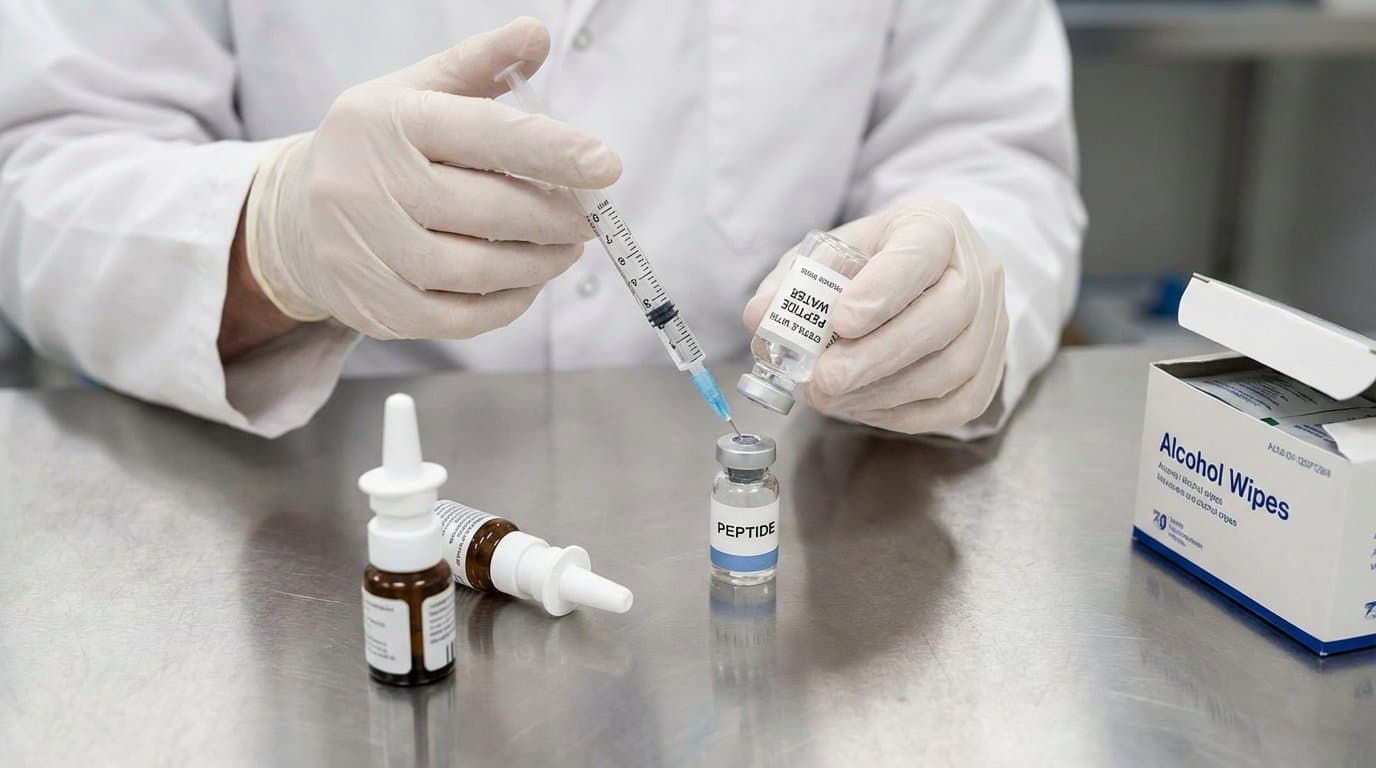
For handling aliquoted peptides, let frozen vials reach room temperature before opening, avoid frost-free freezers, and use vacuum-sealed or nitrogen-flushed containers in a desiccator. Implement degradation monitoring through visual inspections and periodic testing; aliquoted solutions stay stable up to 30 days at 4°C or longer at -20°C/-80°C with one freeze. For handling aliquoted peptides, let frozen vials reach room temperature before opening, avoid frost-free freezers, and use vacuum-sealed or nitrogen-flushed containers in a desiccator. These precautions support proper storage peptide practices that help preserve stability and reduce degradation risks. Implement degradation monitoring through visual inspections and periodic testing; aliquoted solutions stay stable up to 30 days at 4 °C or longer at −20 °C/−80 °C with only one freeze.
Shop Research Peptides at Holas Today
If you are looking for research peptides that are properly handled, securely packaged, and shipped with care, Holas has you covered. We provide laboratory-grade peptides with third-party tested purity, reliable packaging standards, and fast shipping to support your research needs. Browse our full catalog or contact us to find the right peptides for you today.
Frequently Asked Questions
What Packaging Materials Protect Peptides Best?
Borosilicate glass vials protect your peptides best with their chemical inertness and low adsorption. You seal them under vacuum or inert gas like nitrogen to block oxygen and moisture, pairing with desiccants. For light-sensitive ones, choose amber glass; use insulated mailers with cold packs for shipping. Avoid plastics unless high-grade to prevent interactions.
How Long Do Peptides Last at Room Temperature?
Lyophilized peptides last several days to weeks at room temperature if you keep them sealed, dry, and protected from light and moisture. You limit risks by using desiccants and avoiding sequences with Cys, Met, or Trp, which degrade faster. Transfer them to 4°C or colder immediately after arrival for best stability; prolonged exposure accelerates oxidation and hydrolysis. Aliquot to prevent freeze-thaw cycles.
Which Peptides Need Anaerobic Storage Conditions?
You’ll need anaerobic storage for peptides containing Cys, Met, or Trp residues, as these amino acids are prone to oxidation. Peptides with Asn and Gln also benefit from anaerobic conditions due to limited shelf lives. Store these sensitive sequences in vacuum-sealed or nitrogen-flushed containers at, 20°C to, 80°C. Without inert gas protection, oxidative degradation accelerates, dramatically reducing stability and compromising your experimental results.
Can Peptides Ship in Plastic or Glass Vials?
You can ship peptides in both plastic and glass vials when properly sealed. Use vacuum-sealed glass vials with butyl rubber seals and amber tint for light-sensitive peptides, or plastic vials to prevent breakage. Pair them with Cool Shield mailers, desiccants, and vapor barriers to withstand multi-day transit and humidity.
Should Peptides Go in Checked Luggage?
Don’t put peptides in checked luggage. Carry them in your carry-on to avoid temperature extremes and pressure changes that damage injectables. Use an insulated cooler or vial case with frozen gel packs, declare them at TSA screening for medical use. Keep vials upright in padded organizers and separate sharps. This maintains stability for research or medical needs.