GHK-Cu presents two formulation challenges that shape how it is studied: it is a hydrophilic, copper-bound tripeptide that penetrates the lipophilic outer skin barrier poorly, and its copper center makes it more sensitive to pH, light, and oxidation than peptides without a coordinated metal. Both factors determine whether intact, active compound reaches the experimental endpoint. The sections below cover the molecular properties that limit delivery, the carrier systems studied to improve it, and the storage conditions that preserve copper chelation. GHK-Cu is sold for laboratory research use only and is not for human or veterinary use.
GHK-Cu Molecular Properties That Shape Delivery
GHK-Cu is the copper(II) complex of the tripeptide glycyl-L-histidyl-L-lysine, with a molecular weight of approximately 340 Da. That sits below the roughly 500 Da limit generally considered the upper bound for passive diffusion through the stratum corneum, yet molecular weight alone does not predict delivery. The peptide is hydrophilic with limited permeation through the stratum corneum, and its charge and hydrophilicity, rather than its size, are the limiting factors for movement through intact skin.
Two further properties shape how GHK-Cu behaves in formulation work. First, the molecule is susceptible to proteolytic enzymes, which makes sustained delivery in bioactive concentrations a formulation problem rather than a simple loading problem. Second, the copper center is the source of the complex’s characteristic activity, so any condition that disrupts the peptide-copper coordination changes the compound being studied. These properties make GHK-Cu a recurring subject in delivery and stability research rather than a straightforward topical or solution-phase ingredient.
Why Delivery Route Affects What Can Be Measured
Delivery route determines how much intact peptide-copper complex reaches the tissue or compartment where an endpoint is measured, which makes route a primary variable in study design rather than an afterthought. The outermost skin layer, the stratum corneum, is the principal rate-limiting barrier for any topically applied hydrophilic molecule, and GHK-Cu is no exception.
The table below summarizes the formulation-relevant contrasts that the literature draws between surface application and barrier-bypassing delivery, framed as study-design considerations.
| Parameter | Surface application | Barrier-bypassing delivery |
|---|---|---|
| Tissue access | Epidermis and upper dermis | Deeper or systemic compartments |
| Rate-limiting factor | Stratum corneum permeability | Compound stability and sterility |
| Concentration profile | Low, locally sustained | Higher initially, more distributed |
| Typical endpoints | Local skin and matrix measures | Distributed or systemic measures |
Comparative pharmacokinetic data across formats remain limited for GHK-Cu, so route-specific exposure is best treated as a confounder when interpreting results across studies rather than as a settled potency comparison.
The Stratum Corneum Barrier and Passive Diffusion

The stratum corneum, the outermost layer of keratinized cells, is the primary gatekeeper for hydrophilic compounds. Penetration through it is not simply a function of being under a molecular-weight threshold. Permeability scales with lipophilicity, charge, and molecular geometry, and a hydrophilic, positively influenced molecule like GHK-Cu interacts with the skin barrier differently from a small lipophilic one.
Studies of GHK and its copper complexes using stratum corneum membrane models found that GHK-Cu can migrate through the membrane model, but the same work notes the peptide’s susceptibility to proteolytic enzymes as a constraint on sustained delivery. This is why much of the formulation literature focuses less on whether the molecule can cross the barrier at all and more on how to protect it and maintain bioactive concentrations once it does.
Carrier Systems Studied to Improve Delivery
Because free GHK-Cu penetrates the lipophilic barrier poorly, much of the delivery research centers on carrier systems. The most studied is liposomal encapsulation. As a hydrophilic peptide, GHK-Cu can be entrapped within the aqueous core of a liposome, and reviews report that liposomes may improve its permeation. Encapsulation is also studied as a way to stabilize labile molecules, reduce enzymatic degradation, and prolong residence time at the application site.
An important caveat from this literature is methodological. The same review notes that the transport of liposome-encapsulated GHK-Cu has received little study attention, and that the peptide’s skin permeation has mostly been examined in its free form rather than its encapsulated form. In practical terms, the delivery-research field has more data on the problem (poor penetration of free peptide) than on the validated performance of the carrier systems proposed to solve it. Other vesicular approaches, including deformable and elastic nanoliposome systems, are discussed as strategies for larger or charged bioactives, but these remain areas of active formulation development rather than settled methods.
Why the Copper Center Drives Stability Requirements
The coordinated copper that defines GHK-Cu imposes stability requirements that unbound peptides do not have. The central issue is that the compound can degrade along two distinct routes: oxidative breakdown of the peptide, and dissociation of the copper ion from its chelation site. If the copper dissociates, the material is no longer GHK-Cu but GHK plus free copper, which is a different experimental condition.
Copper’s redox behavior is the underlying reason. The copper ion can shift between oxidation states, and uncontrolled oxidation can affect the peptide-copper coordination, which is why oxidation is treated as a primary stability concern for this compound specifically. Light is a second factor, since photochemical effects can act on the copper coordination over time. These are not generic peptide-handling cautions; they follow directly from having a redox-active metal at the center of the molecule.
pH and Oxidation Sensitivity
The copper-peptide bond is pH-sensitive, and the handling literature describes a near-neutral working range for keeping the complex intact, with copper precipitation becoming more of a concern at elevated pH. Outside an appropriate range, or in the presence of strong reducing or oxidizing agents, the chelation that defines the molecule is more likely to be disrupted. For solution-phase work, minimizing exposure to oxidizing agents, and where practical storing reconstituted material under an inert gas such as nitrogen or argon, are described as ways to limit oxidative degradation. NAD plus for research has gained prominence in recent studies due to its potential benefits in cellular energy metabolism. Researchers are exploring its role in enhancing mitochondrial function and combating oxidative stress.
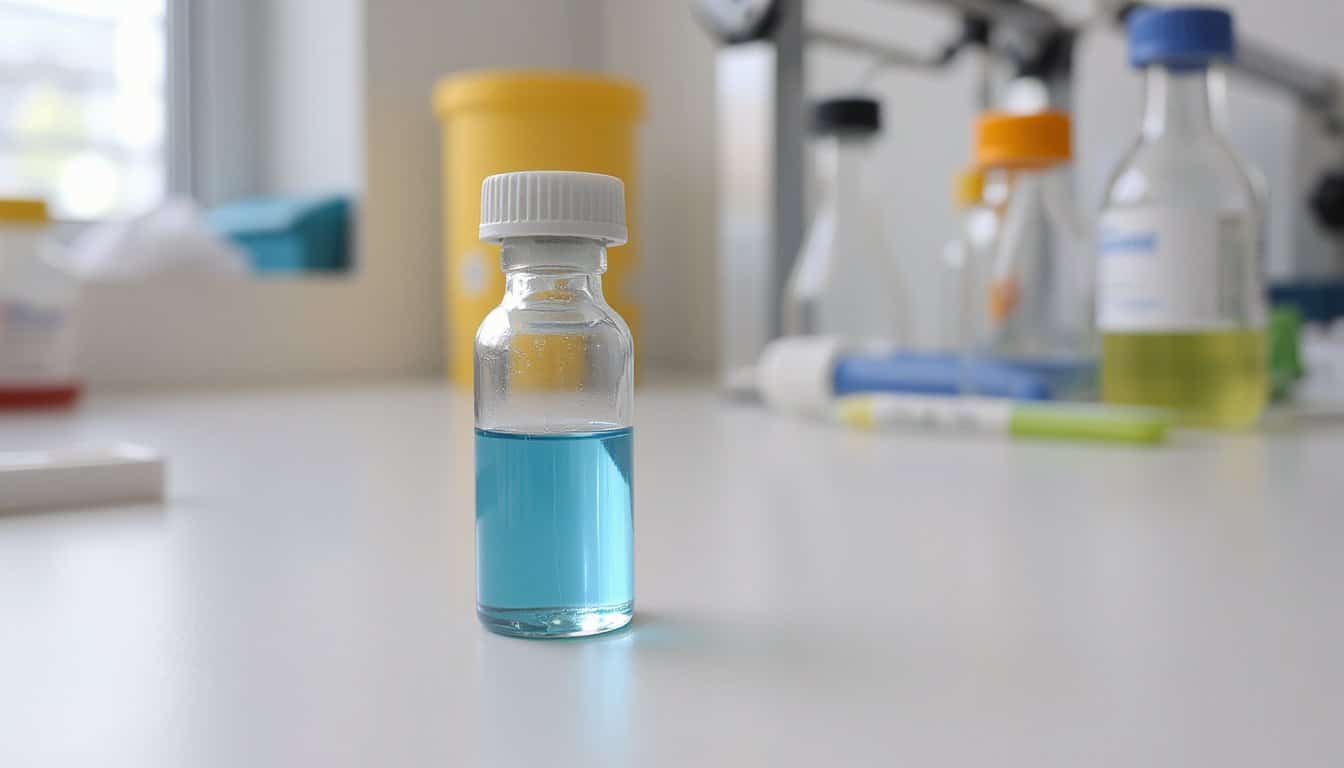
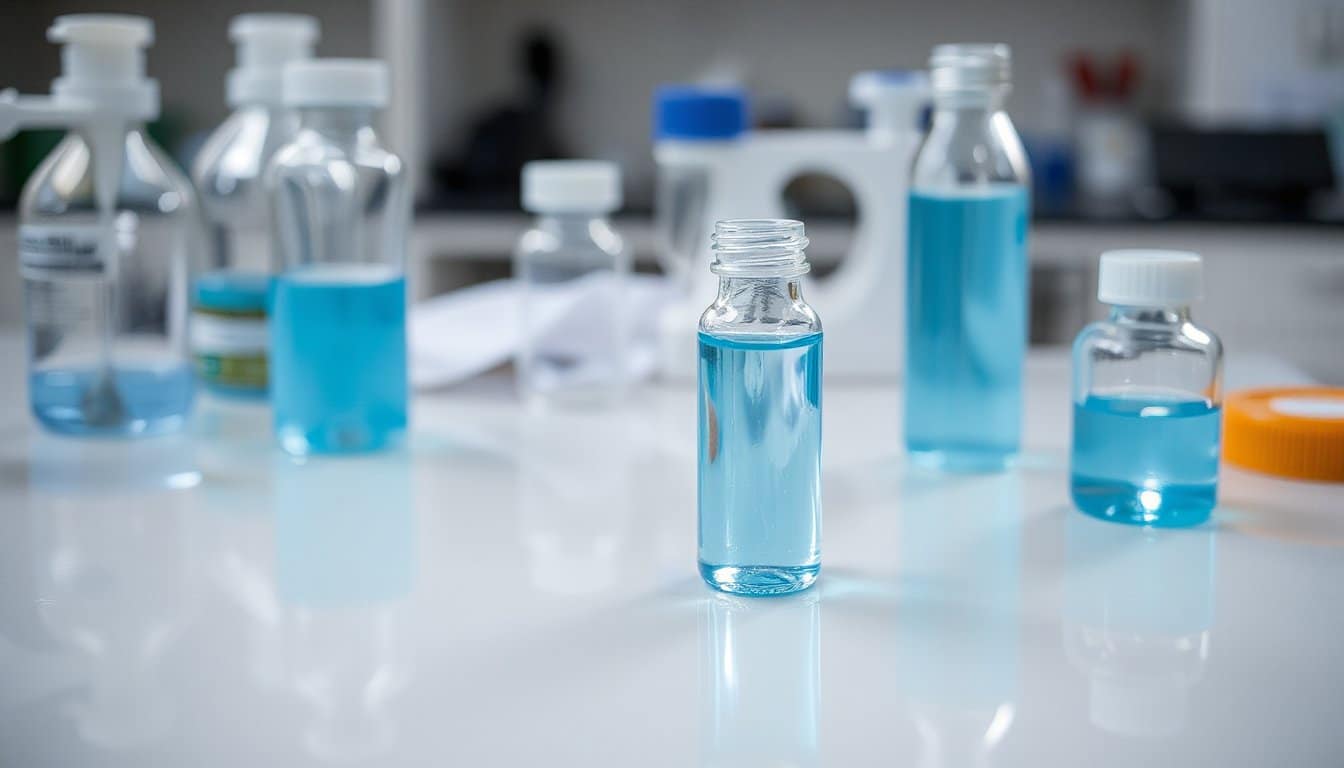
A useful practical point from this literature is that properly chelated GHK-Cu in solution carries a characteristic blue color from the copper complex, so a clear or pale solution can indicate incomplete chelation or degradation. This visual cue functions as a simple, if non-quantitative, quality check alongside formal analysis.
Temperature, Light, and the Lyophilized Form
The lyophilized powder is the most stable form of GHK-Cu, because removing water sharply reduces the two most common peptide degradation routes, hydrolysis and microbial growth. The handling literature describes lyophilized material as reasonably stable under refrigeration, with freezing used for long-term storage, while reconstituted solution is kept refrigerated and used within a defined window, commonly cited as up to about four weeks. Mots-c dosage and storage is critical for maintaining the efficacy of the compound. It is essential to adhere to the recommended storage conditions to prevent degradation.
Light protection and avoidance of repeated warming and cooling cycles are standard recommendations, both tied to limiting oxidative and photochemical damage to the copper coordination. As with other peptides, repeated freeze-thaw cycling of reconstituted material is a leading cause of degradation, which is why aliquoting into single-use volumes before freezing is a common handling step.
Reconstitution as a Chelation-Preservation Step
For GHK-Cu, reconstitution is less a simple mixing step than a point where chelation can be preserved or lost. The general lab sequence mirrors standard peptide handling: the lyophilized vial is brought to room temperature while sealed to avoid condensation, surfaces are sanitized, and the diluent is added slowly down the inner vial wall rather than directly onto the powder, with gentle swirling rather than shaking until the solution clears.
What differs for GHK-Cu is the emphasis on pH-appropriate solvent choice and prompt cold, dark storage afterward, both aimed at keeping the copper coordinated. The prepared solution is labeled with its reconstitution date and concentration so that material can be tracked against its usable window. Because oxidative and chelation-loss degradation can occur without obvious visual change beyond the loss of the blue color, tracking time and conditions is as important as visual inspection.
Quality Control and Verifying Copper Content
Because GHK-Cu’s identity depends on the peptide and its coordinated copper together, quality control covers both components. A certificate of analysis for the compound generally confirms peptide purity, typically by HPLC, alongside verification of copper content by mass spectrometry or elemental analysis. Appearance is a supporting check: correctly complexed material reflects the expected copper-associated color, and a mismatch between visual appearance and the documented analysis is a flag to verify the batch.
For research use, the practical implication is that delivery and stability are linked. A carrier system that improves penetration does not help if the copper has dissociated before use, and a stable powder does not help if the delivery vehicle degrades the complex on contact. Both halves, getting intact compound to the endpoint and keeping it intact until that point, are part of the same formulation question.
Shop Research Peptides at Holas Today
If you are looking for laboratory-grade peptides that are properly handled, securely packaged, and shipped with care, Holas has you covered. We provide research-grade peptides with third-party tested purity, reliable packaging standards, and fast shipping to support your research needs. Browse our full catalog or contact us to find the right materials for your research today. All products are for laboratory research use only and are not for human or veterinary use.
Frequently Asked Questions
How Is Skin Permeation of GHK-Cu Measured in the Lab?
Permeation studies typically use diffusion-cell setups, such as Franz cells, that place a skin or membrane sample between a donor compartment holding the test formulation and a receptor compartment, then measure how much compound crosses over time. A recurring point in the GHK-Cu literature is that most permeation testing has been done on the free peptide, while methods for assessing encapsulated GHK-Cu transport remain comparatively underdeveloped, which is itself flagged as a research gap rather than a solved measurement problem.
Does the Solvent or Vehicle Affect GHK-Cu Stability?
Yes. Because the copper coordination is pH-sensitive and prone to disruption at elevated pH, the choice of solvent and its pH directly affect whether the complex stays intact. Vehicles or excipients that are strongly acidic, alkaline, oxidizing, or reducing can destabilize the chelation or shift the copper’s oxidation state. This is why pH-appropriate solvent selection is treated as part of preserving the compound, not just a dissolution step.
Why Does Copper Dissociation Matter for Experimental Data?
If the copper ion separates from the peptide, the sample is no longer GHK-Cu but a mixture of GHK and free copper, which is a different experimental condition. Because this change can occur without an obvious visual signal beyond loss of the blue color, an experiment could unknowingly test the wrong compound, producing results that do not reproduce against published GHK-Cu benchmarks. This is the main reason chelation preservation is emphasized throughout handling.
How Does GHK-Cu Handling Differ From Non-Metal Peptides?
Standard peptides are mainly managed against hydrolysis, oxidation, and microbial growth. GHK-Cu shares those concerns but adds a metal-specific one: keeping the copper coordinated and in the correct oxidation state. In practice this means the usual cold, dark, dry, sealed storage still applies, with added attention to pH, oxidizing-agent exposure, and, where practical, an inert-gas headspace for reconstituted solution.
What Should a GHK-Cu Certificate of Analysis Confirm?
For a copper-bound peptide, a single purity figure is not enough, because identity depends on both the peptide and its coordinated copper. A complete certificate of analysis generally confirms peptide purity, typically by HPLC, together with verification of copper content by mass spectrometry or elemental analysis. Checking both is what distinguishes correctly complexed GHK-Cu from peptide that is pure but improperly or incompletely chelated.