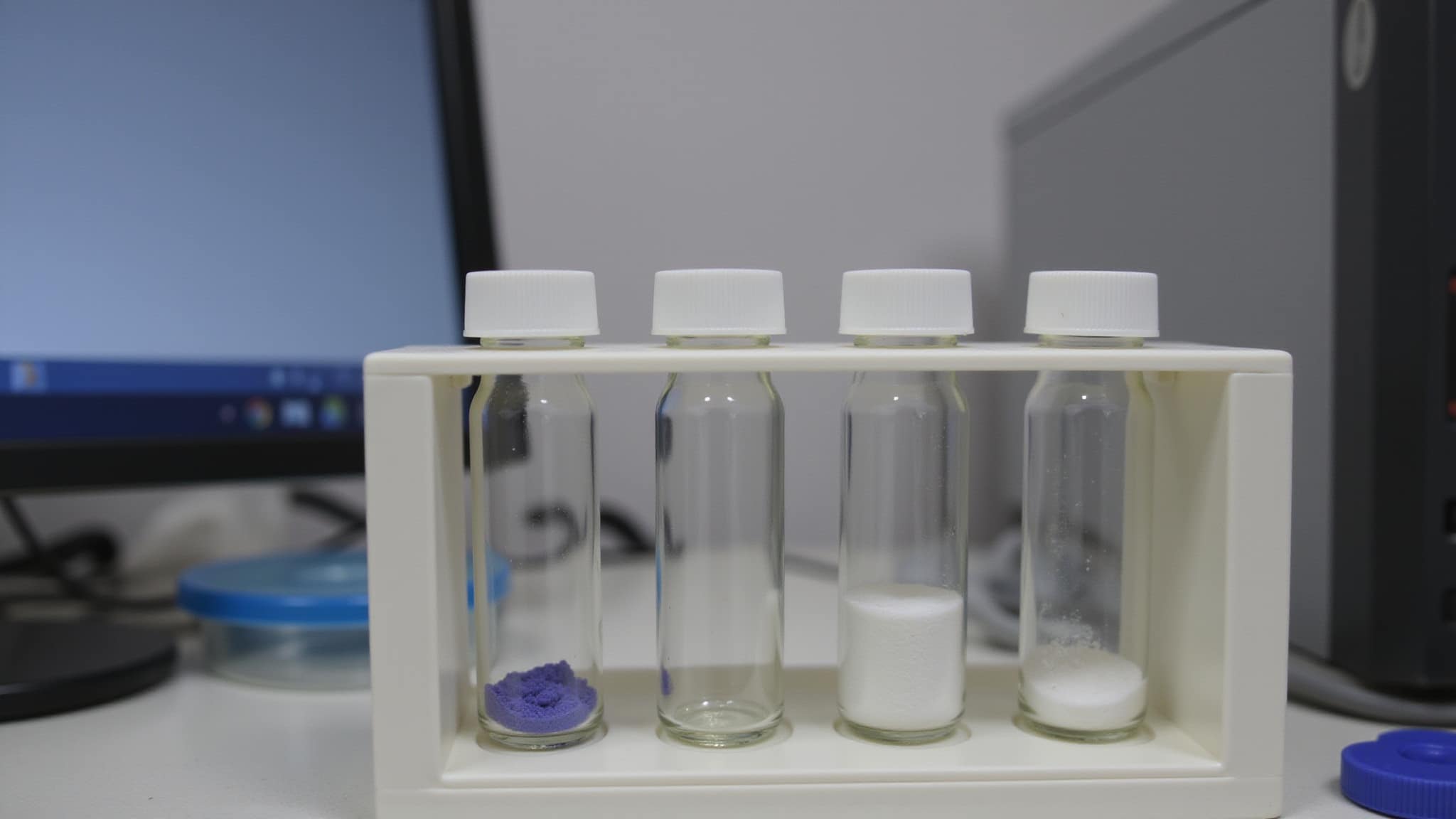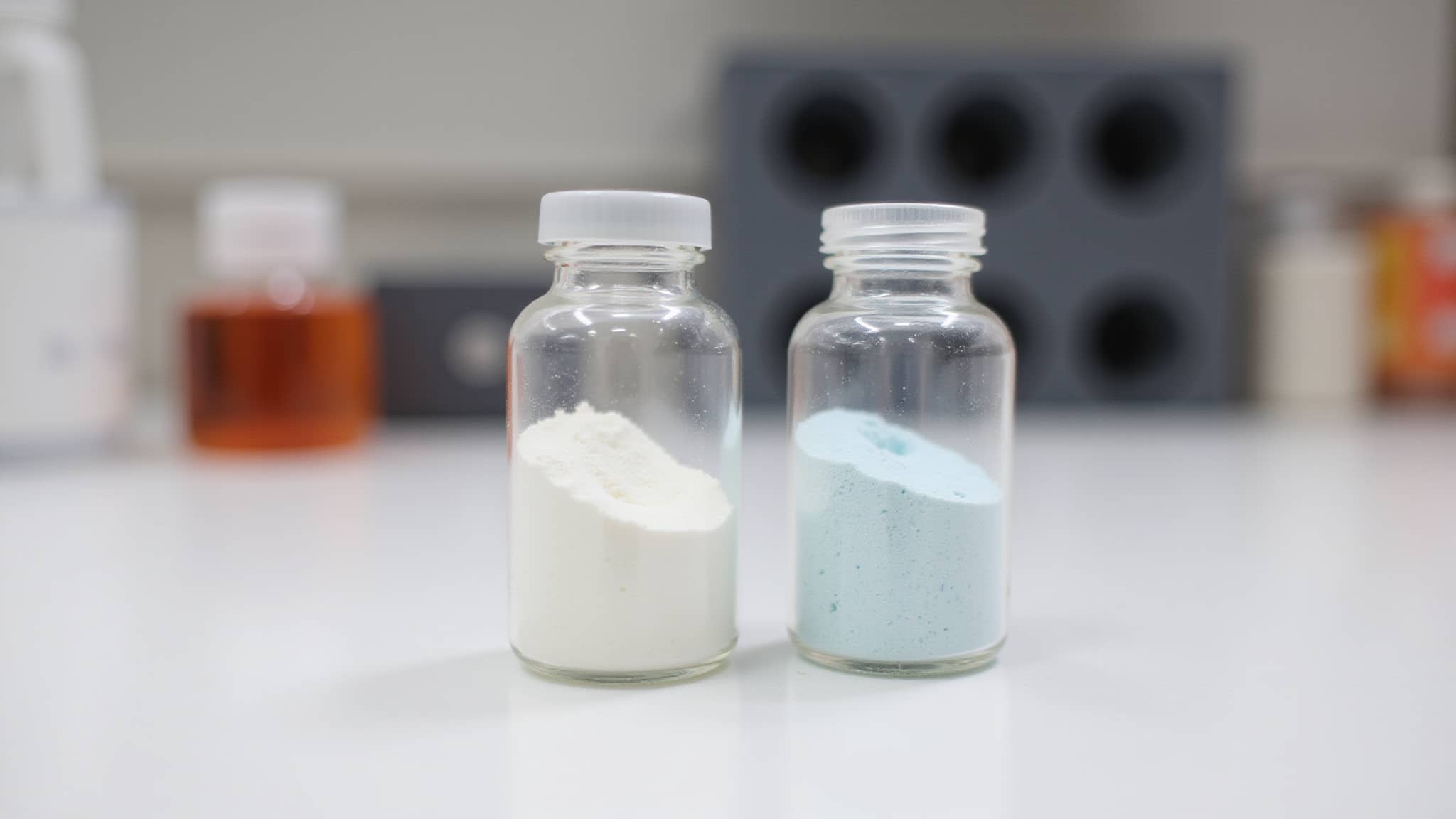
Tesamorelin is a synthetic 44-amino-acid GHRH analog built on the complete GHRH(1 to 44) backbone, capped at the N-terminus with a trans-3-hexenoic acid group. That single acylation resists dipeptidyl aminopeptidase cleavage, so researchers get extended plasma half-life without altering the core sequence. It engages the GHRHR, stimulating pulsatile growth hormone release and downstream IGF-1 elevation. Researchers use it to study lipodystrophy, visceral adipose reduction, and axis modulation. The handling and sourcing details ahead sharpen the protocol. Sermorelin vs tesamorelin presents a crucial comparison in peptide therapy. Both options serve to stimulate the release of growth hormone, yet they differ in their molecular structure and pharmacokinetics.
Key Takeaways
- Tesamorelin is a synthetic 44-amino-acid GHRH analog (C221H366N72O67S, ~5135.9 Da) with an N-terminal trans-3-hexenoic acid cap.
- The N-terminal acylation resists dipeptidyl aminopeptidase cleavage, extending plasma half-life while preserving the full GHRH(1 to 44) backbone.
- It acts through the GHRH receptor to stimulate pulsatile pituitary growth hormone release and downstream IGF-1 elevation.
- Store cold and light-shielded, avoid vigorous agitation and freeze-thaw cycles, since aqueous conditions accelerate hydrolysis and aggregation.
- Research applications include HIV-associated lipodystrophy, visceral adipose tissue reduction, body fat distribution, and growth hormone axis modulation.
What is Tesamorelin peptide in research

Tesamorelin is a synthetic 44-amino-acid analog of human growth hormone-releasing hormone (GHRH), distinguished by an N-terminal trans-3-hexenoic acid group attached to the full GHRH(1 to 44) backbone. In research, researchers encounter it as a stabilized synthetic peptide analogue with molecular formula C221H366N72O67S and a molecular weight near 5135.9 Da, typically formulated as the acetate salt. Researchers are working with a molecule that preserves the complete native sequence, unlike truncated analogs such as sermorelin. The single-site N-terminal acylation differentiates it from broad sequence redesign, and it’s what confers enhanced potency and enzymatic resistance. Researchers use tesamorelin primarily to investigate growth hormone axis modulation, since it stimulates the pituitary through the GHRHR. It’s distinct from GLP-1 agonists, acting instead through the GH pathway.
How is Tesamorelin structured as a GHRH analog
Tesamorelin is a 44-amino-acid peptide built on the complete GHRH(1 to 44) NH2 backbone, capped at its N-terminus by a trans-3-hexenoic acid group. This single-site acylation defines the molecule, distinguishing it from native GHRH without redesigning the underlying sequence. The formula is C221H366N72O67S, roughly 5135.9 Da, formulated as the acetate salt. Because the full 44-residue structure stays intact, the key receptor-binding features required for GHRHR engagement are preserved. Unlike truncated analogs such as sermorelin, tesamorelin retains every residue, so the conserved backbone maintains physiological signaling fidelity. The N-terminal hexenoic acid modification shields the peptide against dipeptidyl aminopeptidase cleavage, giving a stabilized analog that couples structural conservation with enhanced enzymatic resistance and potency.
Why does Tesamorelin stability matter in research

Tesamorelin stability matters in research because native GHRH degrades rapidly, and its short plasma half-life makes it a poor tool for studying growth hormone axis dynamics. When researchers use Tesamorelin instead, the N-terminal trans-3-hexenoic acid modification resists dipeptidyl aminopeptidase cleavage, extending plasma half-life without altering the core GHRH(1 to 44) backbone. This matters because researchers can maintain consistent GHRHR activation across longer observation windows, letting researchers track pulsatile growth hormone release and downstream IGF-1 elevation with fewer confounding variables. Researchers get reproducible pharmacokinetic behavior, which is critical when researchers are comparing dose responses or characterizing receptor-binding kinetics. Since the sequence stays conserved, researchers are still probing native signaling features, just with improved metabolic durability. That stability translates directly into cleaner data when researchers are investigating endogenous GH secretion pathways under controlled experimental conditions.
How is Tesamorelin reconstituted and stored
Tesamorelin is reconstituted by slowly introducing sterile diluent against the vial wall and swirling gently until the solution clears, and it is stored cold and shielded from light in both its dried and reconstituted states. Researchers start with the acetate salt in its dried state, storing it cold and shielded from light to protect the GHRH(1 to 44) backbone and its N-terminal trans-3-hexenoic acid modification. When reconstituting, avoid vigorous agitation that can shear the 44-residue chain or disrupt receptor-binding features. Once reconstituted, researchers should keep the peptide refrigerated and use it promptly, since aqueous conditions accelerate hydrolysis and aggregation. Minimizing freeze-thaw cycles matters, because repeated transitions compromise structural integrity. Handling this way maintains the acylation-driven stability and enzymatic resistance that make tesamorelin useful in growth hormone axis research.
Which research applications use Tesamorelin

Tesamorelin’s research applications cluster around growth hormone axis modulation, since it acts through the GHRH receptor. This peptide is a stabilized GHRH analog that stimulates pituitary release of endogenous growth hormone in a pulsatile pattern, subsequently raising IGF-1 levels. Dac albumin binding peptide half life is a critical factor in determining the efficacy of peptide-based therapies. Understanding its stability and duration of action allows researchers to optimize dosing regimens.
The research focus typically includes:
- HIV-associated lipodystrophy, where tesamorelin’s approved indication anchors clinical investigation
- Visceral adipose tissue reduction and altered body fat distribution
- Growth hormone axis modulation, examining GHRHR signaling and downstream IGF-1 responses
- Endogenous GH secretion pathways, leveraging the preserved 44-residue backbone for physiological fidelity
Researchers won’t confuse tesamorelin with GLP-1 agonists. It acts strictly through the GH pathway. Its structural conservation makes it a precise tool for probing hypothalamic-pituitary signaling mechanisms. Ipamorelin and tesamorelin pathway differences are significant in understanding their unique roles in growth hormone release. While both peptides stimulate the growth hormone secretagogue receptor, their mechanisms of action diverge in important ways.
How to source research-grade Tesamorelin
Source research-grade tesamorelin by verifying a precise chemical identity before anything else. Confirm the molecular formula C221H366N72O67S and the ~5135.9 Da mass, then cross-check the CAS registry number 901758-09-6 against supplier documentation. Legitimate material presents as the acetate salt of the full GHRH(1 to 44) backbone bearing the N-terminal trans-3-hexenoic acid modification, not a truncated fragment.
| Identifier | Expected Value | Verification Method |
|---|---|---|
| Formula | C221H366N72O67S | Mass spectrometry |
| CAS Number | 901758-09-6 | Certificate of analysis |
| Purity | ≥98% | HPLC chromatogram |
Request HPLC and mass-spec data confirming purity and identity, and verify the N-terminal acylation that distinguishes tesamorelin from unmodified GHRH. Researchers are matching every synonym, (3E)-hex-3-enoylsomatoliberin, Egrifta, to documented analytical evidence rather than trusting label claims alone.
Order Lab-Verified Tesamorelin Today
Whether the work covers GHRH pathways or preclinical adipose tissue research, quality peptides shape reliable results. Every batch of Tesamorelin at Holas is backed by independent lab results for verified purity and batch consistency. Browse our full catalog or reach out to discuss the sourcing needs.
Frequently Asked Questions
How Does Tesamorelin Differ From Sermorelin in Research Settings?
Researchers find tesamorelin retains the complete 44-amino-acid GHRH sequence, while sermorelin’s a shorter, truncated analog. Tesamorelin’s defining N-terminal trans-3-hexenoic acid group boosts resistance to dipeptidyl aminopeptidase degradation and extends plasma half-life, so researchers are working with a more stable, potent molecule. When researchers are studying endogenous GH secretion, tesamorelin’s full-length structure preserves key receptor-binding features and delivers stronger GHRHR activation, making it more enzymatically resistant than sermorelin in the research.
What IGF-1 Changes Are Observed Following Tesamorelin Administration?
When researchers administer tesamorelin, researchers observe increased IGF-1 levels driven by its action on the pituitary. It stimulates endogenous growth hormone release in a pulsatile pattern that mimics physiological signaling, and that increased GH output raises circulating IGF-1. Researchers are seeing this through GHRHR activation, where the stabilized 44-residue analog resists enzymatic cleavage and sustains signaling. So researchers notice IGF-1 responses reflecting enhanced growth hormone axis modulation rather than direct hormone administration.
Is Tesamorelin Comparable to GLP-1 Agonists in Mechanism?
No, tesamorelin isn’t comparable to GLP-1 agonists in mechanism. Researchers are working with a GHRH analog that binds the growth hormone-releasing hormone receptor (GHRHR) on the pituitary, stimulating pulsatile endogenous growth hormone release and raising IGF-1. GLP-1 agonists, by contrast, act through the incretin pathway on entirely different receptors. So when researchers are studying tesamorelin, researchers are modulating the GH axis, not GLP-1 signaling, two distinct pharmacological pathways with separate downstream effects.
What Molecular Weight and Formula Define Tesamorelin?
Researchers find tesamorelin’s defined by the molecular formula C221H366N72O67S with a molecular weight of about 5135.9 Da . It’s a synthetic 44-amino-acid GHRH analog, and researchers are looking at the full GHRH(1-44) NH2 backbone modified with an N-terminal trans-3-hexenoic acid group. That acylation’s what distinguishes it structurally from native GHRH. Researchers also observe it identified by CAS number 901758-09-6, and it’s typically formulated as the acetate salt.
What CAS Number and Synonyms Identify Tesamorelin?
Researchers identify tesamorelin by its CAS registry number 901758-09-6 . Researchers also recognize it through several synonyms, including (3E)-hex-3-enoylsomatoliberin, which references the N-terminal trans-3-hexenoic acid modification attached to the GHRH backbone, and the brand name Egrifta . When researchers are classifying it, researchers categorize tesamorelin as a stabilized synthetic peptide analogue of GHRH. These identifiers let researchers distinguish it precisely from native GHRH and shorter analogs like sermorelin.