HPLC’s your gold-standard analytical tool for peptide manufacturing quality control, using reversed-phase C18 columns with acetonitrile gradients to separate peptides with pharmaceutical precision. You’ll detect peptides via UV light at 214 nanometers, where peptide bonds absorb strongly, allowing you to calculate purity by dividing your main peak’s integrated area by the total area. The resulting chromatogram maps retention times for identity confirmation and reveals impurities like deletion sequences and oxidation products as distinct peaks. Resolution requirements demand baseline separation between peptide and nearest impurity, with validation parameters including linearity (R² ≥ 0.999) and recovery accuracy of 98-102%. Understanding HPLC testing in peptide manufacturing and how method parameters like temperature, pH, and column chemistry influence your separations provides deeper optimization strategies. HPLC is your gold-standard analytical tool for peptide manufacturing quality control, using reversed-phase C18 columns with acetonitrile gradients to separate peptides with pharmaceutical precision. You’ll detect peptides via UV light at 214 nanometers, where peptide bonds absorb strongly, allowing you to calculate purity by dividing your main peak’s integrated area by the total area. The resulting chromatogram maps retention times for identity confirmation and reveals impurities like deletion sequences and oxidation products as distinct peaks.These measurements are essential for batch quality control, ensuring every peptide lot meets required purity and identity specifications before release. Resolution requirements demand baseline separation between the peptide and its nearest impurity, with validation parameters including linearity (R² ≥ 0.999) and recovery accuracy of 98, 102%. Understanding HPLC testing in peptide manufacturing, and how method parameters such as temperature, pH, and column chemistry influence separations, provides deeper optimization strategies.
HPLC Basics for Peptide Purity Testing
How does HPLC separate peptides to reveal purity? High-Performance Liquid Chromatography (HPLC) serves as the gold-standard method for hplc peptide testing, separating components based on their interactions with the stationary phase. You’ll use reversed-phase HPLC with C18 columns to achieve ideal separation. The technique detects peptides using UV light at 214 nanometers, which targets peptide backbone absorbance universally across all sequences.
Retention time analysis confirms peptide identity when your sample matches expected values under set conditions. You’ll then perform peak area integration to quantify all peaks in the chromatogram. The purity calculation method is straightforward: divide the main peak’s area by total peak area, then multiply by 100. The stationary phase is non-polar in RP-HPLC, while the mobile phase consists of a polar solvent mixture that drives elution. This yields your peptide purity by hplc percentage. A dominant sharp peak exceeding 95% area indicates high-quality material ready for use. The area of the main peak relative to the total area reflects the peptide’s purity.
How Reversed-Phase HPLC Separates Peptides?
Tune your mobile phase peptides, polar water with acetonitrile, via gradient elution peptides, starting low organic to ramp high, disrupting interactions progressively for sharp resolution. Opt for column selection c18 over C4 for stronger retention of peptide fragments; C4 suits less hydrophobic ones. This partitions peptides dynamically, separating subtle variants like oxidized forms or tryptic digests with high precision.
Reading Your RP-HPLC Peptide Chromatogram
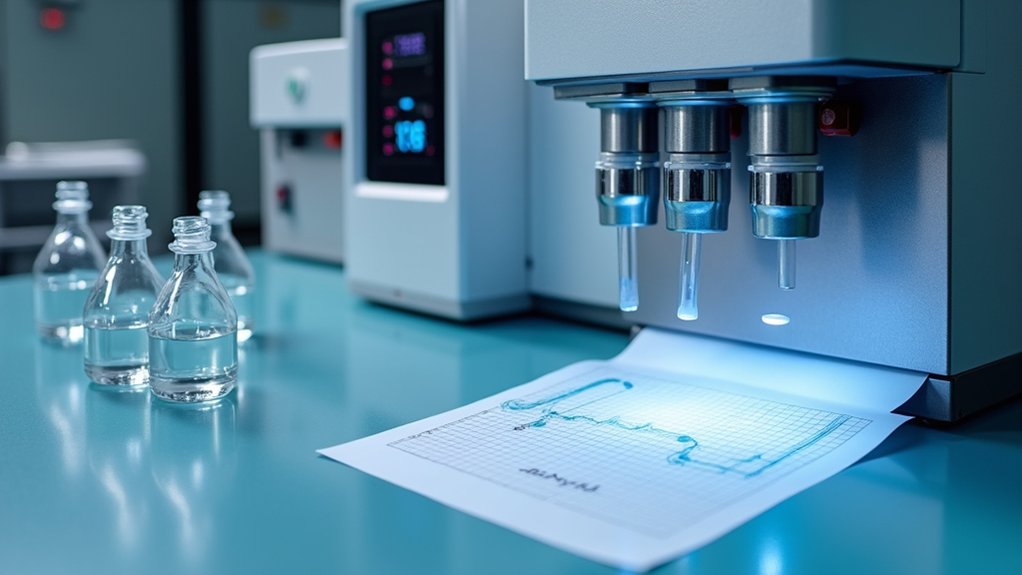
You interpret an RP-HPLC peptide chromatogram by examining its plot of detector response (y-axis) against retention time (x-axis in minutes), where peaks represent eluted peptides or impurities. The baseline separation between peaks indicates resolution quality; narrow, symmetric peaks reveal ideal column efficiency. Your UV detection peptides measurement typically occurs at 214, 215 nm, where peptide bonds absorb strongly, enabling sensitive quantification at microgram levels. Calculate purity by dividing the main peak’s integrated area by total area and multiplying by 100, a method central to analytical HPLC chromatogram assessment. Peak positions reveal identity consistency; shifted retention times signal method changes or column differences affecting assay reproducibility. Impurity peaks appear at distinct retention times relative to your target compound. Document these observations in lot QC reports to support batch release decisions and demonstrate transparency regarding peptide quality and purity standards for your research applications.
Top Impurities Detected in Peptide Peaks
When you examine your RP-HPLC chromatogram, you’ll encounter deletion sequences as distinct peaks eluting earlier than your main peptide peak due to incomplete chain synthesis during solid-phase peptide synthesis. Oxidation products appear as shoulders or separate peaks near the main peak, resulting from side-chain modifications on methionine, cysteine, or tryptophan residues that alter hydrophobicity and reduce biological potency. Both impurity classes require careful peak integration and, when levels exceed detection thresholds, LC-MS confirmation to distinguish true impurities from artifacts and assess whether your batch meets purity specifications.
Deletion Sequences
Deletion sequences rank as top impurities in peptide peaks, originating from incomplete coupling steps during solid-phase peptide synthesis (SPPS). You encounter these in high performance liquid chromatography peptides analysis, where incomplete Nα-deprotection or failed Fmoc-Xaa condensation deletes residues like Glycine (Gly) or Alanine (Ala), the hardest to separate due to structural similarity. In manufacturing QC HPLC, Deletion sequences dominate crude GLP-1 peptides at 45, 65% purity, co-eluting with the main peak under RP-HPLC with 0.1% TFA. For analytical report interpretation, you use MS alongside HPLC spiking to discriminate them, ensuring specification thresholds via peak integration and fragmentation data. Purification demands high-resolution preparative chromatography and carbon media; mitigate upstream with dipeptide building blocks for Gly-Gly or Pro-Pro sequences and in-process coupling controls per EMA/FDA guidelines. Deletion sequences rank as top impurities in peptide peaks, originating from incomplete coupling steps during solid-phase peptide synthesis (SPPS). You encounter these in high performance liquid chromatography peptide analysis, where incomplete Nα-deprotection or failed Fmoc-Xaa condensation deletes residues like Glycine (Gly) or Alanine (Ala), the hardest to separate due to structural similarity. In manufacturing QC HPLC, deletion sequences dominate crude GLP-1 peptides at 45, 65% purity, often co-eluting with the main peak under RP-HPLC with 0.1% TFA.For analytical report interpretation, you use MS alongside HPLC spiking to discriminate them, ensuring specification thresholds through peak integration and fragmentation data. Evaluating Research peptide suppliers to consider is also important because reliable manufacturers implement strict coupling controls and purification standards that reduce deletion sequence formation during synthesis.Purification typically requires high-resolution preparative chromatography and carbon media, while upstream mitigation includes using dipeptide building blocks for Gly-Gly or Pro-Pro sequences and applying in-process coupling controls aligned with regulatory expectations.
Oxidation Products
In Methionine Oxidation, you monitor Met(O) formation from H2O2 (0.35-1%) using HPLC-MS peak areas. Tryptophan Oxidation yields isomers like H-Oia-OH, challenging RP-HPLC separation. Cysteine forms disulfides via air oxidation, reduced by DTE before purification. Quantification challenges persist with MS relative areas and isobaric products, prompting HILIC/CEX complements for precise mapping.
Size-Exclusion and Ion-Exchange for Peptides
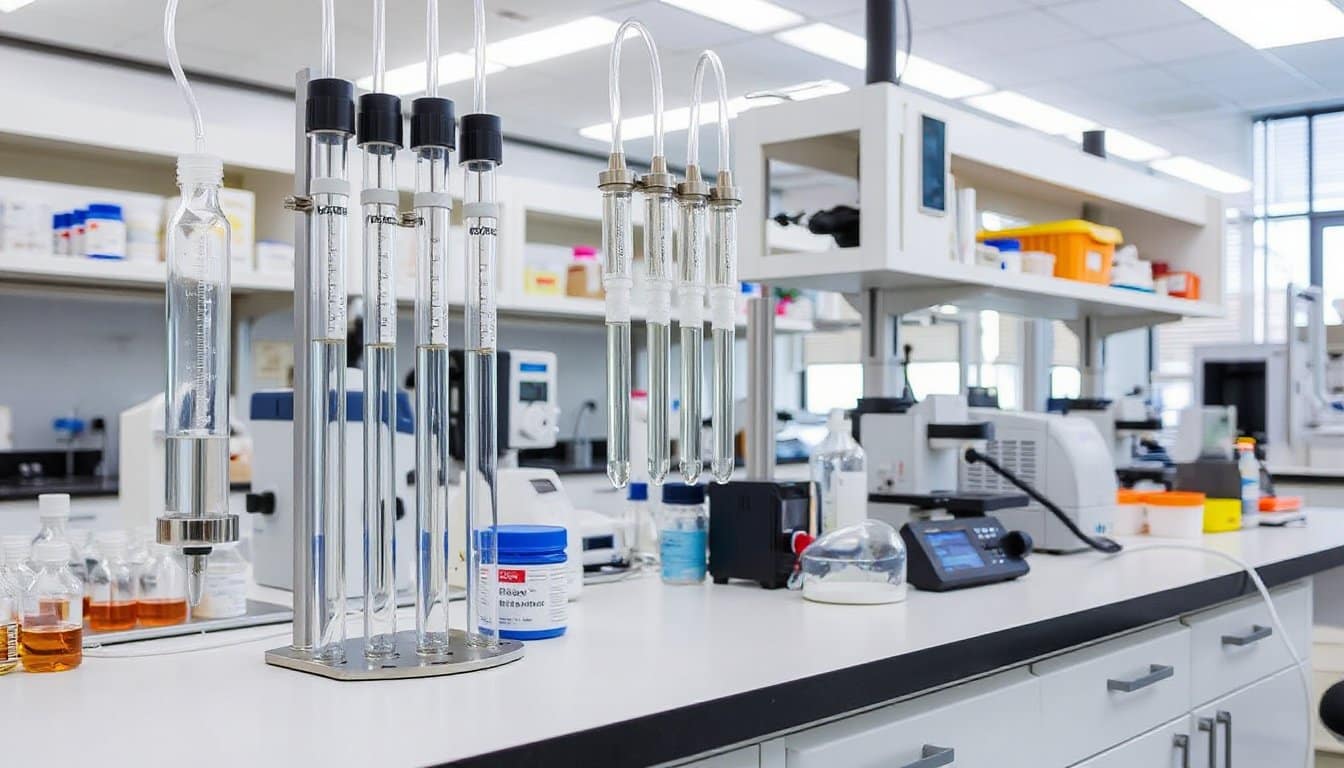
Size-exclusion chromatography (SEC) separates peptides by molecular size, as larger molecules elute first due to exclusion from the column’s 80 Å pores in Zenix™-80 (3 µm particles). You’ll calibrate curves from known analytes to estimate unknowns under 10 kDa, minimizing ionic interactions with 0.1% TFA/75% acetonitrile/water. Size-exclusion chromatography (SEC) separates peptides by molecular size, as larger molecules elute first due to exclusion from the column’s 80 Å pores in Zenix™-80 (3 µm particles). You’ll calibrate curves from known analytes to estimate unknowns under 10 kDa, minimizing ionic interactions with 0.1% TFA/75% acetonitrile/water. While discussions around how to test peptide purity at home sometimes arise, accurate purity determination typically requires controlled laboratory methods like SEC and HPLC.
- Quantify aggregates: Detect dimers/trimers via SEC for method development hplc, ensuring inter-batch comparability and analytical method validation.
- Optimize ion-exchange: Use strong cation exchangers for positively charged peptides; gradient salt elution screens charges for batch release hplc and system suitability.
- Multidimensional setups: Pair SEC (1-6 kDa fractionation) with ion-exchange to resolve E. coli digests, enhancing purity profiles.
You’ll boost efficiency with BEH particles, low-ID tubing, and recovery checks during method development hplc.
HPLC Limits and MS Complements
While size-exclusion and ion-exchange chromatography excel at fractionating peptides by size and charge, HPLC-UV methods reveal key limitations in peptide analysis. Standard UV detection at 214, 220 nm cannot identify non-chromophoric impurities like sugars or glycols, which can constitute up to 40% of your sample while showing 99% purity. Signal-to-noise considerations establish practical detection thresholds of 2:1 to 3:1, meaning impurities below 0.05% frequently escape detection. Chromatographic resolution challenges intensify when compounds share identical retention times, co-elution masks multiple substances within single peaks, particularly affecting related peptide impurities like deletion sequences. Mass spectrometry complements these limitations by detecting co-eluting compounds through mass shifts, identifying sequence variants independent of UV absorption. LC-HRMS achieves specificity HPLC-UV cannot, resolving impurities below 0.1% concentration and providing thorough detection for extensive purity assessment.
Shop Research Peptides at Holas Today
If you are looking for research peptides that are properly handled, securely packaged, and shipped with care, Holas has you covered. We provide laboratory-grade peptides with third-party tested purity, reliable packaging standards, and fast shipping to support your research needs. Browse our full catalog or contact us to find the right peptides for you today.
Frequently Asked Questions
What HPLC Column Costs Most?
The search results don’t provide specific pricing information for HPLC columns. However, large-scale preparative columns represent the highest-cost category, 100 cm high-pressure chromatography columns used for ton-scale peptide manufacturing typically command premium pricing due to their specialized construction and capacity. Premium inert columns from brands like Agilent and Merck also cost extensively more than standard analytical columns, reflecting their superior performance and reliability in biopharmaceutical applications. Exact costs vary based on particle size, chemistry, and supplier specifications.
How to Store Peptide Samples Post-Hplc?
You’ll store your peptide samples in opaque or amber vials with desiccant packets to block UV light and control humidity. For short-term use, refrigerate reconstituted peptides at 2-8°C for 1-2 weeks. For longer preservation, freeze at -20°C for medium-term storage or -80°C for samples exceeding six months. Create single-use aliquots before freezing to avoid degradation from repeated freeze-thaw cycles. Maintain acidic pH (4-6) during reconstitution and use vacuum-sealed or nitrogen-flushed containers.
What’s HPLC Testing Turnaround Time?
You’re looking at 5, 12 business days for standard HPLC testing turnaround. If you need faster results, expedited services can deliver analysis in 5 business days for urgent projects. Rush peptide synthesis paired with analysis typically takes 3, 5 days for peptides under 20 amino acids with crude purity. For higher purity requirements (>95%), you’ll need 6, 10 days. Longer peptides (20, 40 amino acids) require 1, 2 weeks for complete synthesis and testing. Timeline variations depend on peptide complexity, sequence length, and modification requirements.
How Does HPLC Affect Peptide Pricing?
You’ll see HPLC costs directly impact peptide pricing through multiple channels. Testing itself runs $45, $110 per injection for standard analysis, while extensive characterization ranges $800, $5,000 per sample depending on complexity and regulatory requirements. Purification expenses dominate manufacturing costs; a 10% crude purity increase yields over 50% cost savings on active pharmaceutical ingredient. Expedited turnaround (48, 72 hours) greatly elevates service charges, and GMP-compliant testing for submissions vastly exceeds research-phase costs.
Who Regulates HPLC in Manufacturing?
FDA, ICH, and EMA regulate HPLC in peptide manufacturing. You implement validated RP-HPLC methods per their guidelines, you follow ICH Q6A/B for specifications, ICH Q3A/B for impurities, and FDA/EMA directives mandating >97% purity, impurity profiling under 0.5%, and GMP-calibrated equipment to guarantee batch release, identity, and consistency.