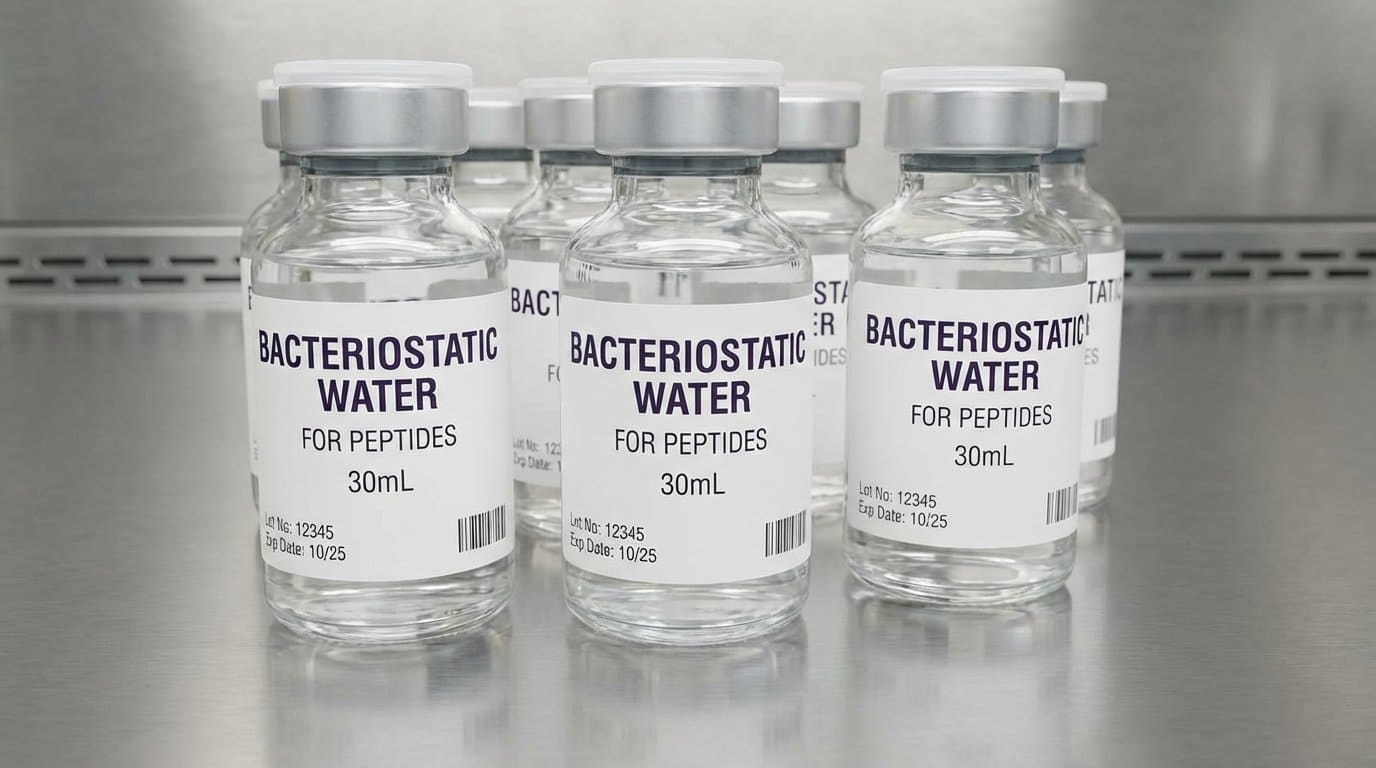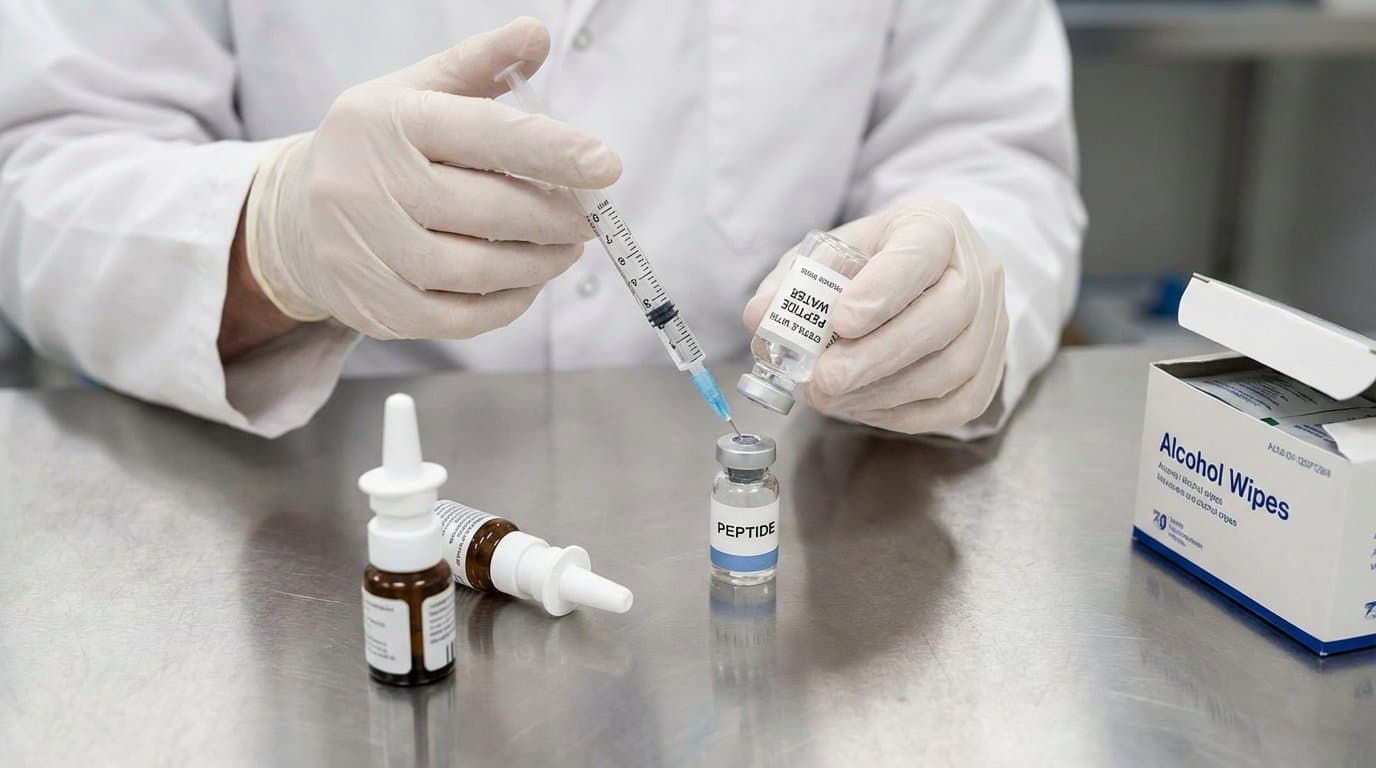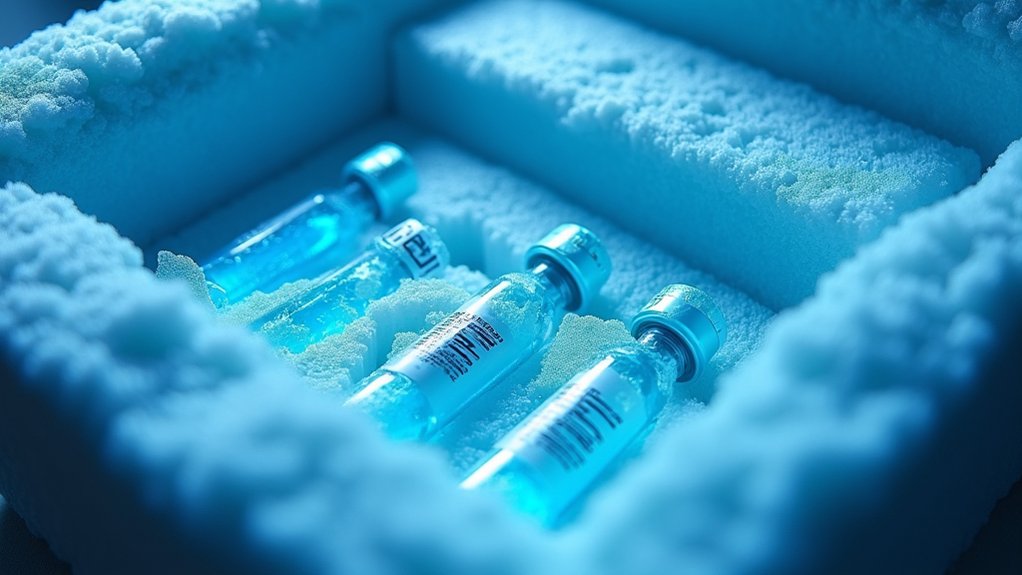
You’ll preserve your peptides’ stability and bioactivity by storing them at -20°C or -80°C in sealed glass or polypropylene containers with desiccant packets. Avoid repeated freeze-thaw cycles by aliquoting samples into single-use vials. Keep lyophilized peptides away from light and moisture, and consider nitrogen purging for peptides with sensitive residues like cysteine or methionine. Reconstituted solutions degrade faster than lyophilized forms, so freeze them immediately when not actively in use. These storage and handling practices for research peptides work together to maintain your samples’ integrity throughout your research timeline. You’ll preserve your peptides’ stability and bioactivity by storing them at -20 °C or -80 °C in sealed glass or polypropylene containers with desiccant packets. Avoid repeated freeze, thaw cycles by aliquoting samples into single-use vials. Keep lyophilized peptides away from light and moisture, and consider nitrogen purging for peptides with sensitive residues like cysteine or methionine, especially in peptides clinical research, where maintaining molecular integrity is critical. Reconstituted solutions degrade faster than lyophilized forms, so freeze them immediately when not actively in use to maintain sample stability.
Why Store Research Peptides Properly
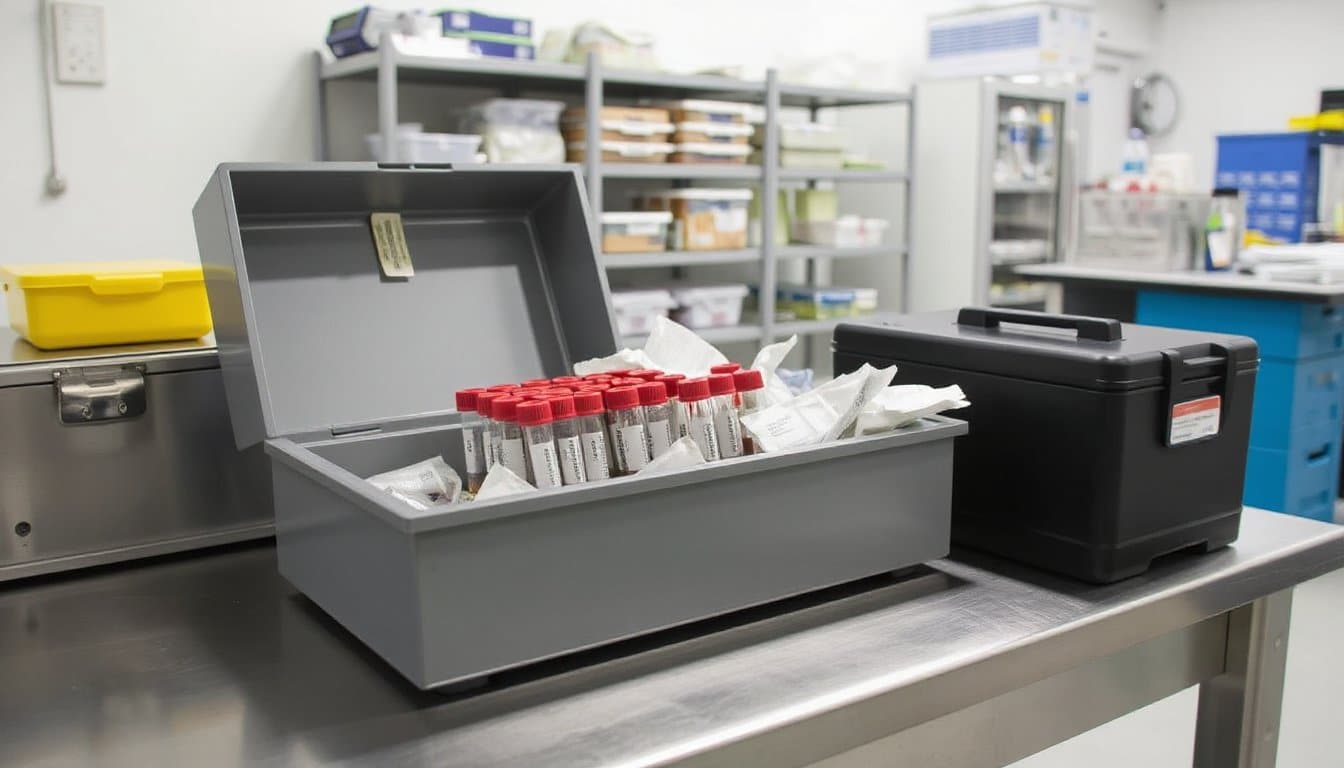
Proper storage prevents chemical degradation of research peptides by limiting moisture exposure, which decreases long-term stability, and air oxidation, which particularly affects peptides containing Cys, Met, or Trp residues. You’ll find that peptide stability conditions directly impact your experimental reliability. High pH solutions accelerating instability and atmospheric oxygen promoting degradation in both lyophilized and solution forms underscore why temperature control peptides matters greatly. Desiccation storage peptides through sealed containers with desiccant packets safeguards against moisture absorption and deliquescence in susceptible amino acid sequences. Repeated freeze-thaw cycles can cause degradation through microcondensation, making single-use aliquoting essential for maintaining peptide integrity. Lyophilized peptides should be stored at -20°C for maximum stability before use. Lyophilized peptide storage at -20°C or -80°C extends viability for years, whereas solutions remain viable only briefly. Low-temperature storage from -20°C to -80°C prevents degradation reactions in most peptides. Understanding peptide hydrolysis risks and peptide shelf life lab protocols assures your research maintains integrity. Proper handling minimizes degradation, preserves potency, and guarantees reliable experimental outcomes essential for therapeutic applications. Proper storage prevents chemical degradation of research peptides by limiting moisture exposure, which decreases long-term stability, and air oxidation, which particularly affects peptides containing Cys, Met, or Trp residues. You’ll find that peptide stability conditions directly impact experimental reliability. High-pH solutions accelerating instability and atmospheric oxygen promoting degradation in both lyophilized and solution forms underscore why temperature control for peptides matters greatly.Desiccation storage of peptides through sealed containers with desiccant packets safeguards against moisture absorption and deliquescence in susceptible amino acid sequences. Repeated freeze, thaw cycles can cause degradation through microcondensation, making single-use aliquoting essential for maintaining peptide integrity. Lyophilized peptides should be stored at −20 °C for maximum stability before use, while storage at −20 °C or −80 °C can extend viability for years, whereas solutions remain viable only briefly. Low-temperature storage from −20 °C to −80 °C prevents degradation reactions in most peptides.Understanding peptide hydrolysis risks and peptide shelf-life lab protocols assures research integrity, while discussions around clinical peptides advantages and drawbacks further highlight why strict handling and storage standards are necessary. Proper handling minimizes degradation, preserves potency, and guarantees reliable experimental outcomes essential for therapeutic applications.
Best Temperatures for Lyophilized Peptides
For short-term needs, keep them at 2, 8°C for weeks or months, or room temperature for days post-delivery, always protecting from light. Shipping at ambient reduces shelf life if prolonged; extreme heat like 45°C with moisture hastens breakdown. Degradation stays minimal at 0.001% under ideal fridge conditions. Consult manufacturers for sequence-specific advice.
Top Containers for Peptide Protection
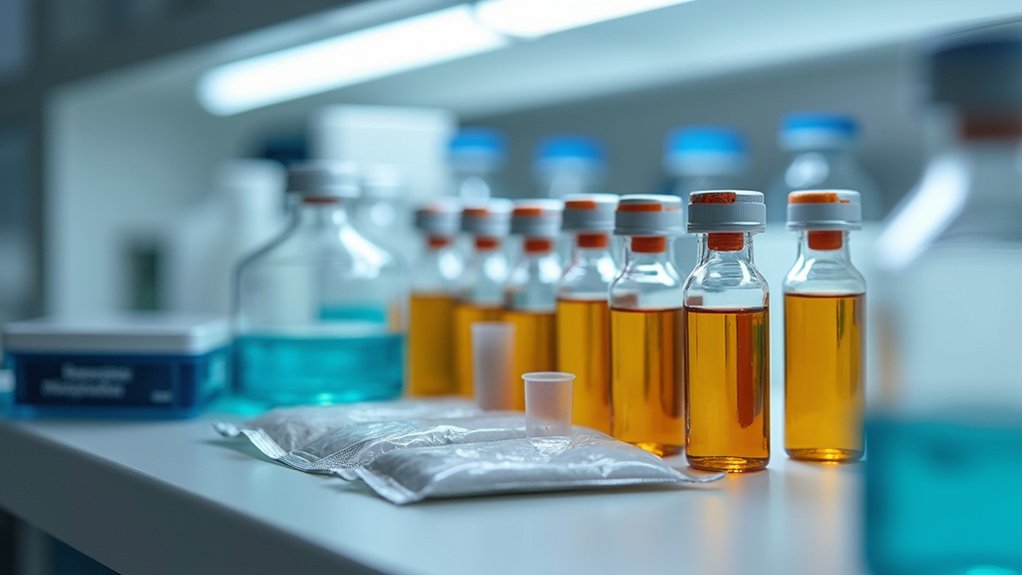
Choose Type I borosilicate glass vials with amber tinting and crimp-top butyl rubber stoppers for optimal peptide protection, as they guarantee chemical inertness, UV blockage, and hermetic seals with leak rates of 10⁻⁶ mbar·L/s. Select polypropylene cryo vials with O-ring screw caps for short-to-medium term storage, since they withstand impact, tolerate extreme temperatures from -196°C to 121°C, and minimize adsorption for hydrophobic peptides. Employ silanized surfaces and advanced hybrids like FEP or PTFE-lined options to further reduce binding losses and oxidation risks during handling.
Optimal Vial Materials
You’ll guarantee laboratory peptide storage by selecting these for laboratory reagent preservation, adhering to peptide handling standards. Use amber glass containers for light-sensitive peptides, blocking UV degradation during peptide oxidation prevention and dark conditions. Avoid polystyrene’s high binding, which causes losses in peptide moisture sensitivity scenarios, and flint glass or rubber stoppers risking contamination. Maintain cold chain peptide shipping integrity with polypropylene for working stocks. To ensure that your operations run smoothly, proper handling during peptide shipment is crucial. This includes using insulated packaging to maintain temperature control and prevent degradation. Timely delivery is also essential to uphold the integrity of the peptides and avoid any compromise in their quality.
Sealing Techniques
| Factor | Technique | Benefit |
|---|---|---|
| Moisture | Desiccant + tight cap | Prevents hydrolysis |
| Oxygen | Nitrogen purge + reseal | Minimizes oxidation |
| Contaminants | Sterile needle + swab | Maintains sterility |
Reseal immediately after access; prioritize sterility over vacuum.
Store Dry Peptides Without Degradation
- Use desiccant packs in well-sealed screw-top bottles or vacuum bags to prevent moisture-induced clumping and hydrolysis.
- Wrap vials in aluminum foil or store in dark containers to shield from UV light, especially for light-sensitive peptides.
- Dispense into small, single-use aliquots to avoid repeated freeze-thaw cycles that reduce activity.
- Choose glass vials over plastic; for Cys, Met, or Trp residues, employ anaerobic conditions with nitrogen or argon.
- Reseal vials immediately after use to limit air and humidity exposure, maintaining powder integrity.
Handle Lyophilized Peptides Right
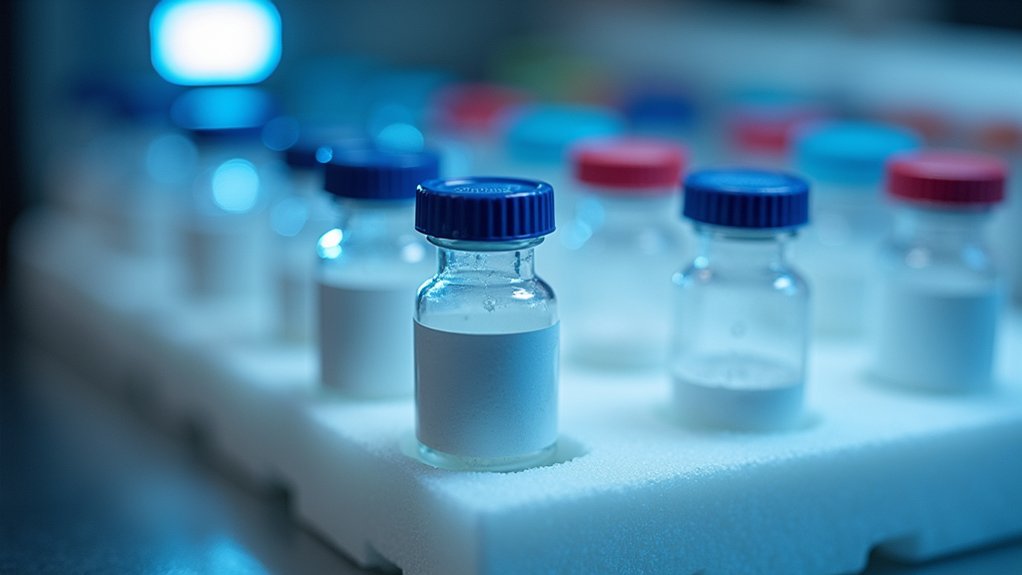
You’ll preserve your lyophilized peptides‘ integrity by maintaining strict control over temperature, moisture, and light exposure throughout storage and handling. Proper desiccation management, warming vials to room temperature in a desiccator before opening, prevents hygroscopic peptides from absorbing atmospheric moisture that accelerates degradation. Strategic aliquoting into single-use portions eliminates repeated freeze-thaw cycles that compromise molecular stability, while dark storage containers and sealed vials away from direct light protect against oxidative and photochemical breakdown.
Temperature and Desiccation Control
Minimize degradation with these practices:
- Aliquot into single-use vials to limit freeze-thaw cycles to under 10.
- Use dedicated, non-frost-free freezers to prevent fluctuations.
- Seal in airtight containers with desiccants to block moisture and hydrolysis.
- Allow vials to reach room temperature before opening to avoid condensation.
- Store oxidation-prone peptides (with Cys, Met, Trp) under anaerobic conditions.
Control humidity below 50% in dry, dark environments to thwart deamidation and microbial growth.
Light Protection and Container Selection
Protect lyophilized peptides from light-induced degradation by storing them in amber glass vials or opaque containers, which block UV and visible wavelengths that trigger photooxidation in residues like tryptophan, tyrosine, phenylalanine, methionine, and cysteine. High-quality borosilicate amber vials with tight crimped seals provide ideal protection against both light exposure and moisture ingress. When handling peptides, minimize illumination by using amber shields or safe lights during weighing and reconstitution. Store containers in dark cabinets or environments shielded from fluorescent and natural light. For enhanced protection, wrap vials with aluminum foil or maintain them in inert-gas-flushed containers to mitigate oxidative risks. Airtight sealing prevents oxygen infiltration while darkness preserves molecular integrity, ensuring your peptides remain stable for extended periods.
Preventing Freeze-Thaw Degradation
Freeze-thaw cycles damage lyophilized peptides through ice crystal formation that disrupts molecular structure, promotes aggregation, and triggers pH shifts or oxidation in sensitive residues like cysteine and methionine.
Store lyophilized peptides at, 20°C or, 80°C for sensitive sequences to minimize temperature fluctuations, as degradation rates double every 10°C rise. Employ single-use aliquoting to eliminate repeated cycles.
- Divide lyophilized stocks into single-use portions before freezing.
- Use pre-labeled, sterile vials for each aliquot’s exact experimental volume.
- Thaw only one aliquot at room temperature in a desiccator before reconstitution.
- Reconstitute gradually with sterile water or 0.1% TFA; avoid large buffer volumes.
- Refreeze unused solution aliquots immediately, never refreezing thawed stock.
These practices preserve integrity, preventing hydrolysis and structural loss.
Reconstitute and Store in Solution
Aliquot solutions and store at -20°C to -80°C; avoid repeated freeze-thaw cycles to maintain stability.
Avoid Freeze-Thaw Damage to Peptides
Multiple freeze-thaw cycles damage peptide structures as ice crystals form and mechanically disrupt chains, while freeze concentration elevates buffer salts that stress molecular stability. You prevent this by minimizing cycles and using antifreeze peptides like rsfAFP and CCP-1, which inhibit ice growth, preserve enzyme activities, and maintain membrane integrity.
- rsfAFP forms a dense membrane layer, regulating ice crystals and preserving ATPase activity.
- CCP-1 inhibits growth via hydrophilic amino acids, stabilizing myosin hydrogen bonds.
- Both peptides reduce LDH, β-galactosidase, and catalase activity loss post-thaw.
- They mitigate Ca²⁺-ATPase drop (43.42% in controls after five cycles).
- Protective barriers limit extracellular ice damage and apoptosis.
Block Light and Moisture From Peptides
Block light exposure by storing peptides in amber or opaque containers and shielding them from UV or fluorescent sources, as these trigger photochemical degradation in residues like tryptophan and tyrosine. Prevent moisture intrusion with desiccants, airtight seals, and humidity below 50%, since water promotes hydrolysis in hygroscopic lyophilized forms. These measures preserve peptide potency alongside low-temperature storage.
Block Light Exposure
To block light exposure effectively:
- Store in opaque containers to prevent UVB-induced MMP activation and photoaging.
- Avoid near-UV on caged peptides until intentional photolysis release.
- Minimize prolonged artificial light to maintain neurotransmitter balance.
- Shield from blue and nighttime light disrupting circadian peptide stability.
- Use dark environments blocking 45-55% efficient photorelease mechanisms.
Prevent Moisture Intrusion
Prevent moisture intrusion by maintaining relative humidity below 50% for lyophilized peptides and storing them in dry environments to avoid powder clumping and degradation. Monitor humidity levels regularly with appropriate tools, and seal containers immediately after use to block moisture ingress. Use desiccant packets in well-sealed screw-mouthed bottles or vacuum-packed bags to prevent denaturation from moisture absorption. Allow frozen peptides to reach room temperature before opening, preventing condensation on cold surfaces that leads to contamination. Avoid repeated freezing-thawing cycles, which introduce moisture and compromise integrity. For reconstitution, employ sterile water, PBS, or specified buffers; add solvent slowly down vial sides. Protect oxidation-prone peptides containing cysteine, methionine, or tryptophan under inert gas like nitrogen or argon, minimizing simultaneous air and moisture exposure.
Peptide Temperatures by Storage Time
At room temperature, limit lyophilized powder to weeks for handling; solutions endure days only, sealed with desiccants.
At room temperature, lyophilized peptide powder remains viable for weeks; solutions degrade within days and require desiccant sealing.
- Avoid repeated freeze-thaw cycles across all conditions
- Aliquot solutions to minimize exposure
- Prioritize powder over solutions for longevity
- Use inert gases like nitrogen for powders
- Target below -50°C for oxidation-prone residues
Spot Peptide Stability Risks Early
Mitigate risks from microbial contamination, oxygen exposure, humidity above 50%, UV light, and sequence vulnerabilities like Asn deamidation, Asp hydrolysis, methionine oxidation, N-terminal Gln cyclization, or cysteine disulfide bonds. Implement monthly testing for solutions, quarterly assessments for storage, pre-experiment verification, and log temperature, humidity, and freeze-thaw cycles.
Shop Research Peptides at Holas Today
If you are looking for research peptides that are properly handled, securely packaged, and shipped with care, Holas has you covered. We provide laboratory-grade peptides with third-party tested purity, reliable packaging standards, and fast shipping to support your research needs. Browse our full catalog or contact us to find the right peptides for you today.
Frequently Asked Questions
How to Ship Peptides Safely?
Ship lyophilized peptides in 0.5 Eppendorf tubes via regular FedEx at ambient temperature, or in DMSO solution (20 mg/ml) on dry ice. Use tightly sealed, compatible containers to block moisture and light, preventing oxidation and hydrolysis. Maintain cool, dry transit conditions; opt for cold-chain if specified. Upon arrival, log details, verify COA, and store refrigerated or frozen per label.
Can Peptides Expire After Years?
Yes, your lyophilized peptides can expire after years if you don’t store them properly. Store them at -20°C for 3-5 years’ stability or -80°C for up to a decade with minimal degradation. You avoid expiration by using sealed containers, desiccants, and inert atmospheres to prevent oxidation, moisture, and light exposure on sensitive residues like Cys or Met. Test stability periodically via HPLC.
Handle Peptides During Travel?
Ship lyophilized peptides on dry ice in insulated, vacuum-sealed containers with temperature indicators to maintain -20°C to -80°C. Use nitrogen-flushed packaging and desiccants to block moisture; protect light-sensitive ones with amber vials. Warm vials to room temperature before opening to prevent condensation. Aliquot into single-use portions, minimizing handling in gloves under clean conditions.
Best Buffers for Reconstitution?
Choose PBS at pH 7.4 or sterile water for most hydrophilic peptides; use 0.1% acetic acid for basic peptides (pH 3.0-5.5). Select Tris or borate buffers (pH 8.0-9.5) for acidic peptides, and HEPES for neutral stability (pH 6.8-7.6). Match buffers to your peptide’s isoelectric point; you’re ensuring solubility, preventing aggregation, and maintaining function during reconstitution.
Store Nasal Spray Peptides?
Store your lyophilized nasal spray peptides at room temperature for up to 60 days if you protect them from light, heat, and moisture. Refrigerate them at 4°C for short-term storage up to 2 years, or freeze at -20°C to -80°C for long-term stability of 2-3 years in sealed vials with desiccants. For reconstituted solutions, keep at 4°C up to 30 days; aliquot and freeze to avoid thaw cycles. Equilibrate to room temperature before opening.