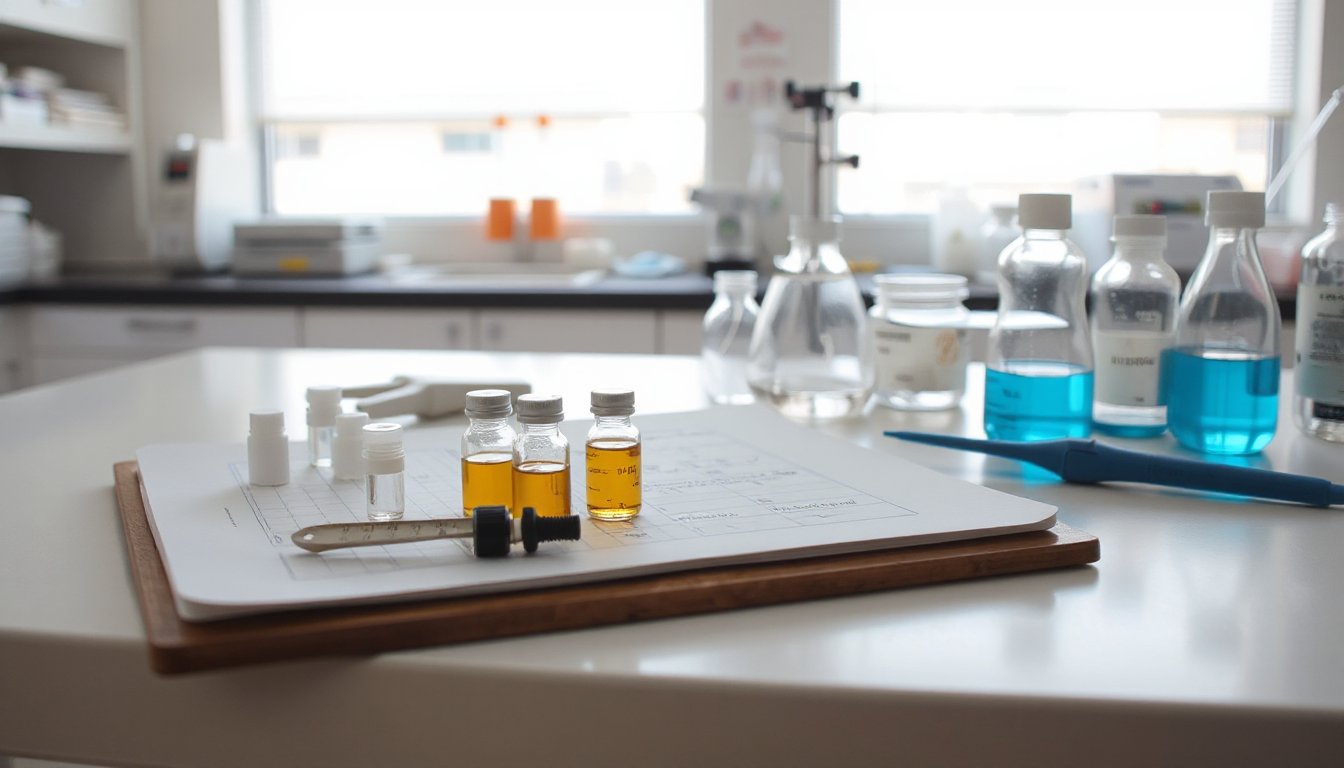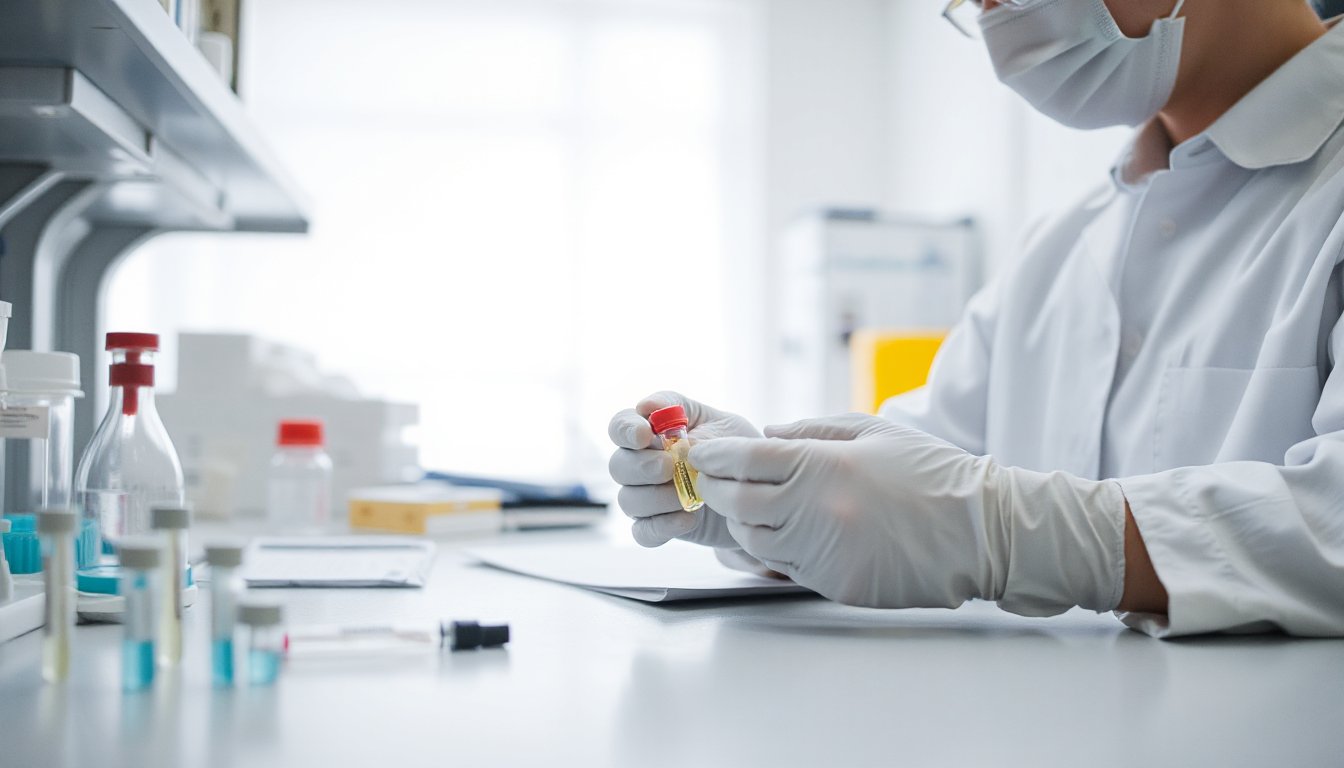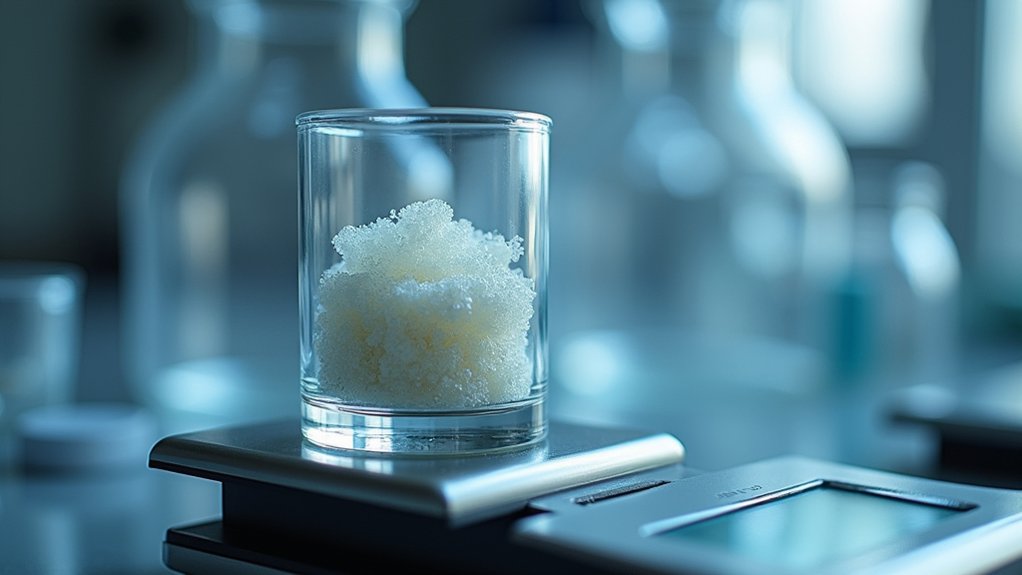
You anchor your target peptide’s C-terminal amino acid to an Fmoc-protected resin. You iteratively deprotect the N-terminus with piperidine, couple the next protected amino acid using HATU or HBTU activators, and wash excesses, repeating cycles for sequences up to 50 residues. You cleave the chain with TFA/water/TIPS, deprotect side chains, purify via reversed-phase HPLC, desalt, lyophilize, and verify by LC-MS. This is how custom peptide synthesis works in research settings, and you’ll explore SPPS vs. LPPS, automation, and research apps next. These custom peptide synthesis techniques for researchers can significantly enhance the efficiency and accuracy of peptide production. By refining these methods, researchers can optimize yields and tailor peptides for specific applications in drug development and biochemical studies.
How SPPS Builds Peptides Step-by-Step

Finally, you achieve cleavage from resin and side-chain deprotection using TFA/water/TIPS, purify via reverse-phase HPLC or preparative HPLC, desalt the peptide, and complete the lyophilization process. This final cleavage yields the pure peptide ready for use or further analysis. The product is analyzed to verify the sequence thereafter. Excess reagents and by-products are removed by filtration and washing steps throughout the synthesis.
SPPS vs. LPPS: Pick the Best Method
While solid-phase peptide synthesis (SPPS) dominates custom peptide production, liquid-phase peptide synthesis (LPPS) offers distinct advantages that make it worth considering for specific applications. You’ll follow the SPPS workflow using Fmoc chemistry for stepwise assembly on resin, minimizing intermediate purification until final purification workflow post-cleavage. Confirm peptide identity via LC-MS verification and analytical HPLC chromatogram, plus peptide yield estimation. SPPS excels for sequences to 50 amino acids, tackling hydrophobic sequence challenges and enabling disulfide bond formation and peptide modifications workflow. Choose LPPS for short peptides (2, 6 residues), complex modifications, or kilogram scales, where intermediate purifications reduce side reactions and costs. Select SPPS for rapid, automated research; opt for LPPS when flexibility trumps speed.
Automate SPPS to Scale Production
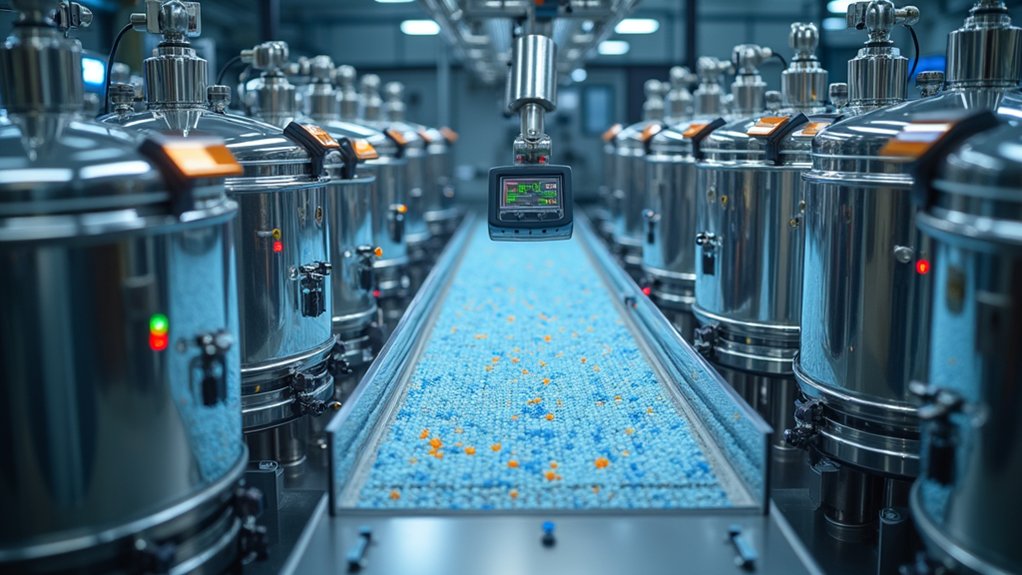
Scale further with parallel synthesis in multiple vessels or microtiter plate format using PE pins for high-throughput libraries. Continuous flow synthesis links reactors for efficient large-scale output. You skip purification of intermediates through effective washing, shortening synthesis cycle time from weeks to a single day.
Purify and Modify SPPS Peptides
Once you’ve synthesized your peptide chain at scale through automated parallel or continuous flow methods, you’ll move into purification and modification, the critical step that separates crude peptide processing from laboratory-ready material. Reversed-phase HPLC (RP-HPLC) serves as your primary purification tool, leveraging C18-modified silica to separate peptides based on hydrophobicity. You’ll elute polar contaminants first with 0.1% TFA aqueous, then ramp acetonitrile for peptide fraction collection. Pool pure fractions, perform purity calculation via analytical HPLC, and proceed to peptide drying by freeze-drying. For difficult peptide sequences prone to aggregation during synthesis or oxidation control, apply ion-exchange for peptide counterion exchange or size-exclusion. Confirm peptide sequence accuracy with MALDI-TOF confirmation and mass spectrometry before release.
SPPS in Drug Discovery and Proteomics
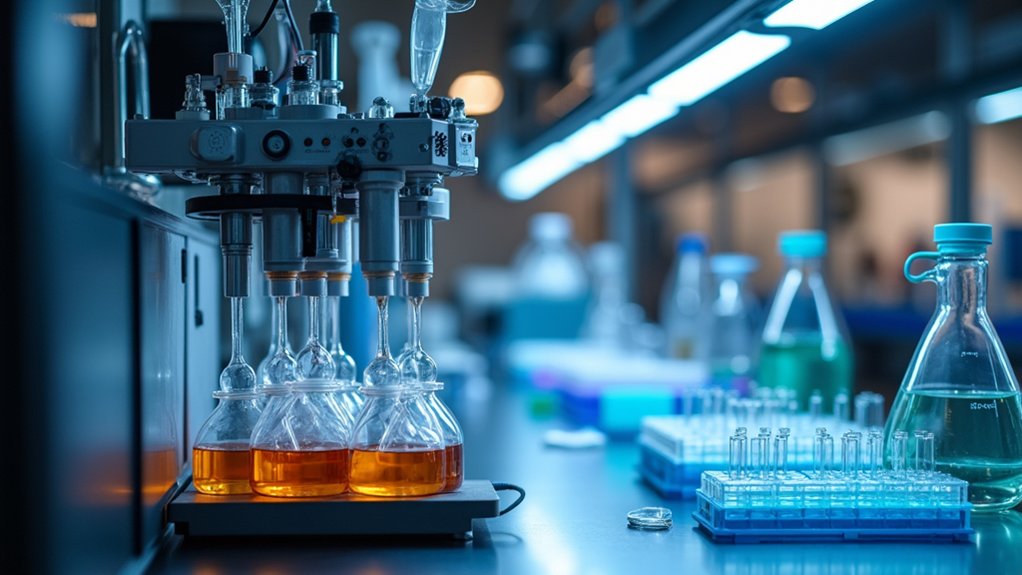
Because SPPS offers superior scalability and automation compared to liquid-phase methods, it’s become the dominant approach for developing therapeutic peptides in drug discovery programs. You perform the amino acid coupling cycle repeatedly on resin, enabling high-throughput libraries and rapid iterations for SAR studies, as in Fmoc-SPPS synthesis of lysocin E (8% yield) or daptomycin (9% yield). In proteomics, you generate tools for epitope mapping and protein interactions via automated platforms supporting N-terminal acetylation, C-terminal amidation, acetate salt peptides, and TFA salt peptides. You incorporate biotin tag, fluorescent tag, spacer linkers, and PEGylation research during lab-grade manufacturing, enhancing stability for receptor studies and peptide arrays. Microwave assistance accelerates deprotection, reducing aggregation in base-sensitive targets.
Shop Research Peptides at Holas Today
If you are looking for research peptides that are properly handled, securely packaged, and shipped with care, Holas has you covered. We provide laboratory-grade peptides with third-party tested purity, reliable packaging standards, and fast shipping to support your research needs. Browse our full catalog or contact us to find the right peptides for you today.
Frequently Asked Questions
How Much Does Custom Peptide Synthesis Cost?
You pay $2, $4.50 per residue for crude custom peptides from providers like AAPPTec and ProteoGenix, with minimums of $125, $200. You encounter $6.50, $15.50 per residue for >80, 98% purity at 1, 5mg scales, escalating to $79+ for >100mg. You add fees for setups ($200, $425), modifications like phosphorylation ($150), and cyclization ($250, $900). Costs rise with length, hydrophobicity, and quantity; request quotes.
What Is Standard Turnaround Time for Orders?
You receive standard custom peptide orders (2-30 AA, >80% purity) in 10-15 business days. Expect 2-3 weeks for most under 30 AA, though complexity or modifications extend this to 3-4 weeks. Providers like o2h guarantee ≤20 AA, ≥95% purity in 2 weeks. Rush options deliver in 5-7 days. Timelines vary by sequence length, purity, and specs.
Can Peptides Be Rush Synthesized?
Yes, you can rush synthesize peptides using automated SPPS with Fmoc chemistry on resins like polystyrene. You’ll achieve faster timelines than standard 2-3 weeks for simple sequences via parallel synthesizers, while maintaining HPLC purification and mass spec validation. However, complex lengths over 30 aa, cyclizations, or oxidations limit feasibility, requiring manual steps that extend delivery.
What Are Minimum Order Quantities?
You order custom peptides starting at 1-5 mg scales from providers like ProteoGenix and AAPPTec, with 5 mg typical for >90% purity research-grade. You face minimum charges of $125-$250 regardless of quantity, and purity or modifications raise thresholds to 5-10 mg.[KNOWLEDGE] You request quotes for >100 mg, where discounts apply, ensuring scales match your research needs.
How to Place a Custom Peptide Order?
Submit your peptide sequence, purity, modifications, and quantity via the provider’s online portal or email sales. Receive a quote based on length and complexity; approve it to initiate SPPS on automated synthesizers. Track progress through cleavage, HPLC purification (>75-98% purity), and QC with MS/HPLC data. Get COA and delivery in 2-3 weeks.