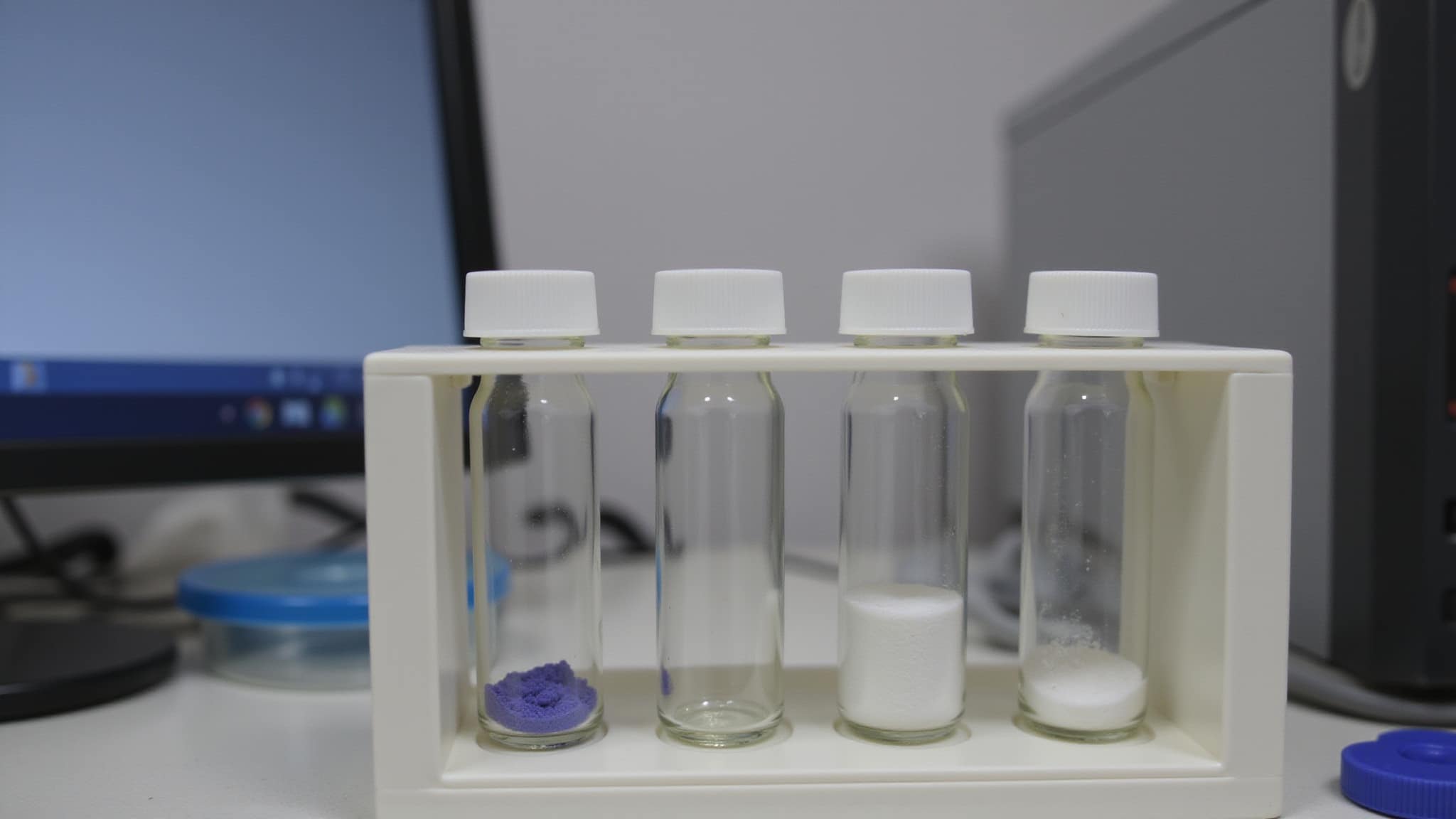
Retatrutide’s triple agonism of the GLP-1, GIP, and glucagon receptors makes it a tool for probing overlapping metabolic pathways in a single compound. In preclinical models, including diet-induced obesity and MASH designs, it is associated with reductions in hepatic triglycerides, body weight, and insulin-resistance markers, and in human Phase 2 and Phase 3 trials it has produced large, dose-dependent weight and fat-mass reductions. Open questions in adipose-tissue remodeling and receptor-specific mechanisms continue to shape the research agenda. Retatrutide is sold for laboratory research use only and is not for human or veterinary use.
What Makes Retatrutide a Triple-Agonist Research Tool?

Because retatrutide activates three distinct metabolic receptors, GLP-1, GIP, and glucagon (GCGR), in a single compound, it functions as a uniquely broad pharmacological tool for metabolic research, allowing study of overlapping and non-overlapping signaling across pancreatic, hepatic, and adipose systems at once.
In retatrutide metabolic research, the triple-agonist profile is useful for examining glucagon-receptor contributions within an incretin-based backbone, something dual GLP-1/GIP agents cannot address, and for comparisons against single and dual agonists that test whether receptor breadth drives additive or synergistic outcomes. This makes the compound relevant for studying obesity, insulin resistance, and ectopic fat as interconnected endpoints rather than separate variables. In the Phase 3 TRIUMPH-4 trial, the 12 mg dose produced an average weight loss of 28.7% at 68 weeks, the first successful Phase 3 readout, building on earlier Phase 2 results.
How Retatrutide Alters Appetite and Energy Balance
Retatrutide’s triple-receptor profile gives it broad metabolic reach, and its effects on appetite and energy balance are among the most measurable trial outcomes, following a clear dose-dependent pattern. Phase 2 data showed doses of 4 mg and above reduced hunger, appetite, and prospective food consumption versus placebo, with 8 mg and 12 mg producing the strongest effects on disinhibition and dietary restraint. Retatrutide vs tirzepatide has become a significant point of interest in the ongoing research of metabolic therapies. Comparing these two medications underscores their potential effectiveness in weight management and metabolic health.
Weight loss correlated with appetite suppression, pointing to reduced caloric intake as a primary driver, while retatrutide’s glucagon-receptor activity is associated with increased energy expenditure and a shift toward stored-fat utilization. This combined influence on both intake and expenditure distinguishes it from appetite-only agents. In retatrutide adipose-tissue research, these interconnected signals are studied as one explanation for sustained weight reduction, with the triple-receptor engagement examined as a more comprehensive metabolic intervention than targeting any single hormone.
Preclinical Models Used to Study Retatrutide

Before retatrutide entered clinical trials, its metabolic profile was characterized across several preclinical model systems, each designed to isolate specific endpoints its triple-receptor mechanism is expected to influence. The main model categories include:
- Diet-induced obesity mice, where high-fat and high-fat/high-sugar paradigms assess body-weight reduction, glucose handling, plasma lipids, and gastric emptying, and where dose-response data informed clinical trial design.
- MASLD/MASH dietary models, where accelerated mouse models reproduce early steatohepatitis features, and where retatrutide intervention has reduced ALT, hepatic triglycerides, and body weight.
- Fructose-binge liver-injury models, where short-duration paradigms trigger acute hepatic inflammation and lipid accumulation, enabling rapid hepatometabolic screening.
Comparative studies against semaglutide positioned retatrutide’s multi-receptor activity as mechanistically distinct from single-agonist approaches. Animal data also showed reversal of steatohepatitis features alongside improved glucose tolerance and lipid profiles, with the usual acknowledged methodological limitations of short-duration models.
How Retatrutide Affects Fat Mass and Body Weight
Although retatrutide’s triple-receptor mechanism was first characterized in preclinical obesity models, its effects on fat mass and body weight have been quantified across Phase 2 clinical trials, and the magnitude of adiposity reduction distinguishes it from single- and dual-agonist comparators. In the Phase 2 obesity trial, least-squares mean weight change at 24 weeks ran dose-dependently from about 7.2% at 1 mg to 17.5% at 12 mg, reaching 24.2% at 12 mg by 48 weeks.
Fat loss was broadly distributed across adipose depots. Visceral and abdominal fat decreased substantially, and the trial’s liver substudy linked glucagon-receptor activity to ectopic fat mobilization. Waist circumference declined alongside total weight, and trial data suggested relative lean-mass preservation, which reinforces the compound’s relevance for modeling multi-receptor adiposity control. These are reported trial outcomes rather than expectations for any individual.
What Retatrutide’s Cardiometabolic Data Show So Far

Retatrutide’s cardiometabolic profile extends beyond weight reduction. Phase 2 analyses reported dose-dependent improvements across atherogenic lipoproteins, triglyceride-rich particles, and NMR-derived insulin-resistance markers that broaden the compound’s relevance for cardiovascular-risk modeling. Reported 48-week findings include:
- Atherogenic particles: reductions in non-HDL-C and ApoB, with decreases in small LDL particles, shifting the lipoprotein profile toward lower residual cardiovascular risk.
- Triglyceride axis: substantial triglyceride reductions alongside ApoC-III declines, consistent with suppression of triglyceride-rich lipoprotein production.
- Insulin-resistance markers: reductions in NMR-derived lipoprotein insulin-resistance scores at higher doses, indicating metabolic-signaling effects studied as distinct from weight-mediated improvements alone.
Retatrutide Research Gaps That Still Need Answers
For protocols built around retatrutide, a central gap is that the individual contribution of each receptor, GLP-1, GIP, and glucagon, to observed metabolic outcomes has not been isolated in human tissue models, making it difficult to attribute specific endpoints to specific pathways. Durability of weight loss and metabolic improvements beyond active dosing also remains uncertain, since trial durations are limited and post-cessation data are largely absent. Retatrutide’s effects on adipose-tissue remodeling, including depot-specific lipid turnover, adipokine shifts, and browning capacity, remain mechanistically unresolved in human subjects.
Receptor-Specific Contribution Unclear
Because retatrutide activates GLP-1R, GIPR, and GCGR at once, isolating each receptor’s contribution to outcomes such as weight loss, glycemic control, liver-fat reduction, and appetite suppression is one of the compound’s most significant unresolved challenges. Current clinical readouts report aggregate endpoints rather than receptor-resolved data. Key gaps include:
- Glucagon-receptor attribution: GCGR’s contribution to hepatic fat mobilization and energy expenditure has not been definitively separated from GLP-1R and GIPR effects in human trials.
- Adipose receptor mapping: tissue-specific knockout and single-cell studies needed to confirm GIPR’s direct role in adipocyte signaling versus indirect effects are still lacking.
- Central pathway separation: whether appetite suppression is primarily GLP-1R-driven or reflects synergistic triple-receptor activity in the brain is not yet resolved.
Long-Term Durability Unknown
Phase 2 data show substantial weight reductions, roughly 17.5% at 24 weeks and 24.2% at 48 weeks at the top dose, but they do not yet answer whether the effects persist. Existing research lacks the follow-up needed to determine whether weight plateaus, continues declining, or rebounds after treatment ends.
| Durability Gap | Current Evidence | What’s Missing |
|---|---|---|
| Weight maintenance | 48-week Phase 2 data; 68-week Phase 3 readout emerging | Multi-year post-plateau tracking |
| Metabolic persistence | Short-term glycemic and lipid reductions | Sustained outcomes beyond active dosing |
| Organ-level benefit | Early MASLD/steatosis improvements | Long-duration MASH resolution and cardiovascular event data |
Durability cannot be extrapolated from short trial windows, which is why the Phase 3 TRIUMPH program is central to clarifying whether these effects persist under extended dosing.
Adipose Remodeling Mechanisms Unresolved
Durability is not the only open problem. The biological mechanisms driving fat-mass reduction remain poorly characterized at the tissue level. Clinical data confirm significant fat-mass loss, but the relative contributions of lipolysis, adipocyte shrinkage, and changes in adipocyte number are not yet distinguished. Key gaps include:
- Depot-specific remodeling: subcutaneous versus visceral responses have not been mapped in human studies, leaving thermogenic gene expression and mitochondrial activity differences unresolved.
- Extracellular-matrix turnover: fibrosis changes, tissue stiffness, and macrophage infiltration lack biopsy-based confirmation in retatrutide-treated subjects.
- Browning verification: white-adipose browning is frequently hypothesized but unconfirmed through direct human tissue evidence.
Until these mechanistic layers are resolved, interpretation of fat-mass endpoints remains incomplete.
Shop Research Peptides at Holas Today
If you are looking for laboratory-grade peptides that are properly handled, securely packaged, and shipped with care, Holas has you covered. We provide research-grade peptides with third-party tested purity, reliable packaging standards, and fast shipping to support your research needs. Browse our full catalog or contact us to find the right materials for your research today. All products are for laboratory research use only and are not for human or veterinary use.
Frequently Asked Questions
How Does Retatrutide Compare to Tirzepatide or Semaglutide in Research?
Retatrutide has a broader receptor profile than either comparator, activating GLP-1, GIP, and glucagon receptors, while tirzepatide covers GLP-1/GIP and semaglutide targets GLP-1 alone. Across their separate trials, retatrutide reached about 24% weight loss at 48 weeks in Phase 2, tirzepatide about 22.5% at 72 weeks in SURMOUNT-1, and semaglutide about 15% in STEP-1, though no head-to-head trials have compared them directly. The added glucagon-receptor activity is what makes retatrutide useful for studying hepatic fat mobilization and energy-expenditure endpoints that single or dual agonists cannot address.
What Adverse Effects Were Reported in Retatrutide Trials?
In the Phase 2 trial, the most frequently reported adverse effects were gastrointestinal and dose-dependent, with nausea, diarrhea, vomiting, and constipation most common and generally peaking during dose escalation. Decreased appetite, transient cutaneous sensory effects at higher doses, and modest heart-rate increases were also reported. These are trial-reported safety findings; the tolerability profile is described as broadly consistent with the incretin drug class, with severity tied to dose and titration.
Is Retatrutide Currently Approved for Clinical Use Anywhere?
No. Retatrutide is not approved by the FDA or any other major regulatory body and remains an investigational compound in late-stage development, with the Phase 3 TRIUMPH program ongoing. Regulatory approval cannot be sought until those studies conclude. Material encountered outside clinical trials is research-grade, meaning it lacks the manufacturing controls and quality assurance required for prescription therapeutics, and it is intended for laboratory research use only.
How Does Retatrutide Affect Liver Fat in Research?
In preclinical MASH models, retatrutide is associated with reduced hepatic triglycerides, cholesterol, ALT, and inflammatory markers, mechanistically linked to glucagon-receptor-driven hepatic fatty-acid oxidation and suppressed de novo lipogenesis. In the Phase 2 liver substudy, the 12 mg dose reduced liver fat by about 82% at 24 weeks, with roughly 86% of participants reaching normal liver-fat levels. These figures describe trial and model outcomes rather than predicted individual responses.
What Role Does GIP-Receptor Agonism Play in Adipose-Tissue Remodeling?
In research models, GIP-receptor agonism is associated with adipose remodeling through increased lipoprotein-lipase activity, enhanced triglyceride clearance, and greater glucose and fatty-acid uptake into fat depots. Preclinical work also reports reduced adipocyte size and modulation of lipid-metabolism genes, including RNA-sequencing data from acyl-GIP-treated models. Notably, some of these remodeling effects are reported independent of body-weight loss, pointing to depot-specific lipid partitioning as a mechanism studied in its own right.