
Peptide reconstitution products turn a lyophilized powder into a measured solution before research begins. This collection focuses on the diluents needed for that step, where the goal is a clean, correctly concentrated solution ready for a study. Reconstitution is where many preparation errors happen, so the right diluent and a careful method matter.
The volume of diluent added to a vial decides the final concentration, so this step shapes every measurement that follows.
The diluent and the storage after mixing influence how long a solution stays usable, which is why bacteriostatic water is common for short term holding.
Gentle mixing and a suitable diluent help keep the peptide intact rather than damaging it during preparation.
The standard peptide mixing water for reconstituting lyophilized peptides. The benzyl alcohol preservative supports multiple draws and short term refrigerated storage of the prepared solution.
Decide the concentration you need, then work out the diluent volume against the peptide mass listed on the vial.
Let the water run down the inside of the vial rather than hitting the powder directly, which reduces foaming and stress on the peptide.
Swirl or roll the vial until the powder dissolves. Avoid shaking, since force can degrade the compound.
Refrigerate the reconstituted solution and use it within the window suited to that peptide.
It is the process of dissolving a lyophilized peptide powder in a diluent to make a measured solution for research.
Bacteriostatic water is common because its preservative allows a solution to be held for a short period after mixing.
By the volume of diluent added to the known peptide mass in the vial. More diluent gives a lower concentration.
Shaking adds force that can break down the peptide. Gentle swirling dissolves the powder without damage.
It depends on the peptide and storage, but refrigerated solutions are generally used within a limited period.
Reconstitution sets the foundation for accurate research, so it is worth doing carefully. With a suitable diluent and a steady method, a lab can prepare each vial to the right concentration and keep results consistent. All products in this collection are supplied for laboratory and research use only. They are not for human or veterinary use.
Sterile Water
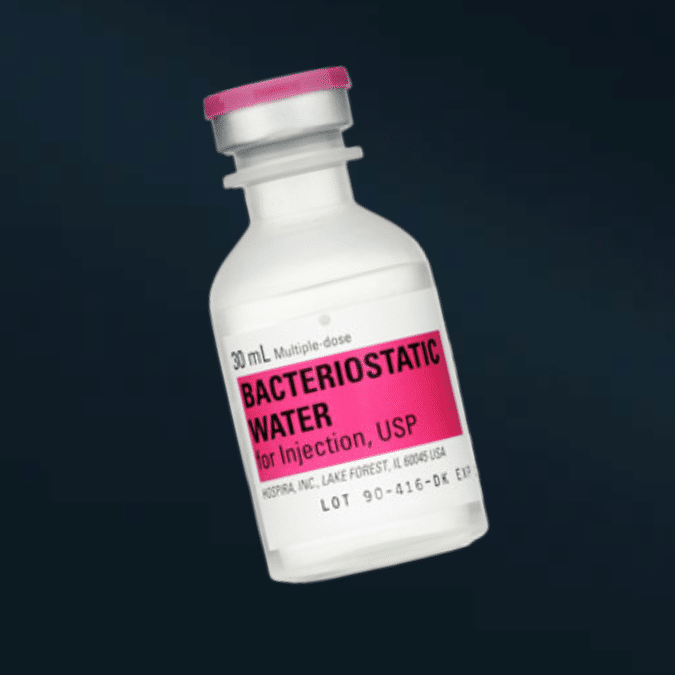
Bac Water (Fast Shipping)
$40.00